Ashtead is a large village on the A24 between Leatherhead and Epsom, a straight run up the A24 from our head office at Jayes Park Courtyard in Ockley, near Dorking. It is one of the Surrey towns we are in regularly. WTS Plumbing & Heating has been family run since William Smith started the firm in 2008. Our engineers are Gas Safe registered, we answer emergency calls around the clock, and every job carries a twelve month warranty on parts and workmanship.
Most of the plumbing and heating work in Ashtead is shaped by one thing, and that is the age and the size of the houses. This is an interwar and early postwar commuter village built onto a small old core, with a high proportion of large detached homes on generous plots. That mix decides whether a combi makes sense or whether a system boiler and an unvented cylinder is the right answer, where a flue can safely terminate, and how much pipework needs replanning rather than simply reconnecting.
Build periods, wall construction and pipework in Ashtead
Ashtead is not a period village with a few later additions. Valuation Office Agency council tax figures for 2024, covering the two census areas that between them take in nearly all of the village, show roughly 5,340 homes, and the single largest build band is the 1930s at about a quarter of the stock. Around two thirds of Ashtead went up before 1965. The 2021 Census for the same areas gives about 44 per cent detached and 34 per cent semi-detached, with only around 6 per cent terraced and 12 per cent purpose built flats. Roughly half of all homes here sit in council tax bands F, G or H.
The oldest stock is concentrated around Rectory Lane, The Street and Dene Road, in The Lanes off Harriotts Lane, Agates Lane and Skinners Lane, and in the large Edwardian houses on Woodfield Lane and at Highfields. Solid brick walls with no cavity mean radiators need sizing generously and flow temperatures cannot always be dropped as far as a new build allows. Expect chimney breasts in both reception rooms, flues capped rather than removed, and a liner needed for any stove or gas fire. Imperial half inch and three quarter inch pipe survives behind boxing and needs adapting onto 15mm and 22mm.
The interwar and postwar streets are the biggest single body of work. The Berg Estate north of the level crossing, North East Ashtead around Stonny Croft, Berry Meade and Hillside, and West North Ashtead all follow the same pattern: early narrow cavities, an airing cupboard cylinder, a loft cistern, and a boiler that has migrated from the kitchen chimney breast to a utility room, garage or loft. Plenty were put on a combi that was never sized for the number of bathrooms now in the house, so weak flow to an upstairs shower and long dead legs are routine. Detached garages push condensate pipes outside where they freeze.
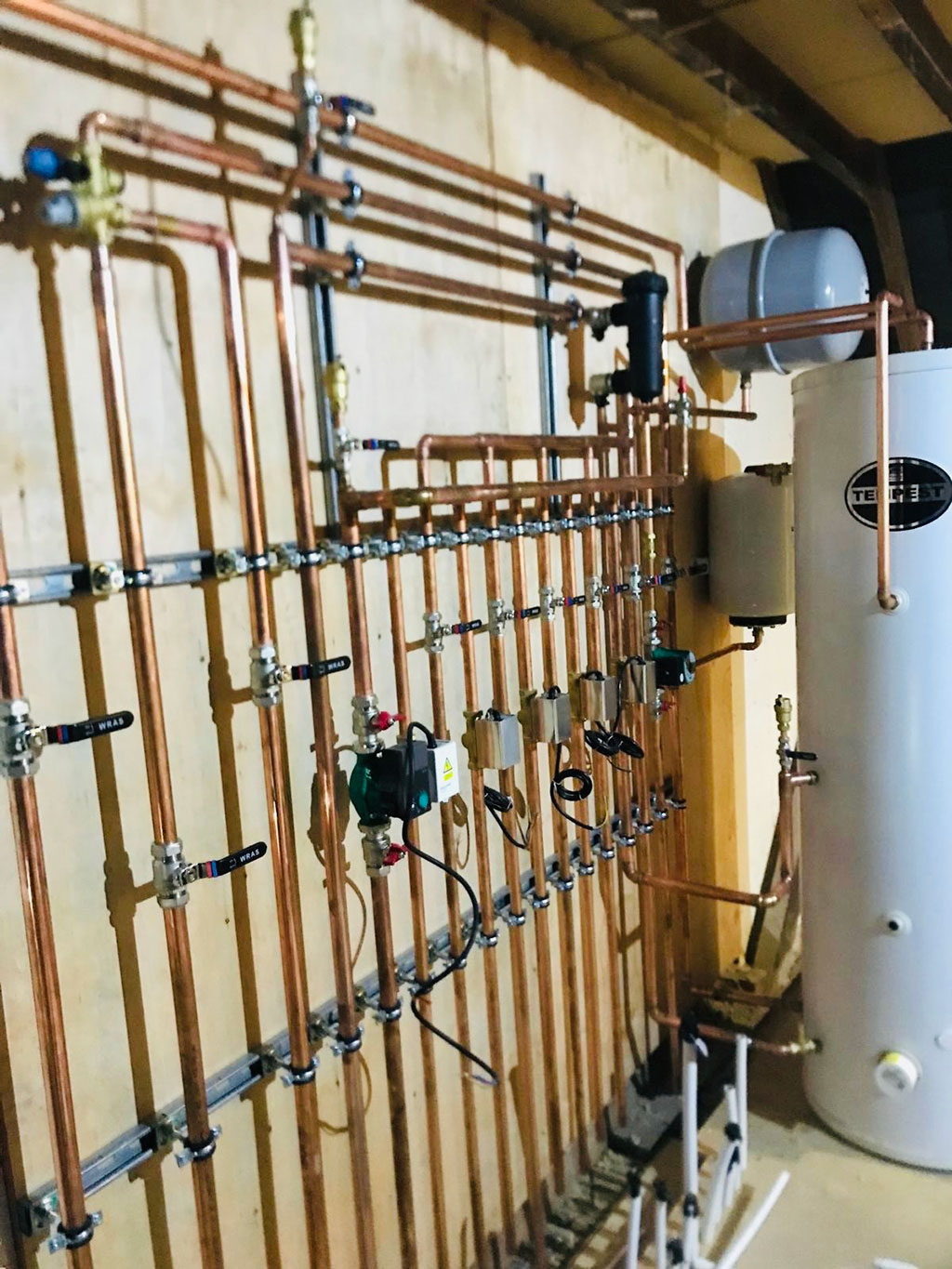
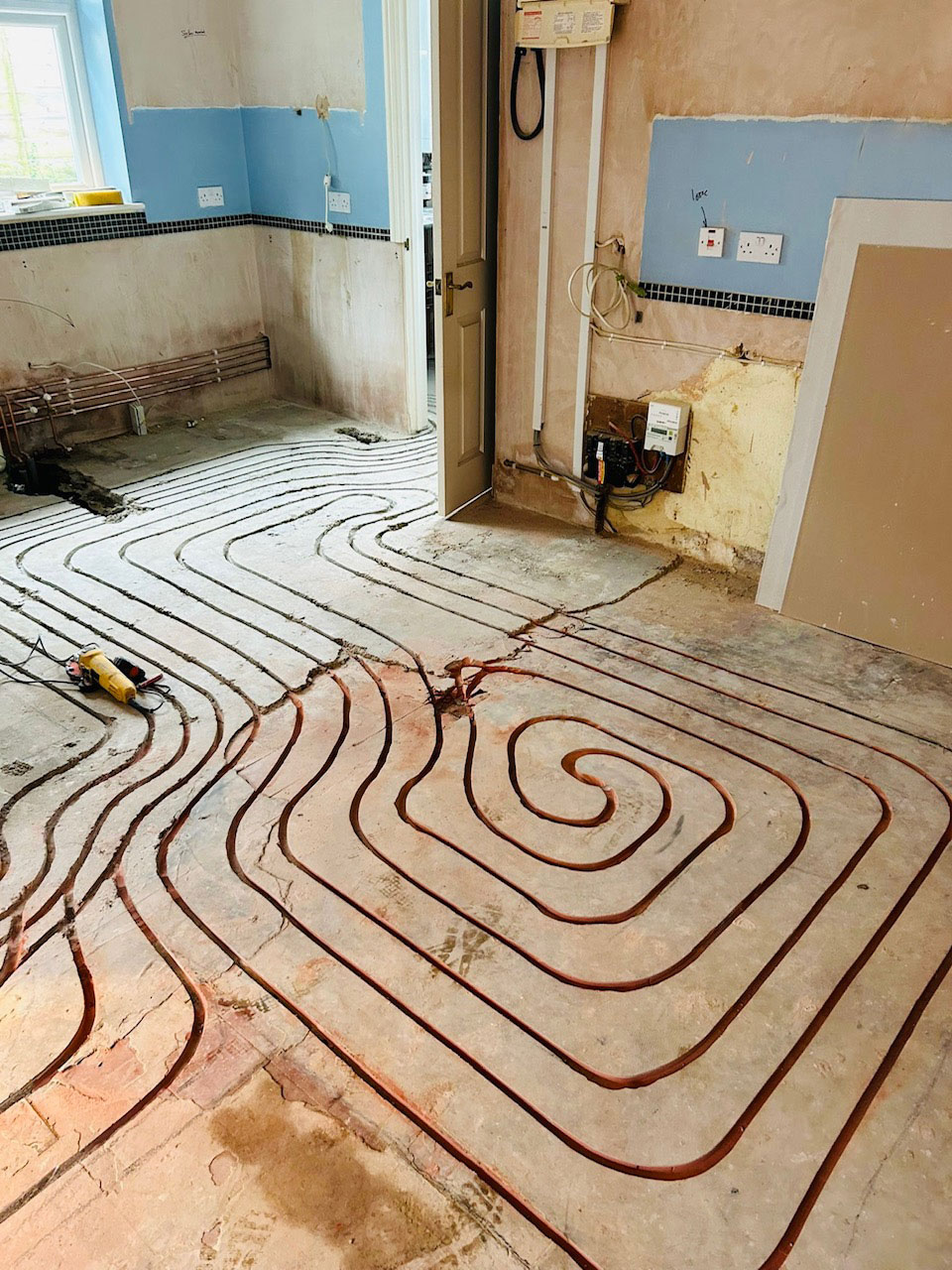
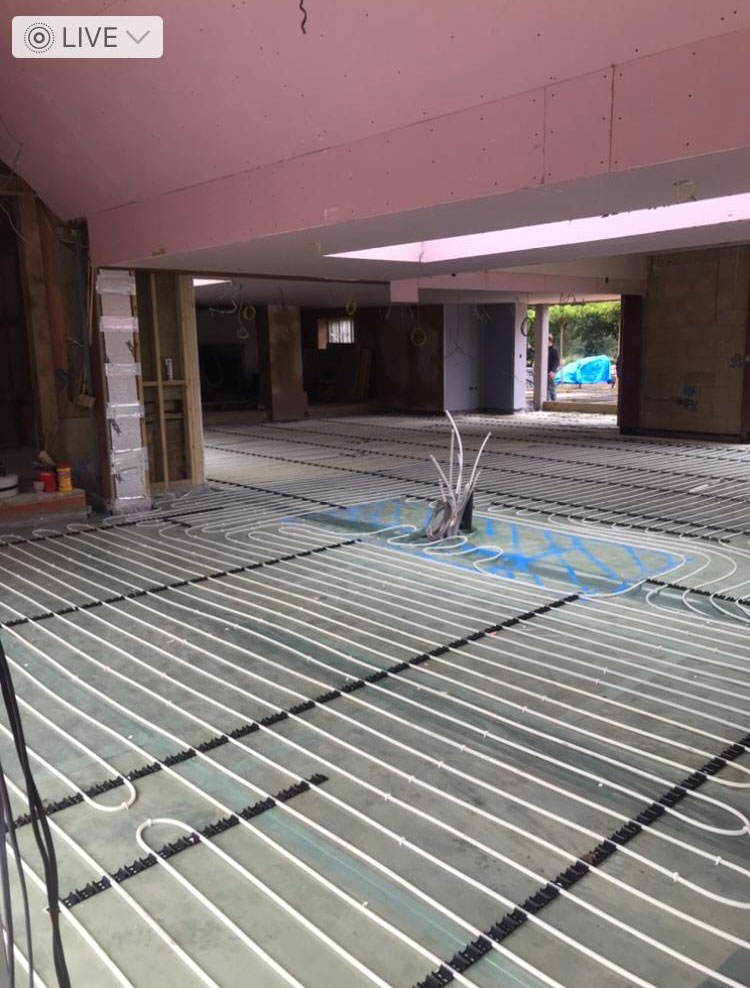
South Ashtead, The Warren, Park Lane, Grays Lane, Chalk Lane, Rookery Hill and the Farm Lane enclaves are a category of their own. These are five and six bedroom houses on deep plots behind dense hedges, with outbuildings, annexes and pool rooms added long after the house was built, and a plant room tucked into a garage, cellar or utility at one end. The incoming main enters a long way from the road and the runs to the far bathrooms are long. Newer additions, including the 1980s closes at The Murreys and Summerfield off Barnett Wood Lane and the individual plot replacements since the 1990s, bring barrier pipe, manifolds and ground floor underfloor heating. Across all of it, hard chalk groundwater means scale in heat exchangers, cylinders and shower valves.
What we do in Ashtead
Boiler repair
The 2021 Census for the two areas covering the village puts around 85 per cent of households on mains gas central heating, so most breakdowns we attend are gas boiler faults. On the 1930s and 1950s semis in North East Ashtead and on the Berg Estate, many no heat calls trace back to a condensate pipe running outside past a detached garage and freezing. In the larger South Ashtead houses it is more often a zone valve or scale in a heat exchanger.
Boiler installation and replacement in Ashtead
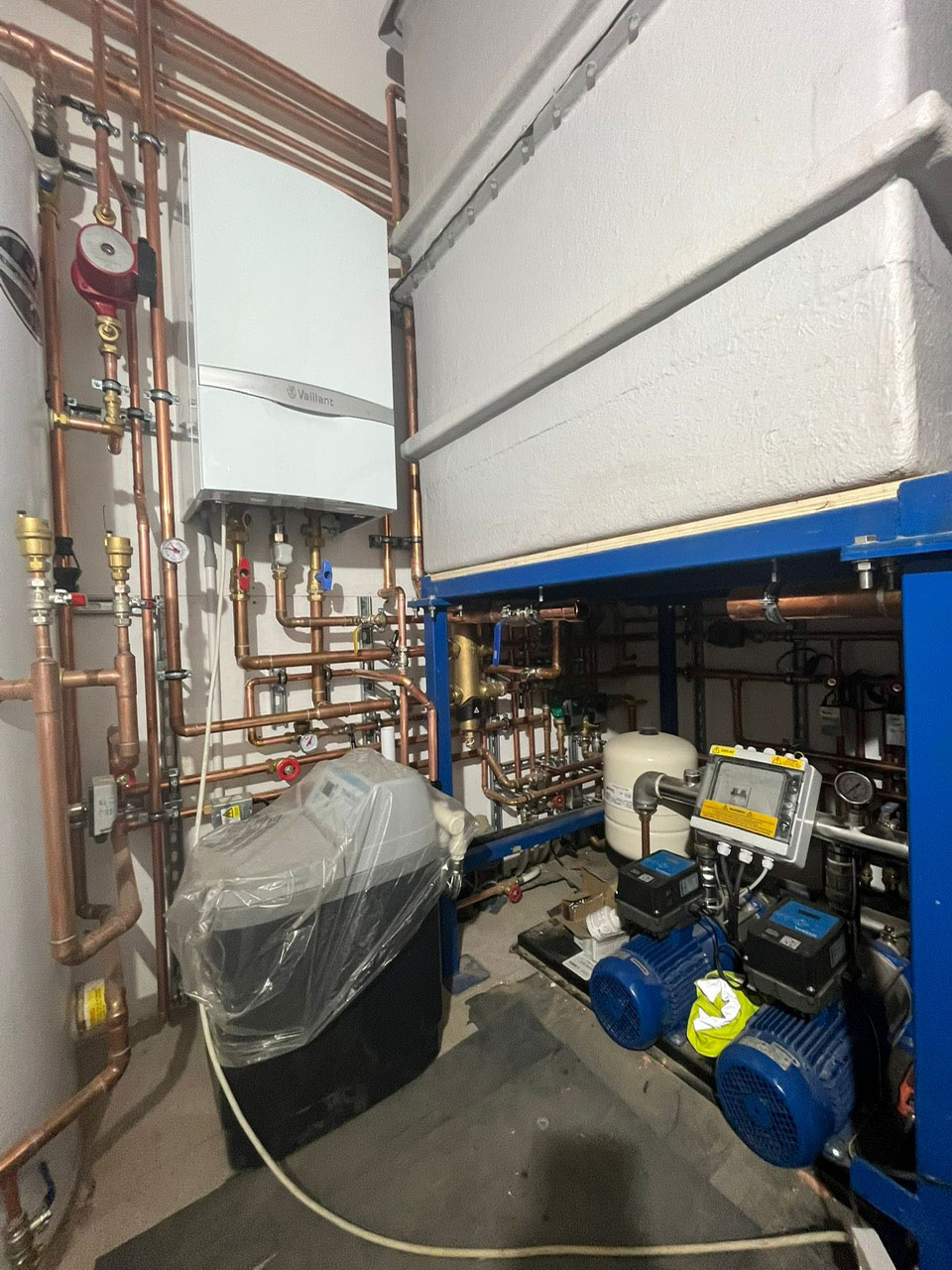
The boiler coming off the wall was usually specified for a 1930s or 1950s semi with one bathroom, so we size the replacement against the bathrooms and en suites added since. A four bathroom house on Grays Lane or The Warren wants a system boiler with a large unvented cylinder, zoned controls and a secondary return. A semi off Stonny Croft may be fine on a combi if the main can deliver. Bay fronts and tile hanging limit where a flue can terminate.
Boiler servicing and gas safety certificates
Annual servicing and landlord gas safety certificates across KT21, including the flats and offices above the shops on The Street and the parades at Craddocks Parade and Barnett Wood Lane. Older systems here reward a proper look: capped or unlined chimneys, back boilers behind fireplaces that were never fully removed, and vented cylinders fed by a loft cistern still in daily service. Landlords with several properties in the village can have visits grouped into one run.
Emergency plumbing in Ashtead
We answer emergency calls around the clock, for burst pipes, failed stopcocks, leaking cylinders and no hot water. Before we arrive, shut the stopcock, usually under the kitchen sink or in the front path on the interwar houses here, and run the cold taps down. A weeping joint can wait; a leaking unvented cylinder, a smell of gas or water tracking into a ceiling cannot. Out of hours the call comes through to Ockley, and in the peaks we allow for the station level crossing.
Hot water and unvented cylinders
Simultaneous demand is the recurring hot water problem here. Two or three bathrooms running at once in a large West Ashtead or Ashtead Park house will expose an undersized cylinder or a 15mm feed left over from an earlier layout. We replace and upgrade unvented cylinders, fit secondary returns so a distant en suite is not waiting on a long dead leg, and fit scale reducers where hard groundwater has already marked the shower valves.
Drainage and CCTV surveys
Blocked drains, slow gullies, repairs and CCTV surveys across the village. The long narrow back gardens on the Berg Estate and the mature trees along The Lanes and Woodfield Lane make root ingress and displaced joints a normal find. A survey shows whether you have clay or pitch fibre under an interwar garden, whether a shared rear run behind the cottage streets off The Street is the real fault, and whether a joint opened by a tree on Woodfield Lane needs jetting or relining.
Getting a van to your door in Ashtead
The A24 runs the whole length of the village as Epsom Road, The Street and Leatherhead Road, and M25 junction 9 at Leatherhead is just west of the village, so our vans come up from Ockley and Dorking without difficulty. Inside the village, access varies sharply. Everything north of the railway is reached over the station level crossing, and Mole Valley's own character appraisal of the village records it closed for about half of peak travelling hours. The narrow streets south of The Street are congested with parked cars. Harriotts Lane, Agates Lane and Skinners Lane are winding, often have no pavement and leave a long wheelbase van very little room. South Ashtead is the opposite, with wide roads and verges but a long walk from the van to a plant room set well back behind hedges and gates.
Air source heat pumps: which Ashtead houses actually suit one
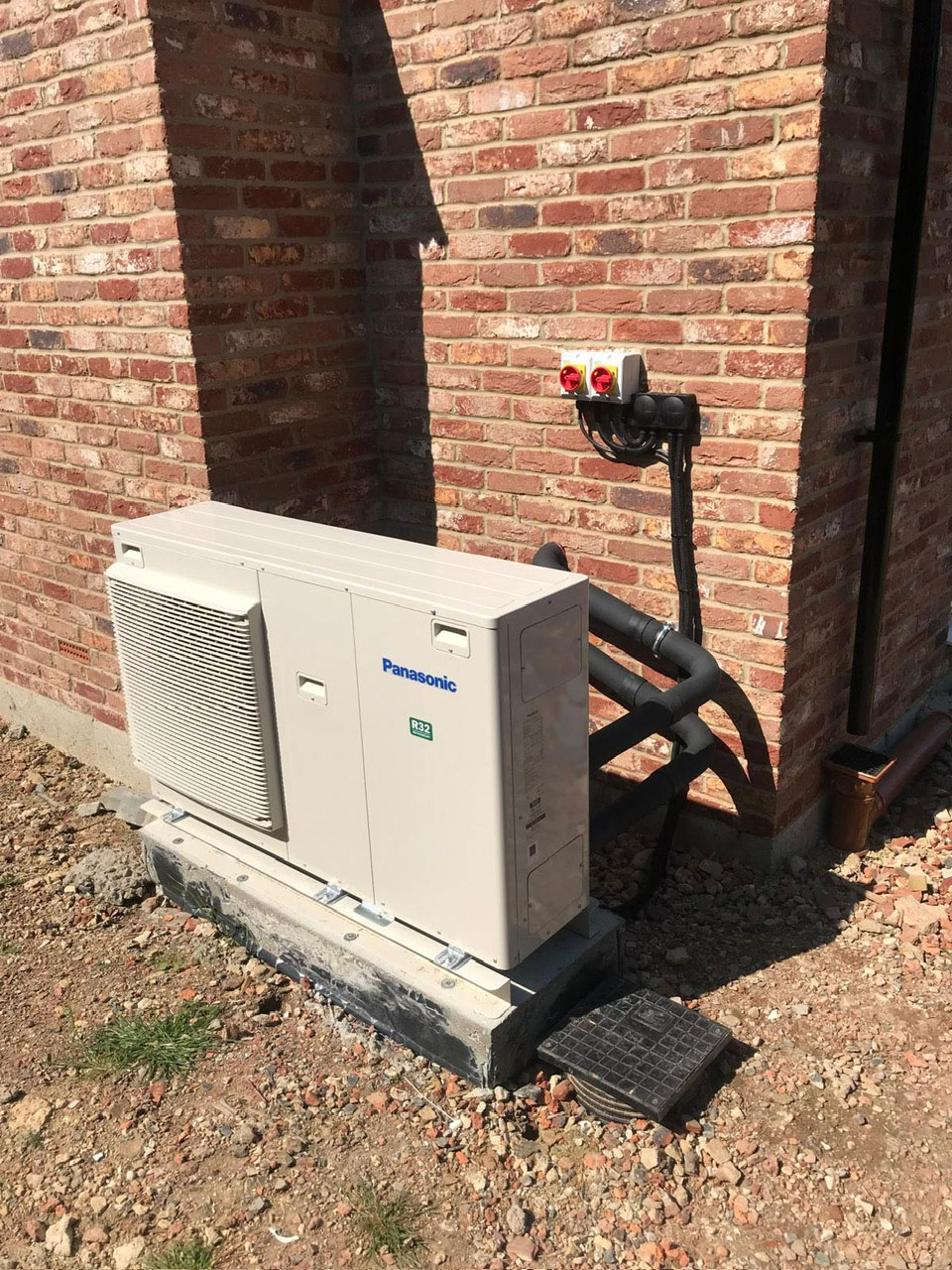
The large detached houses south and west of the village suit a heat pump far more readily than the tight interwar streets north of the railway, and what decides it is space: outdoor room for a monobloc unit and a cupboard deep enough for a heat pump cylinder. The houses in South Ashtead, The Warren and around the park have both, and many already have oversized radiators or underfloor heating from a recent refurbishment. The tighter interwar and postwar streets in North East Ashtead, West North Ashtead and on the Berg Estate have narrow side passages, long thin gardens and close neighbours, so siting and noise matter far more. Solid wall cottages in The Lanes and around Rectory Lane need fabric work and radiator upsizing first. We will tell you which group your house falls into before you spend anything.
Listed buildings, the conservation area and where a flue can go
The Ashtead Conservation Area was designated by Mole Valley District Council in 1988 and comes in three separate parts: the junction of Rectory Lane and Dene Road, the southern end of Woodfield Lane with its line of 14 Edwardian houses, and an area near the entrance to Ashtead Park around Farm Lane and Rookery Hill. Listed buildings are scattered through the village too, from The Old Rectory and Ashtead Lodge to cottages on Agates Lane and the Leg of Mutton and Cauliflower. If your home is listed or sits in one of those three parts, the position on an external flue, soil stack, meter box or heat pump unit should be checked with Mole Valley before work starts. The great majority of homes in the village are unlisted houses where normal building regulations apply.
Streets, villages and postcodes we work in around Ashtead
We work right across KT21 and into the neighbouring postcodes, from the old core around Rectory Lane to the Berg Estate north of the railway and the large houses on the downs side of the village. If your road is not listed here, ring us anyway. We are up in this part of Mole Valley most weeks.
- The Village (KT21) The historic core on The Street, with shops below and flats or offices above, and narrow Victorian cottage streets behind that are frequently congested with parked cars.
- Rectory Lane and Dene Road (KT21) The original axis of the village, with surviving timber framed buildings, high brick walls to Ashtead Lodge and The Old Rectory, and one part of the conservation area.
- Lower Ashtead and Woodfield (KT21) The mixed residential area north of The Village towards the station, taking in Craddocks Parade, the Barnett Wood Lane parade, the library and the recreation ground.
- Oakfield Road to The Marld (KT21) Low density detached houses from the early 1900s and the 1930s on regular generous plots, with mature planting and the Woodfield Lane conservation area section.
- West Ashtead (KT21) Detached houses in mature gardens either side of Epsom Road, taking in Grange Road, Taleworth Road, Uplands and Stag Leys, with later backland closes behind.
- The Lanes (KT21) Harriotts Lane, Agates Lane and Skinners Lane: narrow, winding and often without pavement, with very varied house sizes and periods on irregular plots.
- North East Ashtead (KT21) Regular 1930s and 1950s semis on a consistent building line around Stonny Croft, Berry Meade and Hillside, with long rear gardens and heavy on street parking.
- West North Ashtead (KT21) Higher density streets between Barnett Wood Lane and the railway, with small interwar semis, postwar purpose built flats, tight side access, smaller plots and more rented homes.
- Links Road and the Berg Estate (KT21) North of the railway, reached over the level crossing. Pre-war detached and semi-detached housing in brick, render and clay tile, plus postwar backland infill.
- South Ashtead and The Warren (KT21) Very large detached houses in big gardens behind dense hedges on Grays Lane, Crampshaw Lane, Chalk Lane, Park Lane and The Warren, near Ashtead Hospital.
- Ashtead Park (KT21) Registered historic parkland east of the village around St Giles' Church and the Freemen's School, with small housing enclaves on Farm Lane, Oak Way and Paul's Place.
- Leatherhead (KT22) Immediately south west, separated by grazing land and the M25 embankments. Grange Road and Leatherhead Road carry KT22 postcodes on the western side.
- Langley Vale and Headley (KT18) Downland settlements to the east and south east, reached by Chalk Lane and Headley Road, far lower density and more likely to be off the mains gas network.
- Great Bookham and Little Bookham (KT23) Villages beyond Leatherhead in Mole Valley, each with its own conservation area and a mix of period cottages and postwar estate housing.
Why homeowners in Ashtead call WTS
- Family run since William Smith started WTS in 2008. The Ockley office takes your call, and the engineer who quotes the job comes back to fit and commission it.
- Our head office at Jayes Park Courtyard in Ockley is a straight run up the A24 to Ashtead, so KT21 is genuinely local work for us rather than an outlying postcode.
- Gas Safe registered heating engineers for boiler repairs, replacements, servicing and gas safety certificates in homes, flats and rented properties across KT21.
- Every job carries a twelve month warranty on parts and workmanship, administered from Jayes Park Courtyard, and we answer emergency calls twenty four hours a day.
- We work for private households, landlords, construction companies and tier one contractors, and we take on apprentices and sponsor grassroots football teams.
Ashtead plumbing and heating questions
Yes, we cover all of KT21, including Links Road, Ashtead Woods Road and the Berg Estate north of the railway. Booking is the only thing that changes: for anything north of the line we either allow extra time for the crossing or put you in a mid morning or early afternoon slot, and we ring ahead when the van leaves Ockley. If you are on one of the lanes with no pavement, tell us when you book and we will allow for the access.
Often yes, but only after the incoming main and the existing pipework have been checked. The test is simple: run the kitchen cold tap into a bucket for a minute. Under about twelve litres a minute and a combi will struggle to hold a shower while another outlet runs. Many of these semis still have a narrow main from the street, and once two bathrooms are in daily use a system boiler and a cylinder wins on flow rather than on output.
A system boiler and an unvented cylinder, in almost every case. The cylinder is sized against the number of outlets that can run at once rather than the number of bedrooms, so three bathrooms, an en suite and a utility usually means 250 to 300 litres. The constraint on Grays Lane and Chalk Lane is rarely the boiler. It is the incoming main, laid for the house as it was built and a long way from the road, which is why we measure the flow at the stopcock before quoting.
Yes, the water here is hard, and a softener earns its place in a larger house with several bathrooms but is rarely worth it in a small flat. SES Water supplies the village and takes most of its water from chalk and greensand sources, so scale in heat exchangers, cylinders and shower valves is routine. A scale reducer is enough for a one bathroom flat off Barnett Wood Lane, while a house with three or four en suites and a large unvented cylinder is better on a full softener.
Usually not, but the two questions are separate. Listed building consent is a planning matter and goes to Mole Valley District Council's planning team; building regulations cover the flue position, the gas work and the electrics, and we notify that side ourselves. For a heat pump, permitted development sets limits on the size of the unit and on noise measured at the nearest neighbouring window, so siting is normally what decides the job. If your house is listed or in the conservation area, ask Mole Valley before anything is ordered.
Yes. If a tenant will not give access, keep a written record of every appointment offered and letter sent, because that is the evidence that you took all reasonable steps. In a converted flat above The Street where one meter serves more than one unit, the check covers every appliance and every length of pipework on that supply, not only the flat you let. We leave the record with you on the day, and you must keep it for two years and give the tenant a copy within 28 days.
Book a plumber or heating engineer in Ashtead
If you need a plumber or a heating engineer in Ashtead, ring WTS Plumbing & Heating on 01306 621 057. We are family run, Gas Safe registered, and based at Jayes Park Courtyard in Ockley, a short run down the A24 from KT21. Tell us the road, whether you are north or south of the level crossing, and roughly when the boiler or system was last worked on, and we will give you a straight answer on what is worth doing. Emergency calls are answered twenty four hours a day, and every job carries a twelve month warranty on parts and workmanship.
What we do in AshteadPlumbing in AshteadBoilers and heating in AshteadDrainage in AshteadHeat pumps in Ashtead
Nearby areas we also coverPlumbers and heating engineers in LeatherheadPlumbers and heating engineers in EpsomPlumbers and heating engineers in Banstead