Our head office is at Jayes Park Courtyard in Ockley, about seven miles south of Dorking on the A29, so Dorking is not a town we visit. It is the town at the top of our road. WTS Plumbing and Heating has been family run since William Smith started the firm in 2008, and our Gas Safe registered engineers work across Mole Valley, from the flats above the High Street shops to the off-grid cottages under Leith Hill.
That closeness matters more in Dorking than it might elsewhere. The town centre is narrow, one-way in places and lined with listed frontages, so a boiler swap on West Street is a different job from the same boiler in a 1930s semi off Deepdene Avenue. We handle plumbing, boiler repairs, installations and servicing, gas safety certificates, drainage, air source heat pumps, air conditioning and electrical work, with a 12-month warranty on parts and workmanship and a 24/7 emergency response.
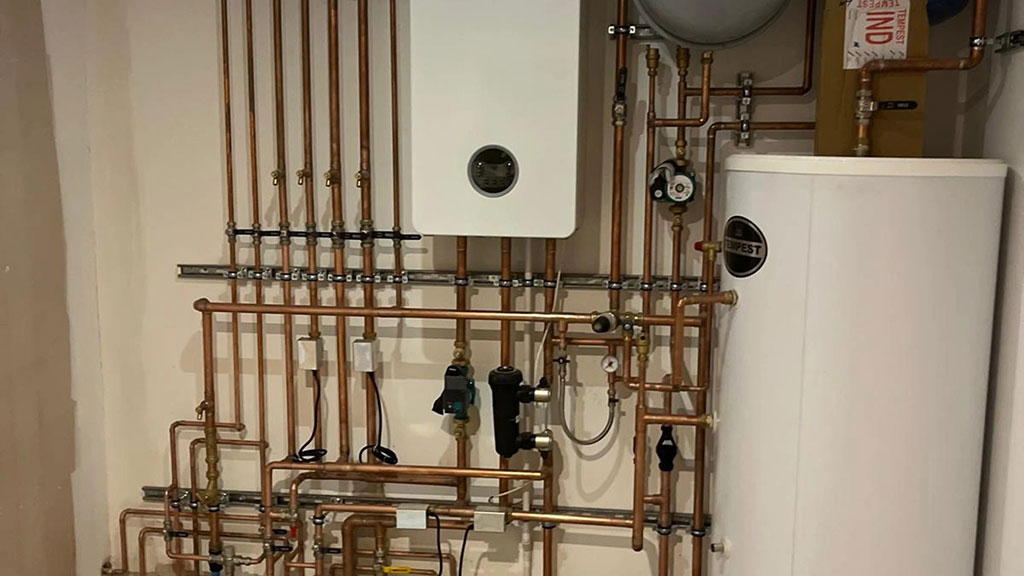
What Dorking homes are actually made of
Dorking is a layered town rather than a single-era one, and the layers matter more to a heating engineer than the postcode does. High Street, West Street and South Street meet at Pump Corner, and much of that frontage is listed and sits inside the Dorking Conservation Area. A large share of the town-centre housing is flats above shops and converted upper floors: in the 2021 Census area covering Dorking North and Westhumble, about one household in five is in a purpose-built flat, with others in converted buildings or over a shop. That means solid walls with no cavity, timber floors, capped or re-used chimney stacks, tight airing cupboards, awkward flue routes over listed elevations and long horizontal condensate runs.
Around the centre, Rose Hill was the town's first planned residential estate, and gave Dorking its run of 19th-century villas. The growth that followed the railway filled Arundel Road, Howard Road and the Tower Hill slopes with terraces and larger semis. These are the classic Dorking jobs: back boilers and floor-standing boilers coming out, gravity hot water on a loft cold tank and an airing cupboard cylinder, 15mm feeds that will not carry a modern combi at a decent flow rate, and radiators sized for a much warmer flow temperature than a heat pump would ever give.
When the Deepdene and Pippbrook estates were broken up in the 1920s and 1930s, bay-fronted semis and detached houses spread north and east. That belt is where microbore, early cavity walls and 1960s to 1980s system boilers turn up, and where most straightforward combi swaps happen. Then there is the council-built stock: Fraser Gardens, and the Goodwyns estate built for Dorking Urban District Council from the mid-1950s, with red-brick cul-de-sacs, three and four storey blocks and the two 14-storey towers on Olivier Crescent. Flats like that mean communal cold water storage, pressure problems on upper floors and restricted flue positions.
Outside the town the mix changes completely. In the 2021 Census area covering Westcott, Ockley and Capel, more than four households in ten are in detached houses and only about one in fourteen is in a purpose-built flat. That is cottages, farmhouses, converted barns and large extended houses, often solid-wall, often on oil or LPG rather than mains gas, and frequently on a borehole or a septic tank or treatment plant. Residential park homes are a real part of the local mix too, around Betchworth and Box Hill, and again around Capel and Beare Green.
What we do in Dorking
Boiler installation and replacement in Dorking
Most Dorking boiler changes fall into two camps. In the Victorian terraces off Arundel Road and Howard Road it is usually a gravity system on a loft tank coming out, where the 15mm feeds will not carry what a combi needs at the shower until they are run in 22mm from the main. In the interwar semis around Deepdene it is often a tired system boiler on microbore, which rules out most high-output combis but takes a modern system boiler and cylinder without lifting floors.
Boiler breakdowns and scale in hard water
In Dorking the breakdown is usually a scale job. On combis in the terraces around Tower Hill and the Holmwoods that means stripping and descaling the plate heat exchanger before the hot water goes lukewarm. On an old gravity system being converted it means a magnetic filter on the return and a proper flush of what has sat in the pipework for decades. On a new install the scale reducer goes on the incoming main, ahead of the boiler. Every repair carries our 12-month warranty.
Oil and LPG heating in the Dorking villages
Dorking town is firmly on mains gas, but the villages around it are not. In the 2021 Census area covering Westcott, Ockley and Capel, close to one household in five heats with oil alone. We work on oil and LPG heating as well as mains gas, so oil boilers, external tanks, bulk LPG and park home systems around Capel and Beare Green are all jobs we take on from the Ockley office.
Gas safety certificates for Dorking landlords
If you let a flat here you need an annual gas safety record, and the awkward part is rarely the boiler. It is reaching a converted upper floor over a South Street shop when the meter is at street level and access is through the rear yard. On the Goodwyns blocks and the Olivier Crescent towers we book a whole stair core at once, because communal storage and restricted upper-floor flue positions are shared problems. Landlord work is a regular part of what WTS does.
Drainage and blocked drains
Older Dorking property often runs on part-original drainage, and lead-caulked cast iron soil stacks still turn up behind older town-centre frontages. A camera survey on a shared Victorian stack behind a shop is a careful job, because the run passes under a listed frontage and there is nowhere to dig on spec. Out in the villages it is the reverse: a treatment plant at Coldharbour or Newdigate reached by a gate at the end of a long drive, with a tanker to get in.
Air source heat pumps on Surrey Hills plots
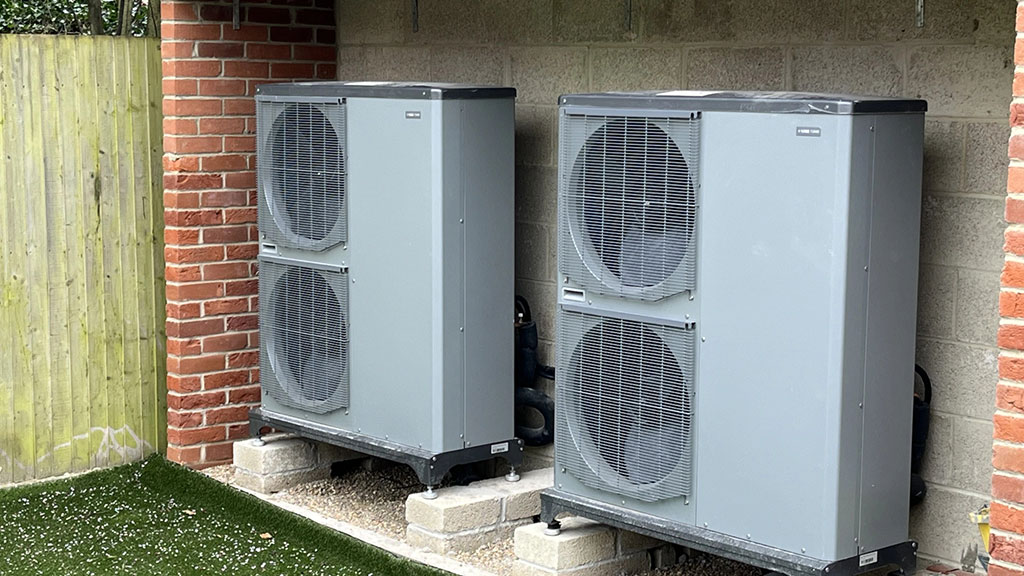
Heat pumps here are limited less by the technology than by where the kit goes. A monobloc unit and a hot water cylinder are straightforward on a large detached house at Newdigate or Abinger, with garden to spare. On a Victorian plot in the town centre the outdoor unit, the boundary and the cylinder space have to be settled first, and siting is a planning question as much as a heating one. We will tell you honestly if your house is not a good candidate.
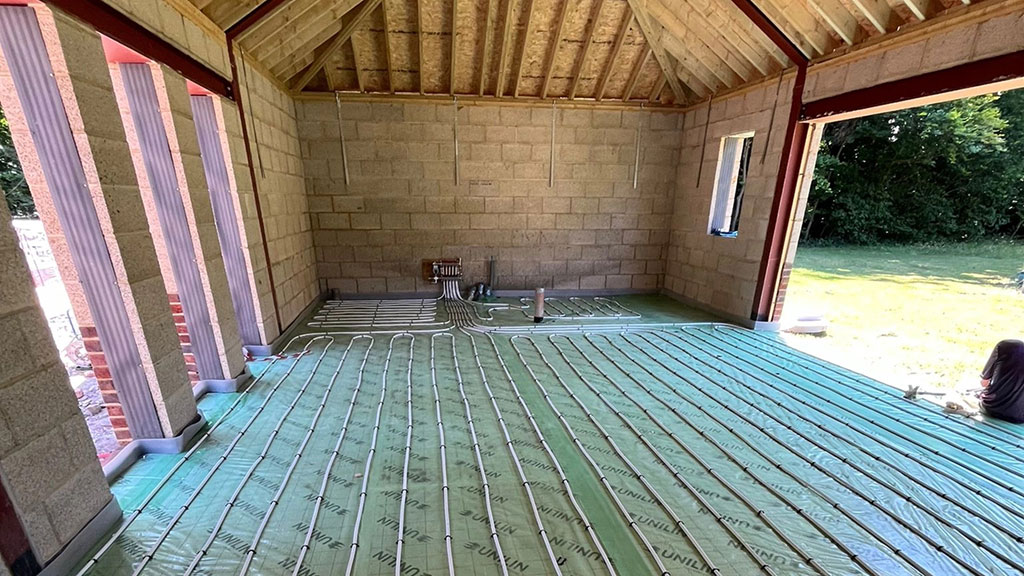
Getting a van to your door in Dorking
Mole Valley District Council runs the town car parks, and the long-stay ones include Reigate Road, High Street and Wathen Road, Dene Street, Southside, St Martin's Walk, South Street, Junction Road and Church Street. Charges apply 8am to 6pm Monday to Saturday, with Sundays and bank holidays free. One detail that matters to a plumber: the exit from Southside onto Rose Hill has a 2.5 metre height restriction, and St Martin's Walk is a multi-storey deck, so a high-roof van carrying a boiler cannot use either. That means working out beforehand where the van can stand, what has to be carried in by hand and whether there is rear access from a yard or a service road. We settle that when we book the day, so the parts arrive with the engineer.
Conservation areas, Article 4 and the Surrey Hills
Mole Valley District Council is the planning authority, working out of Pippbrook in Dorking, and it has 26 conservation areas across the district. The Dorking Conservation Area covers much of the town centre, and the council states that parts of the Dorking, Brockham and Leatherhead conservation areas carry additional controls through Article 4 Directions, so check before assuming external work is permitted development. The Surrey Hills National Landscape and the Areas of Great Landscape Value together make up about a third of the district, and the council notes that residents inside the National Landscape need permission for some work that would not need it elsewhere. Listed building consent is a separate permission again, and an external flue or an oil tank on a listed building needs it whatever the conservation area position. Settle all of that before anything is ordered.
Getting to the villages, and getting up the lanes
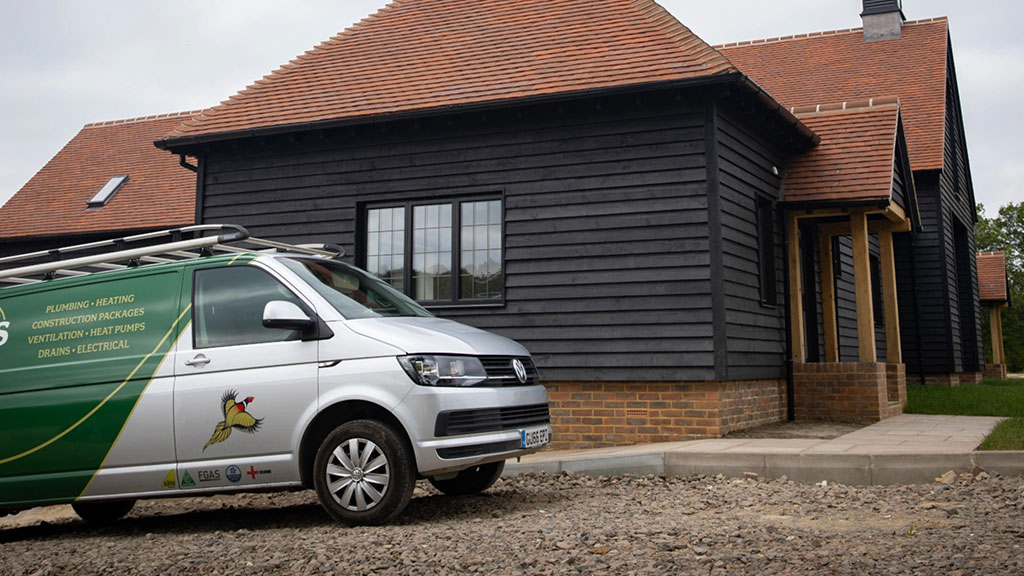
Half of our patch is single-track lanes. Coldharbour Lane climbing to Coldharbour, Leith Hill Lane over at Wotton, Ranmore Common Road along the top of the downs, the Zig Zag over Box Hill and the network of lanes around Abinger and Newdigate all mean passing places, gravel, gates and long driveways. Properties out there are often on oil and private drainage, so an access route for a service vehicle is part of the job rather than an afterthought. A boiler, a cylinder or a tank has to come off the van somewhere, and on a farm track that somewhere can be a long way from the door. We ask about gates, verges and turning space when we book, because a van that cannot get in is a wasted morning for both of us.
Streets, villages and postcodes we work in around Dorking
Dorking is the working centre of Mole Valley, and the villages around it pull in every direction: down the A24 to the Holmwoods and Beare Green, east along the A25 to Brockham and Betchworth, west to Westcott and the Abingers, and south on the A29 past our own front door at Ockley. These are the places we work most.
- Dorking town centre (RH4) Many of the flats over the shops are reached only from a rear yard, on shared risers, with the meter down at street level.
- Rose Hill (RH4) Reached through the arch off South Street, just south of the town centre. Villa stock, so long radiator circuits and old cast iron pipework.
- Tower Hill (RH4) Hillside streets south and west of the centre around Hampstead Road, Knoll Road and Horsham Road. Late Victorian and Edwardian houses with later infill.
- Deepdene (RH4) East of the centre by Dorking Deepdene station. Interwar semis, so microbore and 1960s to 1980s system boilers are the usual find.
- Pixham (RH4) Small settlement off Pixham Lane where the Mole meets the Pipp Brook. Pixham Mill of 1837 and a 17th-century timber-framed cottage still stand.
- Goodwyns (RH4) Estate off Goodwyns Road built from the mid-1950s. Communal cold water storage means weak pressure high up, and flue positions there are restricted.
- North Holmwood (RH5) On the A24 immediately south of Dorking, with Mid Holmwood and South Holmwood beyond. Mixed terraces, semis and flats.
- Westcott (RH4) Village about a mile and a half west on the A25, between Ranmore Common and Leith Hill. Conservation area, and mostly on mains gas.
- Brockham (RH3) Village green settlement east of Dorking. Parts of the Brockham Conservation Area carry additional planning controls through an Article 4 Direction.
- Betchworth (RH3) East of Brockham with its own station on Station Road. Conservation area, and a significant number of residential park homes in this part of the district.
- Mickleham and Westhumble (RH5) North of Dorking on the A24 under Box Hill, with Box Hill and Westhumble station on Westhumble Street and a conservation area at Mickleham.
- Ockley (RH5) Village on the A29 about seven miles south of Dorking. Our head office is at Jayes Park Courtyard, in Ockley parish.
- Capel and Beare Green (RH5) A24 villages south of Holmwood, served by Holmwood station on Old Horsham Road. A meaningful share of park home stock here.
- Coldharbour (RH5) Hamlet on the greensand ridge below Leith Hill, reached by steep single-track lanes, and heavily off the mains gas grid.
Why homeowners in Dorking call WTS
- Our head office is at Jayes Park Courtyard in Ockley, about seven miles south of Dorking, so this is our local patch rather than an outlying one.
- Family run since William Smith started WTS in 2008, with Gas Safe registered heating engineers on the team.
- Every job carries a 12-month warranty on parts and workmanship, whether it is a tap washer or a full heating system.
- A 24/7 emergency plumber response, which is only worth promising if you are close enough to actually turn up.
- We work for private households, landlords, construction companies and tier-one contractors, so a block of flats is as familiar to us as a cottage.
Dorking plumbing and heating questions
We cover both. Our head office is at Jayes Park Courtyard in Ockley, roughly seven miles south of Dorking on the A29, and Dorking is the town we work in most. That takes in the town centre, Rose Hill, Tower Hill, Deepdene, Pixham, Goodwyns and North Holmwood, along with Westcott, Brockham, Betchworth, Mickleham, Capel, Beare Green and the villages up towards Leith Hill.
Yes, Dorking is a hard water area. SES Water supplies the town, and most of its water is groundwater drawn from the chalk of the North Downs and the greensand to the south, which makes it hard. In practice that means scale building up in boiler heat exchangers, hot water cylinders, shower valves and mixer taps. It is worth fitting scale protection at the same time as a new boiler rather than waiting for the first breakdown.
Usually yes, but the pipework decides whether it is worth it. A lot of the terraces around Arundel Road, Howard Road and Tower Hill still run gravity hot water off a loft cold tank with a cylinder in the airing cupboard, on 15mm feeds. A combi on those feeds can give disappointing flow at the shower. We check the incoming main and the flow rate first, then tell you whether a combi or a system boiler and cylinder suits the house better.
Sometimes, but never assume it. A heat pump can fall under permitted development, and it is the conditions that catch people out: limits on noise at the neighbouring property, how close the unit sits to the boundary, and taking it away once it is no longer used. If the house is listed, listed building consent is a separate permission and is needed whatever the planning answer. Ring Mole Valley District Council before you order anything.
Yes. We work on oil and LPG heating as well as mains gas. We service and repair oil boilers, re-site and replace external tanks with the bunding they need, change customers between bulk and bottled LPG, and look after the small combis fitted in park homes around Capel and Beare Green. When you ring, it helps to know the fuel, where the tank sits in relation to the house, and what the access is like for a delivery or service vehicle.
Yes, we run a 24/7 emergency response, and being based at Ockley is what makes that realistic here. A burst in a flat over a High Street shop, a failed pump in a Goodwyns block or a leak in a cottage down a lane at Coldharbour all get the same call-out. Ring 01306 621 057 and tell us what you can see, and we will tell you what to isolate while we are on the way.
Book a plumber or heating engineer in Dorking
If you need a plumber or a heating engineer in Dorking, ring 01306 621 057 and speak to someone who knows the difference between a job on West Street and a job in a park home at Beare Green. Tell us the road and roughly the era of the house, because a gravity system on a loft tank in an Arundel Road terrace, a microbore system boiler in a Deepdene semi and an oil boiler up a Coldharbour lane are three different visits, and we will say which one yours is before we quote. Every job comes with a 12-month warranty on parts and workmanship.
What we do in DorkingPlumbing in DorkingBoilers and heating in DorkingDrainage in DorkingHeat pumps in Dorking
Nearby areas we also coverPlumbers and heating engineers in ReigatePlumbers and heating engineers in LeatherheadPlumbers and heating engineers in Cranleigh