WTS Plumbing & Heating Ltd has looked after Surrey homes since 2008, and Banstead sits north-east of our head office at Jayes Park Courtyard in Ockley, near Dorking. That puts Banstead well within our regular Surrey round. We are a family run firm of Gas Safe registered heating engineers, and we cover the SM7 heart of the village and Nork along with the KT20, KT18, CR5 and SM2 addresses around the edges.
This is not a town you can quote from a standard template. It sits high on the chalk of the North Downs, the water is hard, and more than a third of its houses went up between 1930 and 1939. That combination decides most of what we find behind a kitchen cupboard door: scale in the heat exchanger, imperial copper meeting modern fittings, and a heating system that has been altered three or four times since the house was built.
What Banstead houses do to plumbing and heating
Banstead is, more than anything else, a 1930s town. Valuation Office Agency council tax records for the twelve small areas covering the Banstead Village and Nork wards count 7,360 dwellings, and about 36 per cent of them were built between 1930 and 1939, with a further 4 per cent in the 1920s. Only around 4 per cent pre-date 1919. Roughly a quarter went up between 1945 and 1972, with the rest split between later twentieth century infill and more recent building. The Nork estate was sold to developers in 1923 and built out quickly, and the green belt around the town has limited outward growth since. Almost everything since has gone into gaps that were already there.
The typical property is a three-bedroom bay-fronted semi or detached house of the middle to late 1930s. It was built with a chimney breast and open fires, later fitted with a back boiler, then given a gravity or pumped system with a cold water tank in the loft and a vented copper cylinder in the airing cupboard, and it is now usually on its second or third boiler. We expect to find surviving imperial copper in half inch and three quarter inch needing adaptors where it meets 15mm and 22mm, and microbore added during 1970s and 1980s upgrades. On older properties we check for lead and galvanised steel pipework before we quote.
Loft conversions are very common on these plots, and they change the job completely. A conversion normally takes the airing cupboard and the feed and expansion tank with it, which is what pushes a Banstead house towards a combi, or towards a system boiler with an unvented cylinder fitted into a ground floor or bedroom cupboard. Where the airing cupboard has survived, a system boiler and cylinder usually keeps hot water flow rates sensible for the two-bathroom layouts these conversions create. Radiator sizing needs real care too. The 1930s stock here is a mix of solid brick and early cavity walls with original or partly upgraded insulation, so heat loss often runs above a modern rule of thumb.
Not all of Banstead is interwar. The 1945 to 1972 quarter of the stock is more standardised, some of it former local authority housing, generally already on combis and quicker to work on. The closes and converted institutional sites built from 1973 onwards bring plastic push-fit and barrier pipe, sealed heating and pressurised unvented cylinders. The purpose-built flats in the village centre are a different job again: the 2021 census counted 827 of them in Banstead Village ward, against only 284 in Nork ward, and they mean room-sealed appliances only, restricted flue routes, communal risers and access booked through a managing agent. Over all of it sits hard water, because SES Water takes much of its supply from boreholes in limestone or chalk.
What we do in Banstead
Boiler installation on a 1930s semi
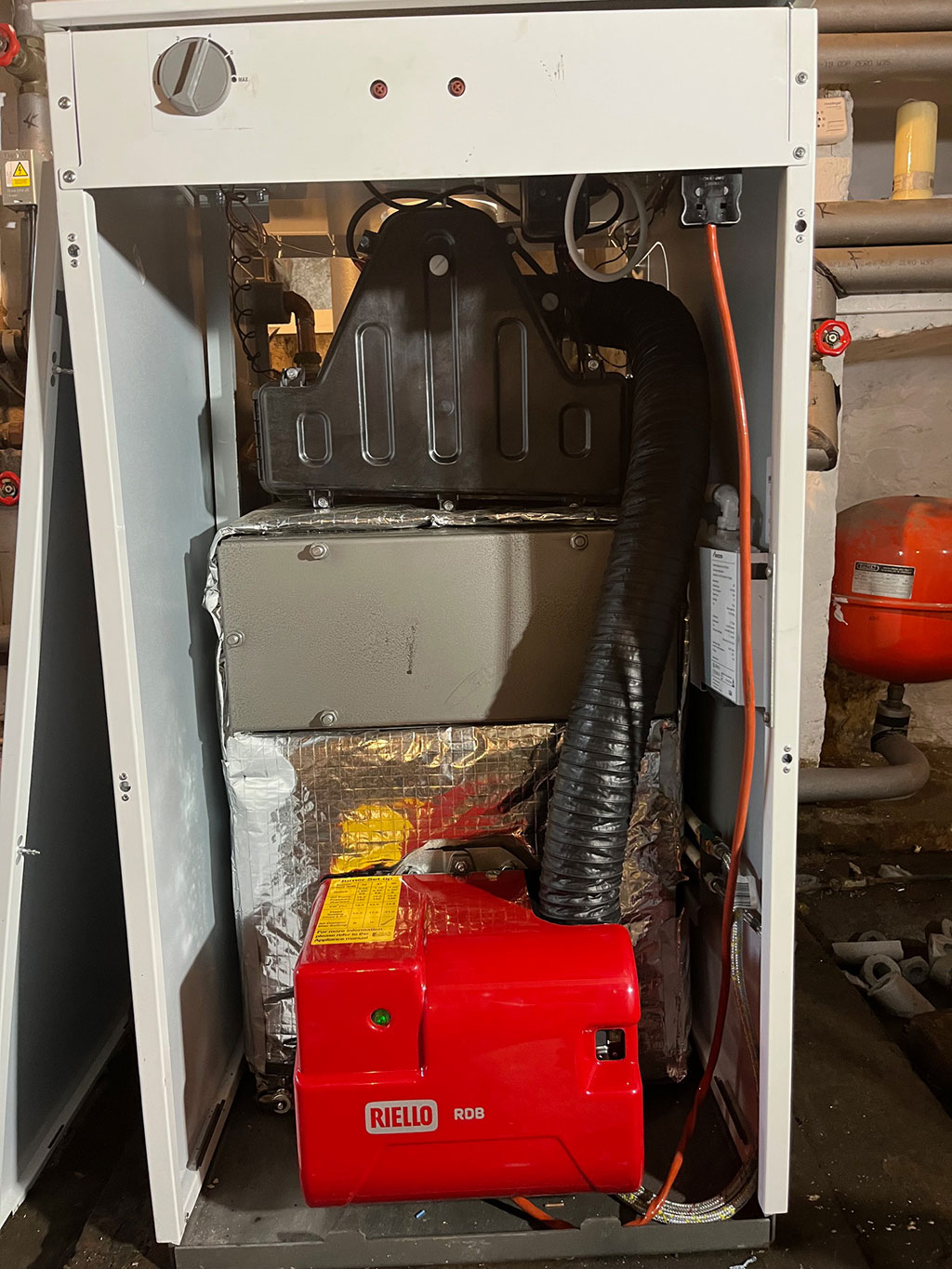
A boiler swap in a Banstead semi is mostly a routing problem. Flues normally run out through a flank or rear kitchen wall, and chimney breasts are often already capped or lined from the back boiler era, so the old route is rarely the new one. We measure incoming mains flow before committing to a combi, and we plan the condensate run properly, because a long external drop down a 1930s flank wall is a freeze waiting to happen in January.
Scale, chalk water and boiler servicing
Chalk water is the reason so many Banstead breakdowns look alike. Scale builds up in combi plate heat exchangers, immersion elements, cylinders and thermostatic shower valves, and it does it faster here than in a soft water town. An annual service, a correct inhibitor level and a magnetic filter are the cheap end of that problem. We also fit scale reduction on the mains feed to a combi, which is worth doing on the North Downs.
Central heating and radiator sizing
Interwar Banstead rooms are often colder than a quick estimate suggests. Solid brick and early cavity walls and partly upgraded insulation mean we size radiators on a proper heat loss calculation. Balancing matters as much: a 1970s microbore leg feeding a later extension radiator will starve it unless the flow is set properly, and on a converted gravity system we check the two port valve and the pump position before blaming the boiler.
Cylinders after a loft conversion
Sizing a cylinder is about what has to run at the same time. Two showers off one unvented cylinder means measuring the incoming main first, then choosing a size with a real recovery time rather than a guess. The discharge route matters as much: the tundish and discharge pipe have to reach a safe outside point, which is harder from a downstairs cupboard than from an upstairs one. On Banstead's chalk water we allow for scale on the immersion and the coil.
Plumbing repairs and bathrooms in Banstead
The pipework under a 1930s floor is rarely all one age. On the older village properties we check the rising main for lead or galvanised steel before any bathroom work starts, because finding it once the tiles are off is expensive. Hard water also chews through shower cartridges and tap seats here, so we carry the parts that fail most often on chalk, and we fit isolating valves where the original build never had any.
Outside drains on interwar houses
Interwar Banstead houses were built before internal single stack drainage became the norm, so they commonly still have external soil stacks, hopper heads and back of house gullies. That is exactly where blockages, cracked collars and leaking joints show up, and it is why a drain problem on a Nork semi looks nothing like one on a modern close off Merland Rise. We clear blockages, repair damaged runs and survey with a camera before anyone digs.
Air source heat pumps on Banstead plots
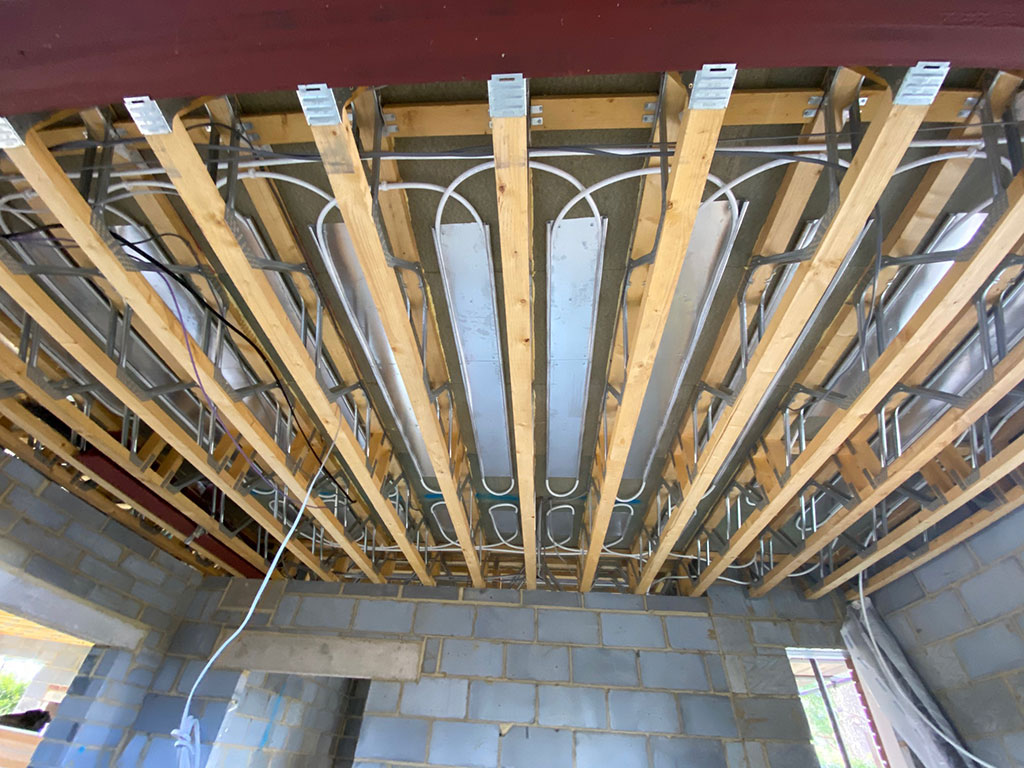
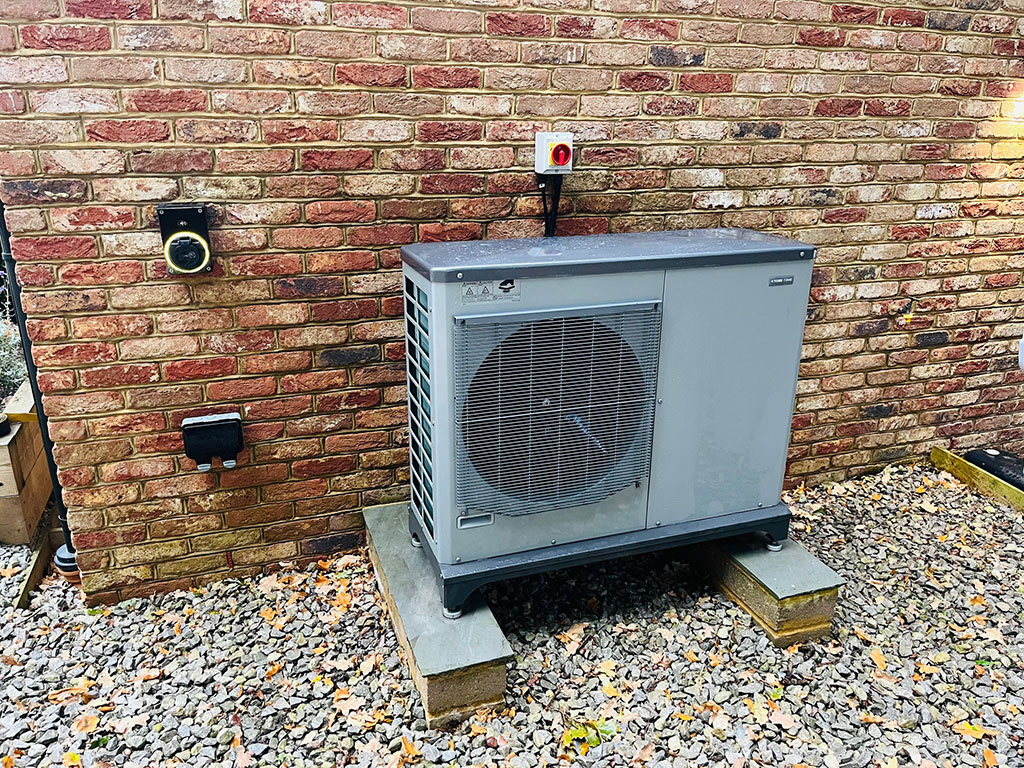
Banstead suits a heat pump better than most towns, and the reason is the shape of the houses. Nork ward alone recorded 1,987 detached homes at the 2021 census, and detached and semi-detached houses on generous interwar plots have side and rear space to stand an outdoor unit and room for sensible pipe runs. The postwar and modern infill is easier still. The real constraints here are finding somewhere for the hot water cylinder, emitter sizing in solid-walled 1930s rooms, and planning sensitivity if the property sits in the Park Road and Mint Road conservation area. We survey for all three before we recommend anything.
Landlords, flats and gas safety certificates
A landlord gas safety record runs on a twelve month cycle, and that date does not move because a tenant was out. We book ahead, give notice in writing and deal with the managing agent where there is one, so the new certificate is issued before the old one expires rather than after it. Where a tenant will not give access, it is the written trail of attempted visits that protects the landlord, and we keep it. Sheltered and retirement blocks are the easy end of this work: one booked visit, a scheme manager to let us in, and a whole run of appliances certificated in a morning instead of six separate trips.
Getting a van to your door
Access decides how quickly we can start. The interwar estates are the easy ones. Nork, Great Tattenhams and much of the Preston and Tattenham Corner area have wide roads, verges and driveways, so we can park close and carry a cylinder or a boiler straight in. The High Street is harder, with short kerbside space and high turnover, and the Horseshoe car park behind it is a small surface car park. The lanes on the Chipstead and Woodmansterne side, Holly Lane and parts of Woodmansterne Lane among them, have no pavement in places and nowhere safe to leave a van on a bend. Banstead town centre also gets congested, so we time jobs around the school and commuter peaks where we can.
Streets, villages and postcodes we work in around Banstead
We are called out right across Banstead and the villages around it, from the SM7 heart of the village out to the KT20 and KT18 estates, the CR5 edges towards Chipstead, and Belmont in SM2. These are the areas we see most, and what tends to be different about the houses in each of them.
- Banstead village centre (SM7) The High Street and the Horseshoe parade behind it, with the library and Civic Centre. Interwar houses alongside most of the area's purpose-built and sheltered flats.
- Nork (SM7) The main interwar estate, developed after the Nork estate was sold to developers in 1923. Mostly detached and semi-detached houses on roads such as Nork Way and Picquets Way.
- Park Road and Mint Road (SM7) The area on the eastern side of the town covered by the Park Road and Mint Road conservation area. Tighter frontages than the 1930s estates.
- Woodmansterne (SM7) Village east of Banstead, reached along Woodmansterne Lane. Note that Woodmansterne station is not in the village; it sits on the Coulsdon side in CR5.
- Burgh Heath (KT20) South of Banstead where the A217 meets the A240 Reigate Road, with the common alongside the housing. Mixed interwar and postwar stock with later infill.
- Tattenham Corner (KT18) West of the A217 near Epsom Downs racecourse, with its own station at the end of the Tattenham Corner line. Largely twentieth century estate housing.
- Great Tattenhams (KT18) The B2221 spine road and the estate around it. Wide suburban roads with off-street parking, mostly interwar and postwar houses.
- Preston (KT20) The Preston Lane, Preston Manor Road and Merland Rise area south-west of Banstead. Postwar and later estate housing with some newer redevelopment.
- Chipstead (CR5) Village south-east of Banstead with two conservation areas, Elmore Road and High Road. Larger detached houses and older cottages along Outwood Lane.
- Kingswood (KT20) South of Burgh Heath, with its own conservation area and its own station. Large detached houses on wooded plots, very different work to a Nork semi.
- Lower Kingswood (KT20) Smaller settlement further south towards Reigate. Postcodes at the edges run into RH2 and CR5, so give us the full postcode when you book.
- Tadworth (KT20) South-west of Banstead with a station on the Tattenham Corner line. The 2021 census recorded 4,034 households in the Lower Kingswood, Tadworth and Walton ward, 1,664 of them detached.
- Walton on the Hill (KT20) Conservation area village with period cottages and larger houses among twentieth century housing, so a wider spread of system types than the village itself.
- Belmont (SM2) Immediately north of Banstead Downs, across the boundary into the London Borough of Sutton, and the next station along the line.
Why homeowners in Banstead call WTS
- Family run since 2008, when William Smith started the business. Our head office is at Jayes Park Courtyard in Ockley, near Dorking.
- Gas Safe registered heating engineers, so a room-sealed appliance in a village centre flat, where the block fixes the flue route for you, still gets fitted and certificated properly.
- We answer emergencies 24 hours a day, seven days a week, which is what counts when a scaled combi locks out on a January night in a Nork semi.
- Twelve-month warranty on parts and workmanship, so an unvented cylinder fitted into a downstairs cupboard after a loft conversion stays covered through its first full heating season on chalk water.
- Banstead work runs from a single 1930s semi in Nork to a sheltered block off the High Street, and we cover households, landlords, construction companies and tier-one contractors.
Banstead plumbing and heating questions
Yes, Banstead is one of our main Surrey towns. Our head office is at Jayes Park Courtyard in Ockley, near Dorking, south-west of the village, so Banstead is well within our regular Surrey round. We cover SM7 across the village and Nork, plus the surrounding KT20, KT18, CR5 and SM2 addresses, including Woodmansterne, Burgh Heath, Chipstead, Kingswood, Tadworth, Walton on the Hill and Belmont.
Yes, Banstead has hard water and it does shorten the life of heating parts. SES Water says much of its supply comes from underground boreholes in limestone or chalk, which tends to be naturally hard. Most people notice it before an engineer does: a shower head that furs up within a year, a combi that runs cooler at the tap than it used to, a cylinder that is slower to recover between baths. Descaling a thermostatic shower valve once a year keeps it moving.
It usually depends on whether the airing cupboard is still there, but the number that settles it is your incoming mains flow rate. A combi that looks right on paper will disappoint on a weak main, so we measure the flow before we specify anything. If you do move to a combi, the loft tank and the open vent pipe come out, which frees the loft space but leaves brackets, a redundant cold feed and sometimes a patched ceiling to make good properly.
In most of Banstead, yes, and two things usually decide it. The first is noise, because the assessment is taken at the neighbouring boundary and a narrower interwar plot leaves less room between the unit and next door, so position and model both matter. The second is your existing radiators. A solid brick interwar house needs emitters that can still heat the room at heat pump flow temperatures, which are lower than a gas boiler's, so some will need upsizing.
For most addresses here, no, but the conservation areas are the exception. Reigate and Banstead Borough Council is the planning authority, and it states that planning permission is generally required for window replacement and other external changes in the borough's conservation areas, and that Article 4 Directions have been served on most conservation areas in the borough. If you are in the Park Road and Mint Road conservation area, or next to a listed building, talk to the council before anything goes on a visible elevation.
Because these houses drain outside rather than through an internal stack. On a typical semi, start at the rear gully by the kitchen wall: if it is standing full, the blockage is downstream of it and the stack itself is probably fine. A failed hopper head shows from the ground as a stain running down the brickwork below it, worse after rain. Once a run crosses the boundary and serves more than one house it is a shared drain, and the sewerage company is responsible for it rather than you.
Book a plumber or heating engineer in Banstead
If you need a plumber or a Gas Safe registered heating engineer in Banstead, call WTS on 01306 621 057. Tell us your postcode, whether the airing cupboard is still in place and roughly how old the boiler is, and we can usually talk through your options before anyone comes out. We cover the village and Nork, Great Tattenhams, Burgh Heath, Chipstead, Kingswood, Tadworth and Walton on the Hill, we answer emergencies around the clock, and every job carries a twelve-month warranty on parts and workmanship.
What we do in BansteadPlumbing in BansteadBoilers and heating in BansteadDrainage in BansteadHeat pumps in Banstead
Nearby areas we also coverPlumbers and heating engineers in CheamPlumbers and heating engineers in ReigatePlumbers and heating engineers in Epsom