Leatherhead sits on the River Mole where it leaves the chalk of the North Downs, roughly midway between Dorking and Epsom on the A24. WTS Plumbing and Heating has run from Jayes Park Courtyard at Ockley, just south of Dorking, since William Smith started the business in 2008, and the route north through Dorking and the Mole gap brings us into the town. It is one of the towns we work in most often.
We are Gas Safe registered heating engineers. In Leatherhead that means boiler repairs and replacements, servicing, gas safety certificates, central heating work, drainage, air source heat pumps, air conditioning and electrical work, with a 24/7 emergency response for burst pipes and dead boilers. The work splits fairly evenly between the purpose built flats in the town centre, the Edwardian and interwar houses on the roads north and east of the station, and the larger detached properties out at Givons Grove and Fetcham. Call the Surrey office on 01306 621 057.
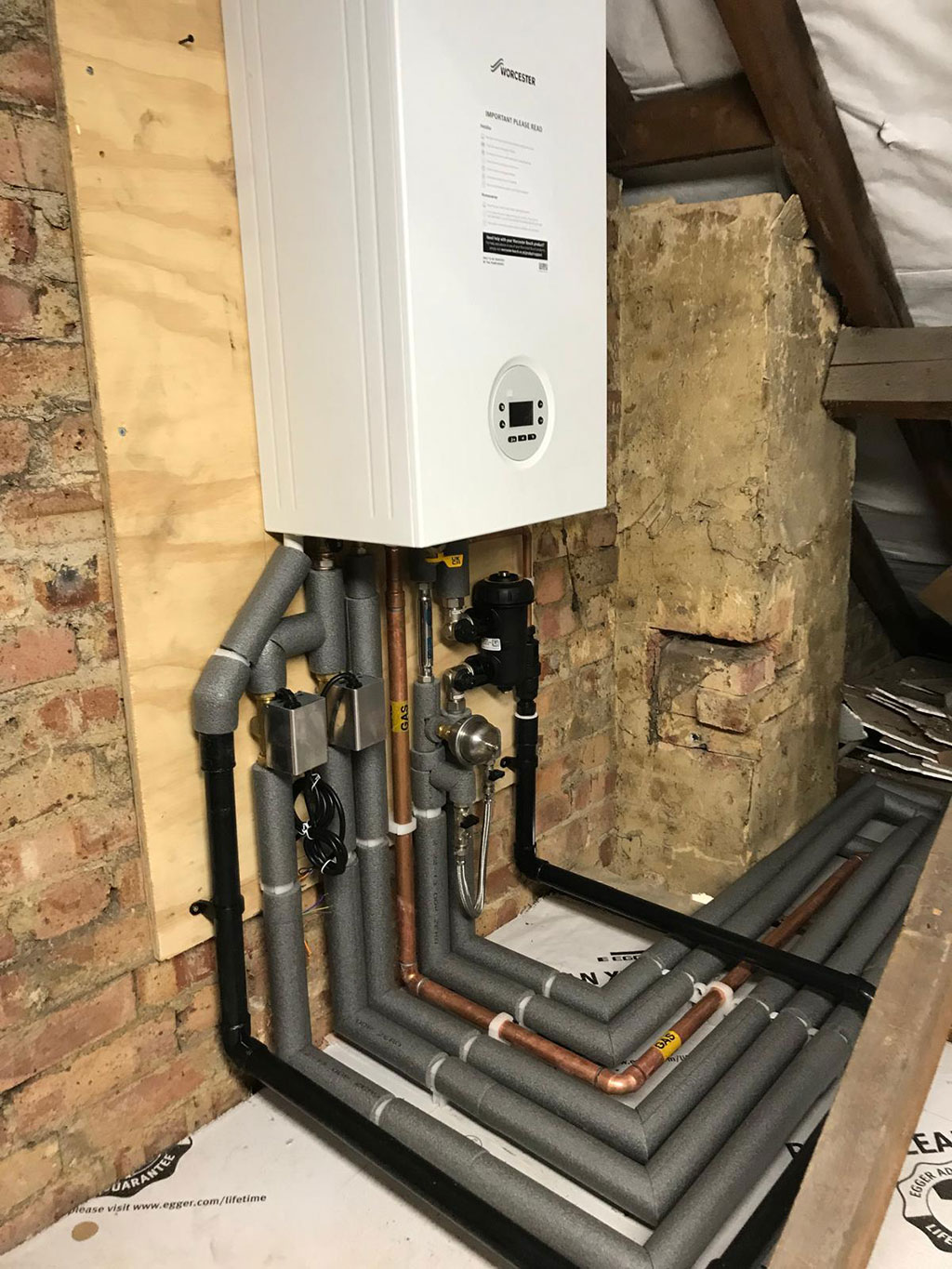
What Leatherhead homes are actually built like
The oldest part of the town is the Leatherhead Conservation Area, covering Church Street, High Street, Bridge Street, North Street and Gravel Hill. Timber framed, flint, brick and tile hung buildings sit along those streets, and there are dozens of listed entries in and around the centre, from Sweech House on Gravel Hill, a late 15th century farmhouse, to the Grade II* Church of St Mary and St Nicholas and the Running Horse. Here you get solid walls with no cavity, chimney stacks that need a flexible liner if a flue is used, and awkward first fix routes through timber and lath.
The railway reached the town in 1859, the Grade II listed station building opened in 1867, and housing followed. Fairfield, Highlands and Kingston Roads and Queen Anne's Gardens went up between 1900 and 1905, then Copthorne, Clinton, Reigate and Woodvill Roads, Kingston Avenue and St Nicholas Hill. Expect solid brick, chimney breasts and high ceilings that push radiator sizing up, along with gravity fed systems, a cold water cistern in the loft and a vented cylinder in the airing cupboard. Plenty of these houses have never had the pipework properly balanced since the day it went in.
The interwar layer is the classic Surrey bay fronted semi and detached house. Leatherhead Urban District Council built its first 59 council houses in Poplar Road in 1921 and 90 more in Kingston Road by 1925, the Givons Grove land was divided into housing plots in 1927, and the Yarm Court estate was sold for housing in 1935. Three bedrooms, cavity walls in the later ones, a loft that still holds tanks, and old back boiler or gravity legacies. After the war, new housing went up along Cleeve, Kingston and Copthorne Roads to replace bomb damaged property, and from there on you meet copper, microbore and single stack drainage.
The layer that sets Leatherhead apart from Fetcham or Ashtead is its flats. In the Census 2021 area named Leatherhead North, 1,449 of 3,453 households live in a purpose built block of flats, with a further 61 in converted non residential buildings and 48 in commercial buildings such as flats over shops. Fetcham, by contrast, records 1,711 detached houses and only 146 flats out of 3,181 households. On top of all of that, the town sits where the chalk of the North Downs dips beneath London Clay, so the mains water is hard and limescale is a routine finding in the systems we open.
What we do in Leatherhead
Boiler installation and replacement
Which boiler suits you depends on the building rather than the brochure. In a KT22 town centre flat the fit is decided by the block: whether a gas supply reaches your floor, and what the lease and the managing agent will allow. In a house with more than one bathroom and a second bath running at the same time, a system boiler and an unvented cylinder usually beat a combi. We settle that before quoting, not on the morning of the fit.
Boiler servicing and gas safety certificates in Leatherhead
Census 2021 puts 2,487 households in the Leatherhead North area on mains gas only and 2,234 in the Leatherhead South and Ashtead South area, so servicing is steady work here. The service turns up scale blocked plate heat exchangers in the KT22 flats, and in the older houses near the station it is often the flue run or the ventilation opening that fails rather than the appliance itself. We test, issue the paperwork, and tell you plainly if something should not stay in use.
Emergency plumber, 24/7
We answer emergency calls 24/7, and Leatherhead is one of the towns we cover from the Ockley office. If you can smell gas, ring the national gas emergency number on 0800 111 999 first, then call us. For burst pipes, a leak coming through a flat ceiling, a blocked soil stack or a boiler that has died overnight, call the Surrey office on 01306 621 057.
Central heating and radiators
The interwar semis around Poplar Road and Kingston Road often still run pipework laid out for a gravity system, with a cistern in the loft and a vented cylinder on the landing. Postwar houses on Cleeve Road tend to be microbore that silts up. We replace old cylinders and loft tanks with sealed systems, balance the circuit, fit new valves, and flush out the sludge that hard chalk water and decades of service leave behind.
Drainage and blocked drains
Older property in the centre and on the roads north of it still has external hopper heads and separate soil stacks, while postwar and later houses here use single stack drainage. That changes how a blockage behaves and where we get access to clear it. We unblock drains, run camera surveys and carry out repairs, including in flats, where one blockage upstairs quickly becomes somebody else's ceiling downstairs.
Air source heat pumps
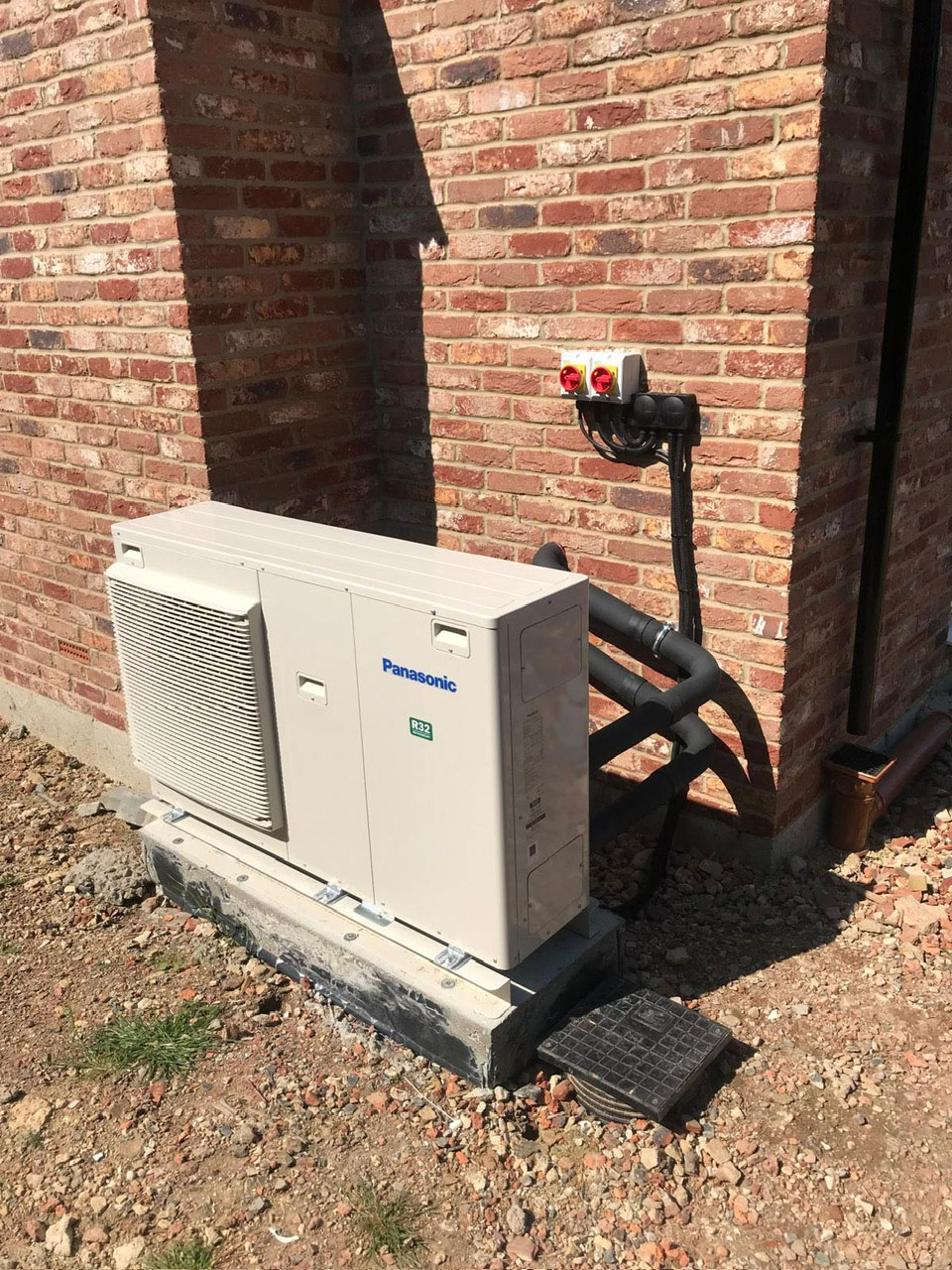
A heat pump runs at lower flow temperatures, so the high ceilinged Edwardian houses on Fairfield and Highlands Roads usually need several radiators resized before one will hold temperature. In a three bed interwar semi the harder question is where the cylinder goes once the loft tank comes out. On a Fetcham or Mickleham conservation frontage, siting and noise decide whether the outdoor unit is possible at all, and a converted flat over a High Street shop rarely has the external wall space for one.
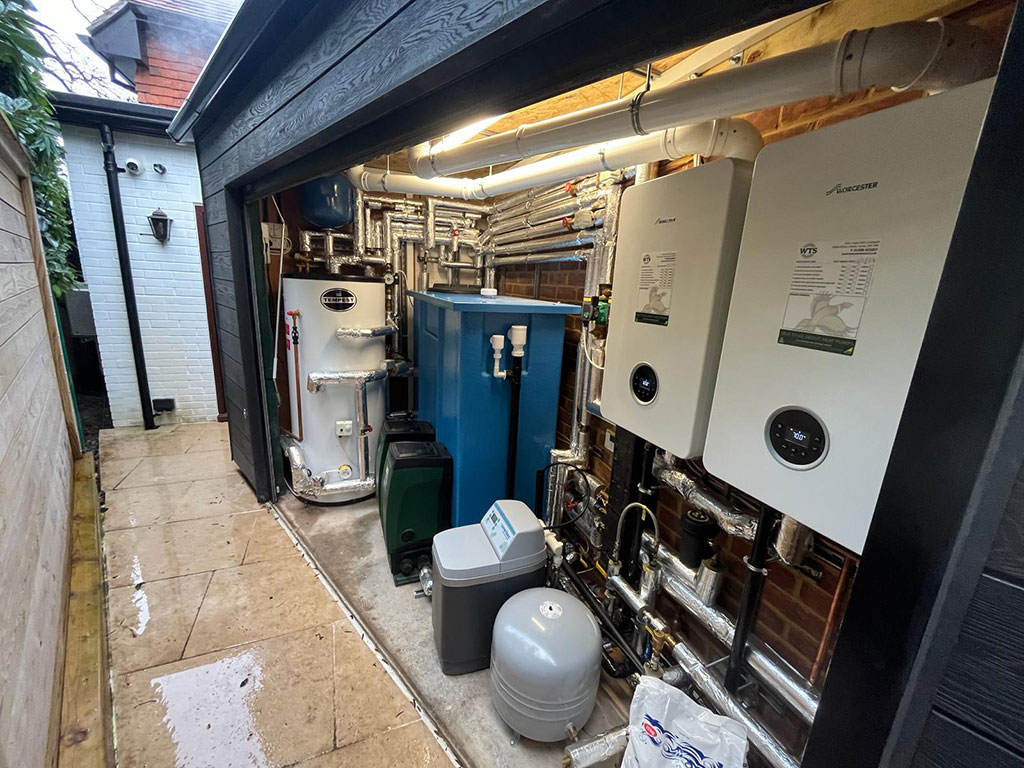
Getting a van to your door in the town centre
The High Street is pedestrianised, so town centre work means loading windows rather than parking on the frontage. Mole Valley District Council runs seven car parks in Leatherhead and they are not all usable by a plumber. The Swan Centre has 266 spaces but a 1.9 metre height restriction that rules out most work vans, and it is short stay with a four hour cap, which is not long enough for a boiler swap. Randalls Road, with 202 spaces and no height barrier, is the one we normally use for a van, and Station Road has 86. Church Road becomes a private parking facility between 6pm and 8am Monday to Saturday and all day Sunday. We sort this out before the day rather than circling the block with your boiler in the back.
Consent, listed buildings and who your council will be
If your property is listed, or inside the conservation area and covered by the Article 4 direction, anything visible from outside follows a sequence. We survey and set the flue or heat pump position first, then produce the elevation drawing and product details the council needs. Householder or listed building consent goes to Mole Valley District Council at Pippbrook in Dorking, in the owner's name, with the fee paid by the owner. The statutory period for a householder application is eight weeks, and listed building consent can run longer, so order nothing until the decision arrives. We produce the drawings and the appliance specification. The owner signs and submits the application. Mole Valley District Council is due to be replaced by a new East Surrey Council from 1 April 2027, so the authority name on your paperwork will change.
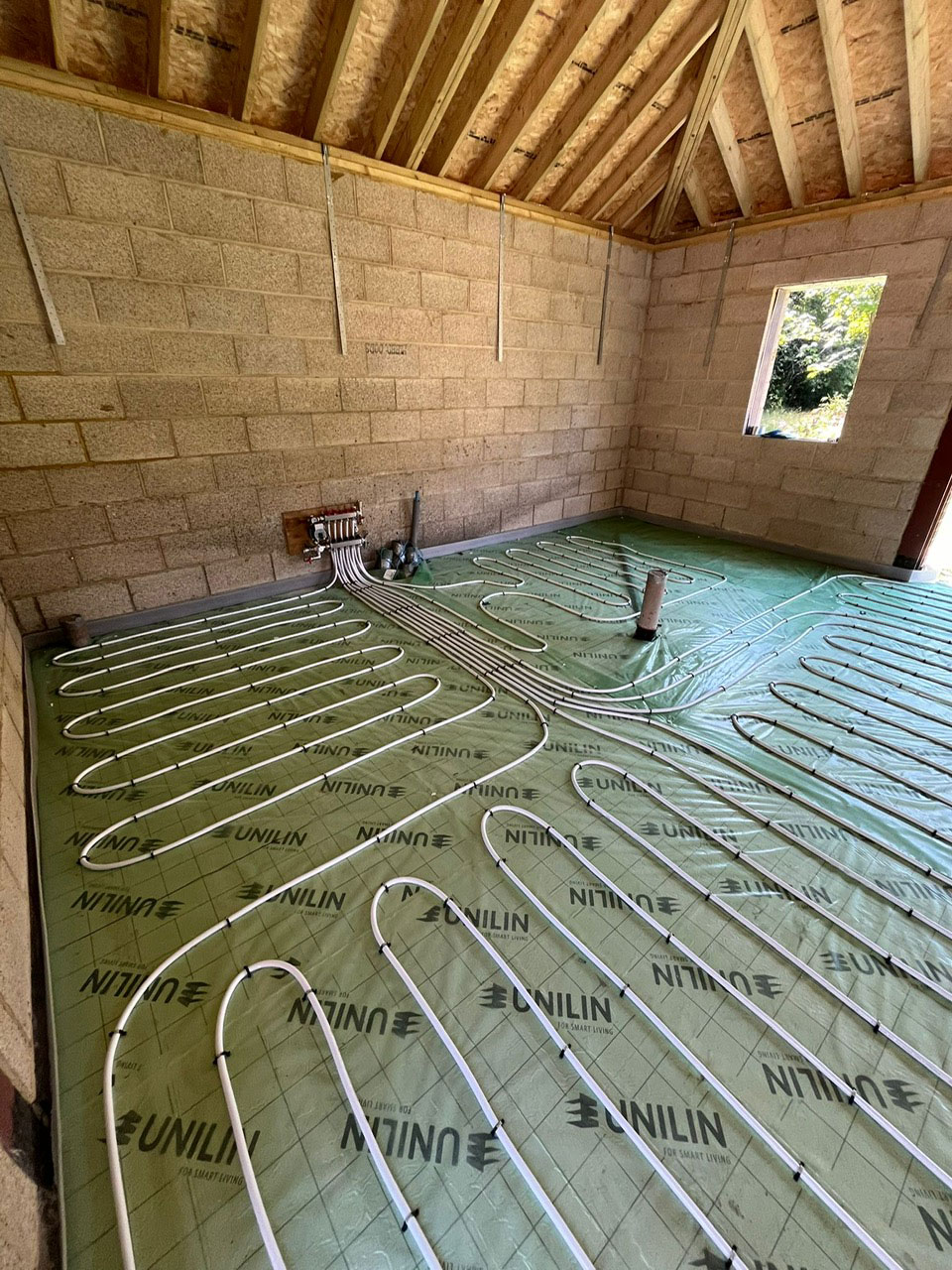
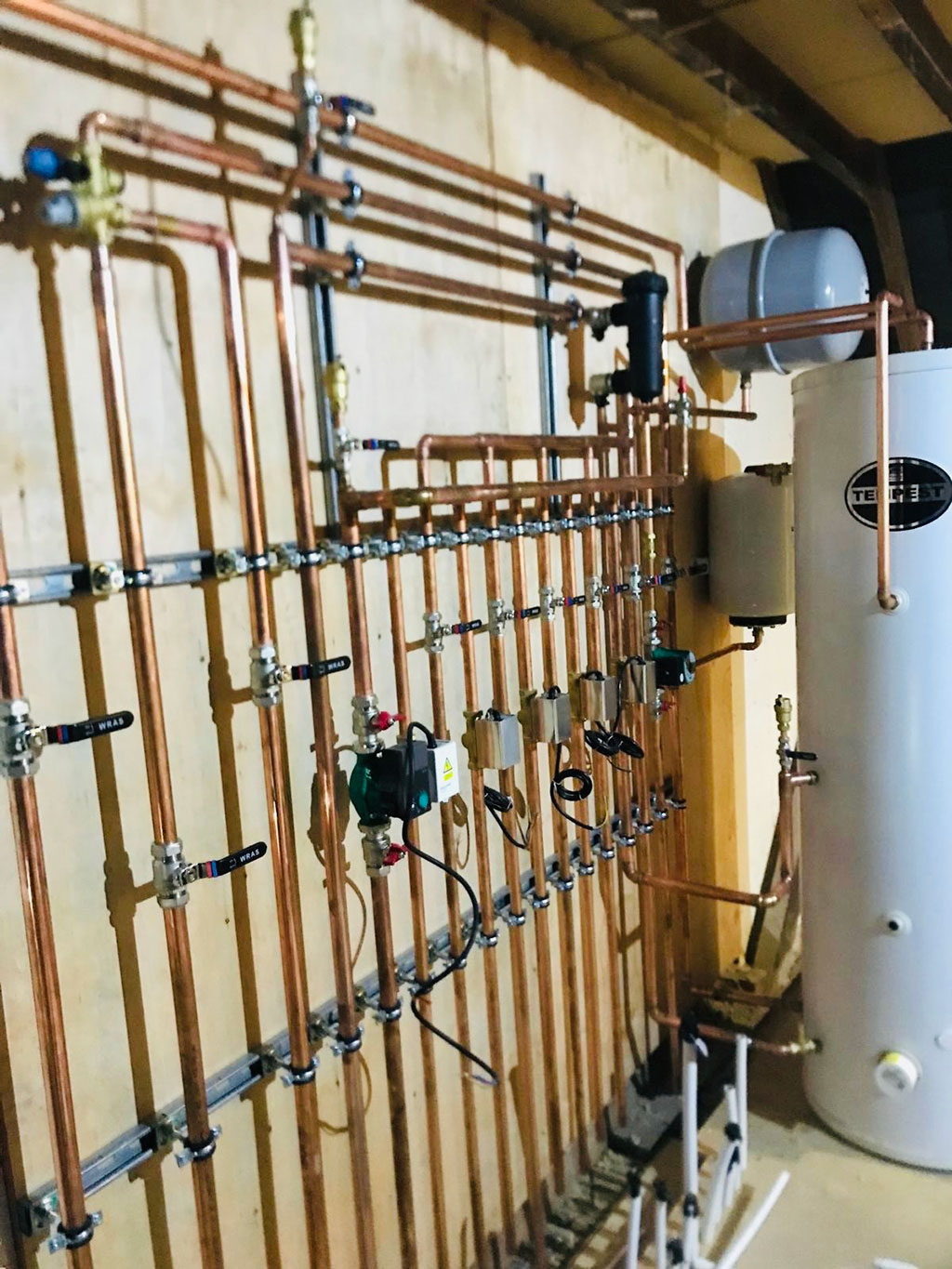
Flats with no gas, and hard water everywhere else
Census 2021 records 559 households in the Leatherhead North area heated by electricity only, against 210 in the Leatherhead South and Ashtead South area and 104 in Fetcham. That is the town centre flats and the converted office and commercial buildings showing up in the figures. If your flat has no gas supply, the question is not which combi to fit, it is whether high heat retention storage heaters, an electric boiler or a heat pump is the right answer. Hard water changes the sums as well. In a flat an in line scale reducer is a small line on a changeover quote and it protects the part that costs most to replace. In the detached houses at Givons Grove and Fetcham the exposure is the unvented cylinder, where scale reaches the expansion vessel and safety valves first.
Streets, villages and postcodes we work in around Leatherhead
Leatherhead is one of the main towns we cover north of our Ockley office, and we work across the Mole Valley villages around it as well as the KT22 addresses that sit in neighbouring boroughs. Worth knowing: a Leatherhead postal address does not always mean Mole Valley District Council is your planning authority, which matters as soon as consent is involved.
- Leatherhead town centre (KT22) The historic core and conservation area around Church Street, High Street, Bridge Street, North Street and Gravel Hill. Heavy in flats, flats over shops and listed property.
- Leatherhead Common (KT22) The northern end of the town, away from the historic core. Solid brick and early 20th century stock, so loft tanks, vented cylinders and gravity pipework are common.
- Givons Grove (KT22) Southern edge of Leatherhead, off the A24 towards Mickleham. The land was divided into housing plots in 1927, so largely interwar and later detached houses.
- Fetcham (KT22) Strongly detached with very few flats, and its own conservation area designated in 1984, west of Leatherhead across the River Mole.
- Oxshott (KT22) A Leatherhead post town address but inside Elmbridge Borough Council's area. Large detached houses, many on private roads, so van access needs planning.
- Ashtead (KT21) Large village north east of Leatherhead on the A24. Its population rose from 3,226 in 1921 to 9,336 in 1939, so interwar houses dominate.
- Great Bookham (KT23) Village west of Leatherhead in Mole Valley with its own conservation area. Bookham station links to Waterloo and Guildford.
- Little Bookham (KT23) Adjoins Great Bookham and also has a conservation area. More period and rural stock than its neighbour, so more solid walls and older pipework.
- Effingham (KT24) West of the Bookhams and inside Guildford Borough Council's area rather than Mole Valley, which changes where a planning enquiry goes.
- Effingham Junction (KT24) Built up around the station on the Guildford line. Mostly 20th century semis and detached houses, so most of our work here is replacement rather than conversion.
- Stoke d'Abernon (KT11) Village north west of Leatherhead in Elmbridge borough, on the Cobham and Stoke d'Abernon station line.
- Mickleham (RH5) Village on the A24 in the Mole gap, directly on our route between Ockley and Leatherhead. Period and estate cottages, and a conservation area.
- Westhumble (RH5) Small village below Box Hill served by Box Hill and Westhumble station. Rural and period stock, and the sort of place where off grid heating still turns up.
- Headley (KT18) Rural parish on the downs east of Leatherhead. Scattered detached and period housing, with large plots and long service runs in from the road.
Why homeowners in Leatherhead call WTS
- Family run since 2008, started by William Smith, and still run from the Surrey head office at Jayes Park Courtyard in Ockley near Dorking.
- Gas Safe registered, which matters in a town where a large share of the stock is let flats needing an annual gas safety certificate.
- A 12 month warranty on parts and workmanship, whether that is a cylinder swap at Givons Grove or a tap washer in a town centre flat.
- We answer emergency calls 24 hours a day, seven days a week, for burst pipes, dead boilers and blocked soil stacks across KT22, KT21 and KT23.
- We work on whole blocks as well as single homes, which is the job in a purpose built town centre block where one leak becomes three flats' problem.
Leatherhead plumbing and heating questions
Yes. Our head office is at Jayes Park Courtyard in Ockley, just south of Dorking, and the run north through Dorking and the Mole gap brings us into Leatherhead. We work across KT22, KT21, KT23 and the Mole Valley villages around them, and we also cover Oxshott, Effingham and Stoke d'Abernon, which carry Leatherhead area addresses but sit in other boroughs. Call 01306 621 057.
Sometimes, but it turns on three things rather than the boiler itself. First, whether the block has a gas riser at all, because a large share of the town centre stock is heated by electricity only. Second, whether a flue can be routed through communal structure. Third, whether the freeholder will consent. We check all three before quoting, and if the answer is no, we will talk you through electric boilers, storage heaters and heat pumps instead.
Yes, the water is hard, because Leatherhead sits on the chalk of the North Downs where the River Mole leaves the hills. Mains water is supplied by SES Water, and you can look your own postcode up on their site for the hardness figure in your supply zone. Limescale builds up in plate heat exchangers, immersion elements and shower valves, so a filter, the right inhibitor and a proper system flush are worth paying for on any boiler change.
You might, if you are inside the conservation area or on a listed building. Parts of the conservation area are covered by an Article 4 direction, which can remove permitted development rights. The direction covers parts of the area rather than all of it, so the only sensible answer is to check your own address with Mole Valley District Council before you order anything. Anything that changes the external appearance is the part to ask about.
Yes. We check every gas appliance and its flue, test for gas tightness at the meter, check ventilation and combustion, and issue a certificate that lists each appliance with its result. You get a copy for your records and the tenant gets one within 28 days. If an appliance fails, it is classified, and where it is unsafe it is disconnected with your permission and recorded on the certificate, so the paperwork shows exactly what needs putting right.
Yes. We work on oil and LPG heating as well as mains gas, although around Leatherhead it comes up rarely. Census 2021 records only 13 households on oil in the Leatherhead South and Ashtead South area and 26 in Fetcham, so this is a rural question in parishes such as Headley, Westhumble and the lanes towards Ranmore. On an oil heated property we can still do the wet system: cylinders, radiators, pipework, controls and drainage.
Book a plumber or heating engineer in Leatherhead
If you need a plumber or heating engineer in Leatherhead, Fetcham, Ashtead or the Bookhams, the Surrey office at Ockley covers all of these. Tell us what the property is, whether that is a flat in the town centre, an Edwardian house near the station or a detached place at Givons Grove, and we will tell you what is realistic before anyone books a day off work. Gas Safe registered heating engineers, 24/7 for emergencies, and 12 months on parts and workmanship. Call 01306 621 057 or email info@wtsmechanical.co.uk.
What we do in LeatherheadPlumbing in LeatherheadBoilers and heating in LeatherheadDrainage in LeatherheadHeat pumps in Leatherhead
Nearby areas we also coverPlumbers and heating engineers in AshteadPlumbers and heating engineers in DorkingPlumbers and heating engineers in Epsom