WTS Plumbing and Heating also work in Central London. Our head office is at Jayes Park Courtyard in Ockley near Dorking, with a second office in Fulham, and visits here are available on request rather than guaranteed. A van day inside the charging zone has to absorb the daily charge, a bay suspension and often a building's permit to work before anyone lifts a spanner, which is why larger mechanical and commercial work is easier for us to programme than a same day domestic call out. Tell us the address, the building type and the timescale when you first get in touch and we will give you a straight answer.
Central London is not one town and it has no single council. The plumbing is shaped by that. Eight boroughs and the City of London Corporation between them set the planning rules, the streets are covered by controlled parking zones, and almost every home is a flat. Most of what we are asked for is flat and block work rather than whole houses: heat interface units in communal schemes, boiler swaps where the flue route is the hard part, boosted cold water in tall terraces, and mechanical packages for contractors. If you need a faster domestic response, our Dorking, Reigate, Leatherhead, Ashtead and Epsom work is closer to home.
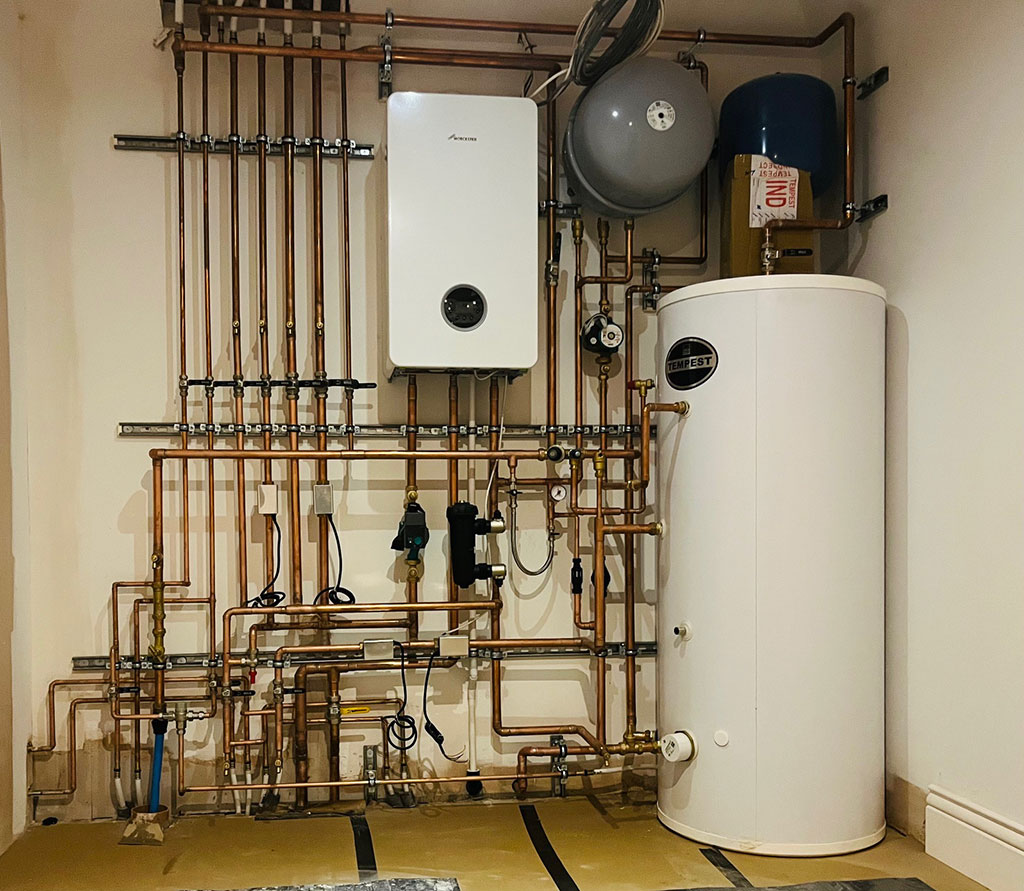
The buildings behind the plumbing in Central London
Central London is a flat market rather than a house market, and that one fact drives most of the plumbing and heating work. Valuation Office Agency council tax figures at 31 March 2025 put flats and maisonettes at 98.4 per cent of all dwellings in the City of London, 89.2 per cent in Westminster, 88.8 per cent in Tower Hamlets, 86.9 per cent in Camden, 83.4 per cent in Islington, 81.9 per cent in Hackney, 81.8 per cent in Kensington and Chelsea, 77.7 per cent in Southwark and 76.3 per cent in Lambeth. Detached houses barely register anywhere in these boroughs.
The age profile splits hard between very old and very new. The same dataset records dwellings built before 1900 at 62.6 per cent in Kensington and Chelsea, 44.7 per cent in Camden, 44.1 per cent in Westminster, 36.7 per cent in Lambeth, 35.9 per cent in Islington, 29.4 per cent in Hackney and 22.2 per cent in Southwark. On the ground that means Georgian and early Victorian terraces in Mayfair, Marylebone, Belgravia, Pimlico, Bloomsbury, Islington and Clerkenwell, and mid to late Victorian mansion blocks across Bayswater, Paddington, Kennington and Hackney. Most were built as single houses and later cut into flats, so one building can stack several separate systems around shared risers and boxed in pipework.
Two newer layers sit on top of that. The City of London's stock is dominated by the postwar rebuild, with the Barbican and Golden Lane estates behind much of it, and 32.8 per cent of its dwellings date from 1965 to 1972. Elsewhere 16.2 per cent of Hackney dwellings, 13.4 per cent in Southwark and 11.5 per cent in Lambeth went up between 1945 and 1964. Newer still, 31.3 per cent of Tower Hamlets dwellings and 18.2 per cent in the City of London have been built since 2009, along with 17.9 per cent in Southwark, 15.8 per cent in Hackney and 11.4 per cent in Islington. Those two layers are where electric heating and communal heat networks concentrate.
Three generations of pipework meet on one first fix in a converted terrace here: old iron and lead on the incoming side, imperial copper from the conversion years, and 15mm and 22mm copper from the last refit, so adaptors and a plan for isolation matter as much as the new appliance. Anything built before 1970 may still have a lead supply pipe, and Thames Water states you are unlikely to have lead if the property went up after that. Lath and plaster ceilings slow a first fix down, and in a house cut into flats a shared stack means a blockage on one floor surfaces on another. Vaults and coal holes under the pavement carry the drainage runs.
What we do in Central London
Boiler installation and repair in converted flats
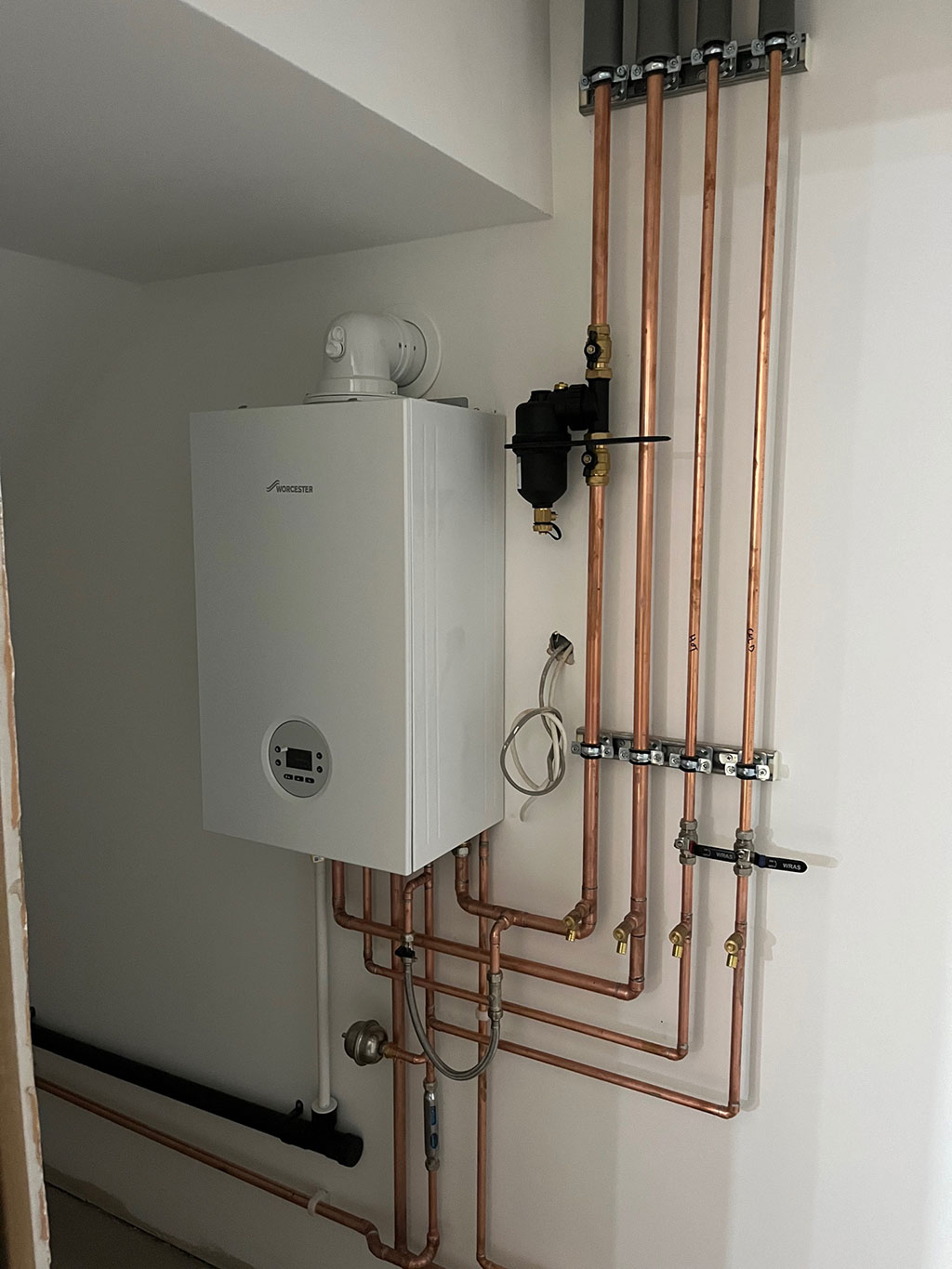
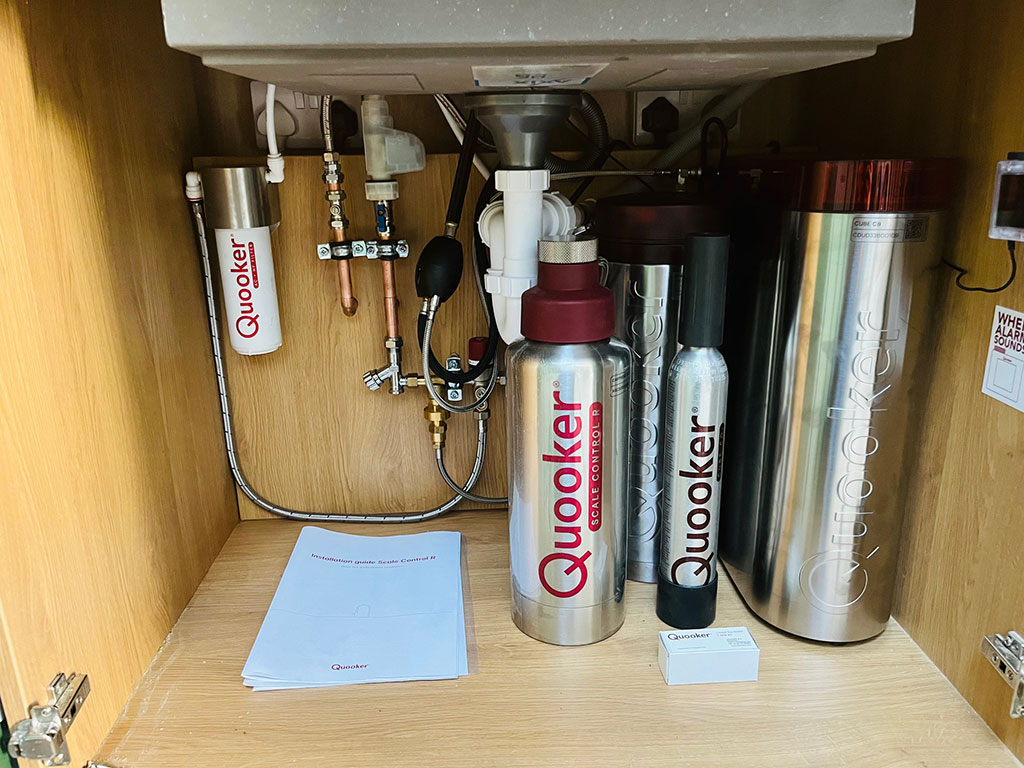
Most boilers here sit in a converted period flat with no easy flue route. We look at the original chimney stack as a lined option, at ceiling voids where inspection hatches are needed, and at terminals into a lightwell or mews where plume management keeps discharge away from neighbouring windows. Thames Water states all the water in its region is hard, so scale reduction is worth pricing in on a new installation. Gas Safe registered engineers, with a 12 month warranty on parts and workmanship.
Heat interface units and communal heating
Heat networks are ordinary here and rare almost everywhere else. Census 2021 figures put households on a heat network only at 18.6 per cent in the City of London, 10.6 per cent in Southwark, 9.4 per cent in Camden, 8.5 per cent in Westminster and 8.3 per cent in Tower Hamlets. Westminster City Council's Pimlico District Heating Undertaking serves Churchill Gardens. We work on heat interface units, plate heat exchangers, communal distribution and pressurisation sets rather than swapping an individual boiler.
Boosted cold water and unvented cylinders
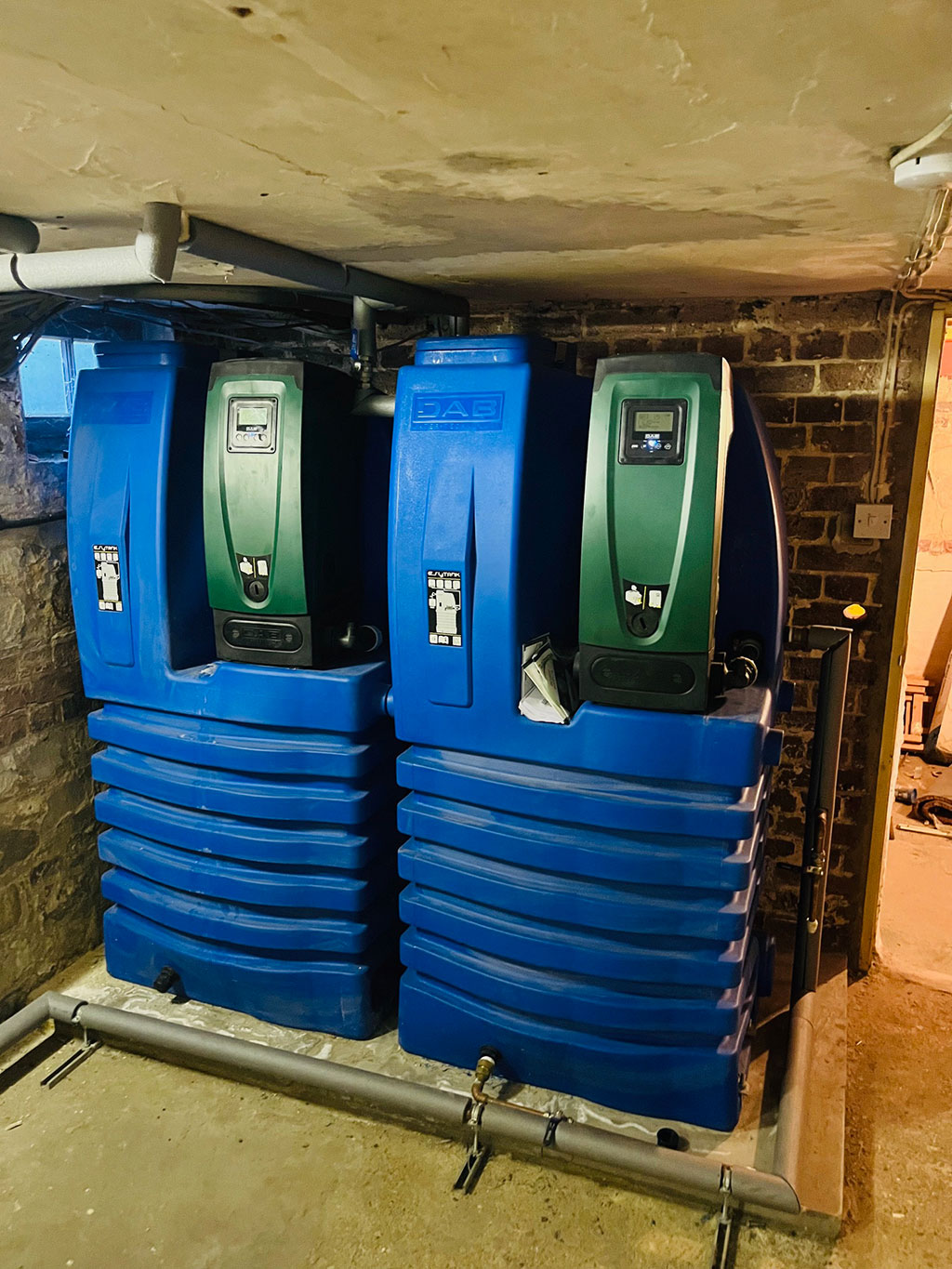
A survey here starts with numbers: static and dynamic pressure at the flat, flow at the kitchen tap, and the height the main has to climb. Then it is a question of what the block allows. Some are on communal roof storage, some on a landlord's booster set that caps what any one flat can draw, and some have an incoming main that cannot be upsized. An accumulator suits that last case, and a roof tank decides whether a flat can go unvented at all.
Drainage, pumped waste and surveys
Victorian buildings here usually drain into an external cast iron stack in a rear lightwell or vault, while postwar blocks are single stack. Lower ground floors across the West End and the City sit below the sewer invert, so pumped drainage and sewage lifting stations are common, and so are surcharge and backflow problems on a combined system. We unblock, repair and run camera surveys where the run is buried, shared between flats or hidden behind later boxing.
Commercial and mechanical installation in Central London
The geography that makes a domestic call out awkward here is what makes it a mechanical market. We take on office fit outs, riser replacements, plant room upgrades, LTHW and chilled water distribution, booster sets, water treatment, commissioning and validation, working for construction companies and tier one contractors. Projects have included Moonbug at Camden Lock, Cannon Street and Moor House Level 9. Design, modelling and reporting sit alongside the installation.
Gas safety certificates for Central London landlords
This is largely a rented flat market, so landlord gas safety records have to be done whatever the access is like. We book around building management, permit to work systems and escorted riser access. We will also flag what turns up in converted flats: flues running through a ceiling void with no inspection hatch, appliances sealed in by later joinery, and ventilation lost when a kitchen was reconfigured.
Charges, parking and how we get to the door
TfL sets the Congestion Charge at £18 per day paid on the day or in advance, or £21 if paid by midnight of the third day after travel, and it runs Monday to Friday 07:00 to 18:00 and 12:00 to 18:00 at weekends and on bank holidays. TfL's Ultra Low Emission Zone covers every London borough at £12.50 a day for vehicles that do not comply. Every central borough runs controlled parking, so bay suspensions and dispensations are booked in advance with the borough that owns the street. All of that sits in the price of a visit before work starts, which is why we would rather quote it openly than bury it. Elizabeth line stations at Farringdon, Bond Street and Liverpool Street do at least mean a survey or a commissioning visit can be made without a van.
Renewables and low carbon heat in a period flat
Most of our low carbon work here is on the communal side rather than in an individual flat. That means ambient loop and communal schemes in new build blocks, plant room refurbishments in postwar estates of the Barbican era where the pipework is at the end of its life, and work on the heat interface unit side once a network is running: replacing units, rebalancing them, and sorting out the poor domestic hot water that a badly commissioned unit gives a flat. Where an individual air source unit is being considered, a monobloc on a lightwell or rear elevation needs the freeholder's consent as well as the borough's, and in a leasehold block that is usually the harder of the two to get.
Flues, basements and the borough that owns the street
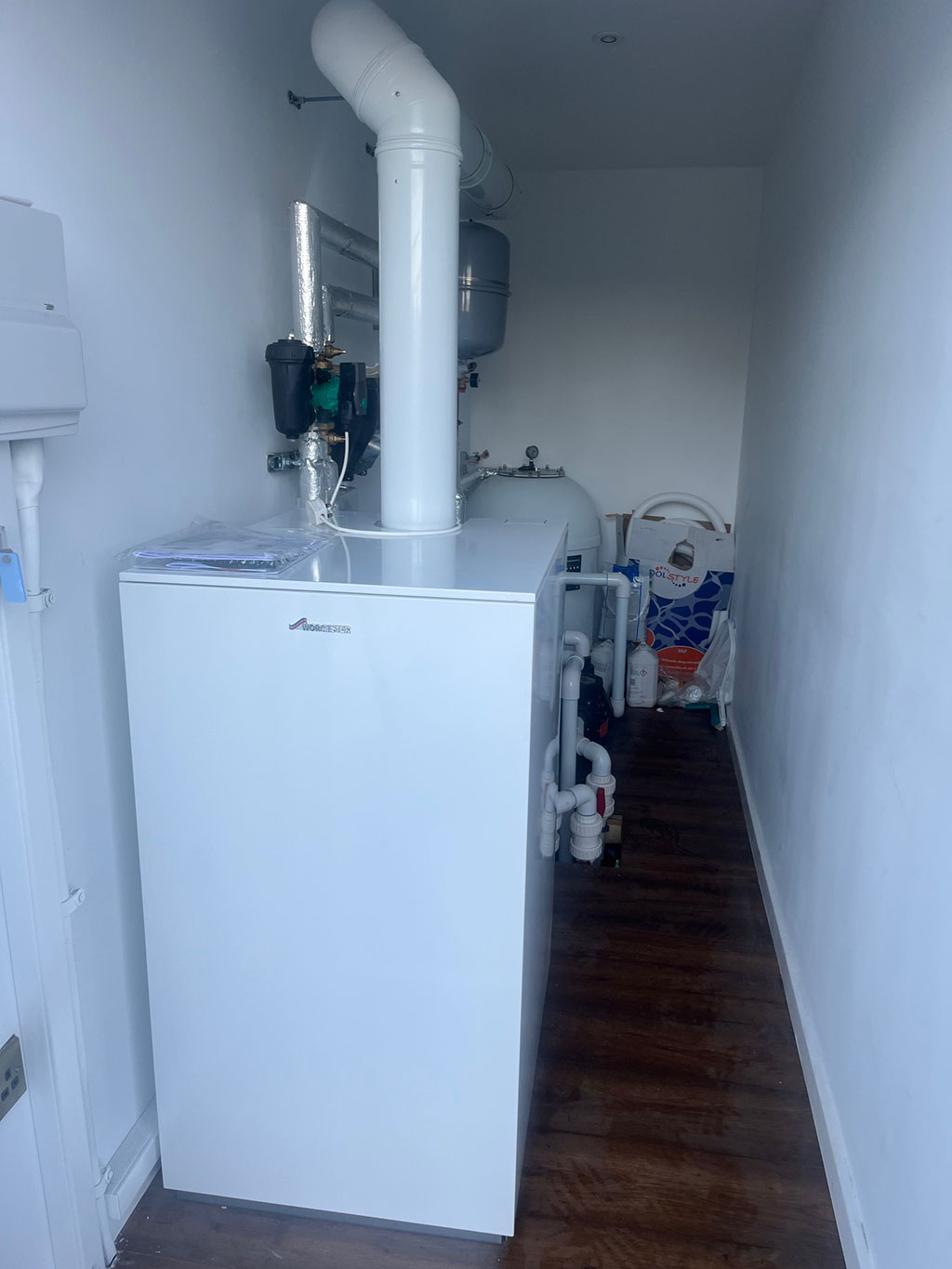
There is no single planning authority here. The City of London Corporation, Westminster, Camden, Islington, Kensington and Chelsea, Southwark, Lambeth, Tower Hamlets and Hackney each run their own, and the answer genuinely differs from one side of a street to the other. Westminster states it has 56 conservation areas, Southwark 48, Kensington and Chelsea 38 covering nearly three quarters of the borough, and Hackney 35. Westminster also holds a city wide Article 4 direction on basement development. An external flue terminal, a new soil pipe or a basement dig has to be checked with the specific borough for the specific address.
Streets, districts and postcodes we work in across Central London
Central London has no agreed boundary, so treat this as the districts we are asked about most. Postcode districts here are subdivided finely, so check the full outward code before anything is quoted. EC1 is a good example: most of it is Islington, but the southern edge is the City of London. The borough, not the postcode, decides the planning answer.
- Soho (W1D) Westminster. Dense 18th and 19th century terraces sitting over ground floor bars and kitchens, so much of the work is commercial catering and small plant in tight spaces.
- Mayfair (W1J) Westminster. Georgian terraces, converted mansion houses and narrow mews behind them. A high proportion of listed buildings, so pipe routes and flue positions are often a consent question.
- Marylebone (W1G) Westminster. Estate built Georgian and early Victorian terraces plus later mansion blocks. The Harley Street medical district brings a steady stream of commercial fit out and compliance work.
- Bloomsbury (WC1B) Camden. Georgian squares and terraces, much of it in university and institutional use, with long vertical runs and shared risers in buildings converted from houses.
- Covent Garden and the Strand (WC2E) Westminster, with the Seven Dials part in Camden. Heavy hospitality use, restricted vehicle access and almost no on street loading, so timings have to be agreed in advance.
- Clerkenwell and Farringdon (EC1M) Mostly Islington, with the southern edge in the City of London. Former workshop and warehouse buildings converted to flats and offices, with deep basements and exposed services.
- Barbican and Golden Lane (EC1Y and EC2Y) City of London. Postwar concrete estates, so the residential work here is communal risers and estate plant rather than individual period conversions. The Barbican is listed Grade II.
- Leadenhall and Lime Street (EC3V) City of London. Almost entirely commercial, so the work is office building services rather than domestic plumbing, across a very dense set of conservation areas.
- Pimlico (SW1V) Westminster. Stucco fronted Victorian terraces alongside Churchill Gardens, which is served by the Pimlico District Heating Undertaking, so heat interface units matter more than individual boilers.
- Belgravia and Knightsbridge (SW1X) Westminster, with the western part of Knightsbridge in Kensington and Chelsea. Grand stucco terraces, garden squares and mews, and Westminster's own Article 4 direction on basement development.
- Bankside and Borough (SE1) Southwark. Warehouse conversions along the river and small terraces behind them, sitting against newer residential towers with communal plant and heat networks.
- Waterloo and the South Bank (SE1) Lambeth. Small early Victorian terraces sit directly against large commercial and cultural buildings, so domestic and mechanical work can be a few minutes apart.
- Shoreditch and Hoxton (EC2A and N1) Shoreditch runs across Hackney, Islington and the City of London, with Hoxton in Hackney. Converted industrial buildings with a lot of exposed and retrofitted services.
- Whitechapel and Spitalfields (E1) Tower Hamlets, with Aldgate on the City of London side. Georgian streets of small houses run straight into large postwar estates and newer blocks with communal risers.
Why homeowners in Central London call WTS
- Family run since 2008, started by William Smith, with a head office at Jayes Park Courtyard in Ockley and a second office in Fulham.
- Gas Safe registered heating engineers, and a 12 month warranty on parts and workmanship for the work we carry out.
- We work for private households, landlords, construction companies and tier one contractors, so a riser replacement is as familiar to us as a leaking flat.
- A survey here reads the building first: pressure and flow at the flat, what the block's plant already does, and who owns the wall a flue would pass through.
- We train apprentices, offer work experience and sponsor grassroots football teams, and we will say plainly when a job is not one we can get to.
Central London plumbing and heating questions
We also work in Central London, but coverage is on request rather than guaranteed and depends on engineer availability. Larger mechanical and commercial work is easier for us to programme in than a same day domestic call out. Our head office is in Ockley near Dorking, and the Surrey towns around it, including Dorking, Reigate, Leatherhead, Ashtead and Epsom, are where our residential work is concentrated. Call with the address and the job and we will tell you honestly.
Usually because the incoming main cannot deliver enough pressure and flow to the top of a five or six storey building. A combi that works perfectly on the ground floor of the same terrace can struggle two or three floors up. The fixes are a boosted cold water set, an accumulator, or a system boiler with an unvented cylinder where there is space for one. Many older blocks still feed the upper flats by gravity from communal storage in the roof.
A heat interface unit is the box in your flat that takes heat from a communal network and makes your hot water and heating, instead of a boiler. Heat networks are common in Central London, with Census 2021 recording 18.6 per cent of City of London households and 9.4 per cent in Camden on a heat network only. Faults inside the flat are usually the leaseholder's, while the plant room and communal distribution sit with the landlord or managing agent.
Often not, and the reasons are space and consent rather than the technology. You need somewhere for a hot water cylinder, which most converted flats do not have, and a consented position for the outdoor unit, which is difficult on a listed frontage or in a conservation area. The realistic low carbon options here are new build, communal and ambient loop schemes, and larger refurbishments where a plant room already exists.
Very possibly, and it depends on the exact address. Conservation area status is the obvious trigger, but listed building consent reaches inside the building too, so a boiler position, a pipe chase cut through a panelled wall or a new flue penetration can all be caught. Basements are handled differently from one borough to the next, so a scheme that is straightforward in one is a full application in another. Ask the borough for that specific address, in writing, before anything is ordered.
It might. Thames Water states that a property is unlikely to have lead pipes if it was built after 1970, and a large share of the stock here predates that, with 44.1 per cent of Westminster dwellings built before 1900. Where sampling shows lead, Thames Water replaces only its own communications pipe, and the private supply pipe and internal plumbing stay with the owner. We can check what your incoming main is made of.
Book a plumber or heating engineer in Central London
If you have a job in Central London, tell us the address, the building and what has gone wrong, and we will say straight away whether we can get an engineer to it. Visits here are available on request and subject to engineer availability, and larger mechanical and commercial work is what we can usually programme in. Call the London office on 02080 874 309, or the Ockley head office on 01306 621 057, or email info@wtsmechanical.co.uk. If the property is in Surrey, Dorking, Reigate, Leatherhead and Ashtead are all worked from the head office.
What we do in Central LondonPlumbing in Central LondonBoilers and heating in Central LondonDrainage in Central LondonHeat pumps in Central London
Nearby areas we also coverPlumbers and heating engineers in FulhamPlumbers and heating engineers in PutneyPlumbers and heating engineers in Wimbledon