WTS Plumbing & Heating Ltd has been working across this rural corner of Surrey since 2008. Our head office sits at Jayes Park Courtyard in Ockley, south of Dorking, on the same network of Wealden B-roads that serves Cranleigh, so the village and the lanes around it are ordinary daily work for us rather than an outlying postcode. Cranleigh is often described as one of the largest villages in England, and it certainly behaves like a small town: a long linear High Street, decades of estate building behind it, and a wide ring of smaller villages that look to it for services.
A 1500s solid-wall cottage by the Common and a 2020s sealed underfloor house at Leighwood Fields sit under a mile apart, and the first move on each is completely different. Between the two are 1960s Parsonage Road semis on open-vented systems with a gravity-fed tank in the loft, and interwar detached houses with long runs up to a first floor bathroom. We handle plumbing, boilers, central heating, gas safety certificates, drainage and air source heat pumps for households and landlords across GU6 and the GU5, GU8, RH12 and RH14 villages nearby. Call 01306 621 057.
What Cranleigh homes are actually built like
Roughly 45 per cent of the village is detached, at a density of only around 15 to 20 dwellings per hectare, which is why stored hot water rather than a combi is still the norm here. The 2021 Census recorded 5,369 households in the parish, and across the two Cranleigh wards the figures give roughly 2,188 detached, 1,231 semi-detached and 629 terraced homes alongside 708 purpose-built flats, out of 4,910 households in total. Only about 13 per cent of the stock is terraced. In plumbing terms that means long pipe runs, more bathrooms per house and bigger radiator loads.
The oldest layer is small but demanding. Around the Common, Horseshoe Lane, Guildford Road and Church Lane there are houses running from roughly the 1500s to the 1800s, built in reddish-brown Wealden clay brick with tile hanging, plain clay roof tiles from the local maker Swallow, off-white render, leaded lights and heavy chimney stacks. These are solid-wall, chimney-led buildings. Expect a cold tank squeezed into a tight loft, a cylinder in the airing cupboard, imperial pipe joined to later copper, restricted routes for a modern flue, and chimneys that need lining where an open-flue or solid fuel appliance is staying put.
The railway years, 1865 to 1965, added the layer most people picture as the old village: Victorian cottages on Elmbridge Road and Alfold Road, the 1890s Bookhurst Cottages built for the Swallow tile works, and generous detached villas of around 1890 to the early 1900s on Avenue Road, Grove Road, New Park Road and Bridge Road. Between the wars came detached houses in large gardens on Woodland Avenue, The Ridgeway, The Copse and stretches of Horsham Road. High ceilings, thick walls and long runs up to a first floor bathroom make these classic system boiler and cylinder houses. Fitting a combi to one is usually a false economy.
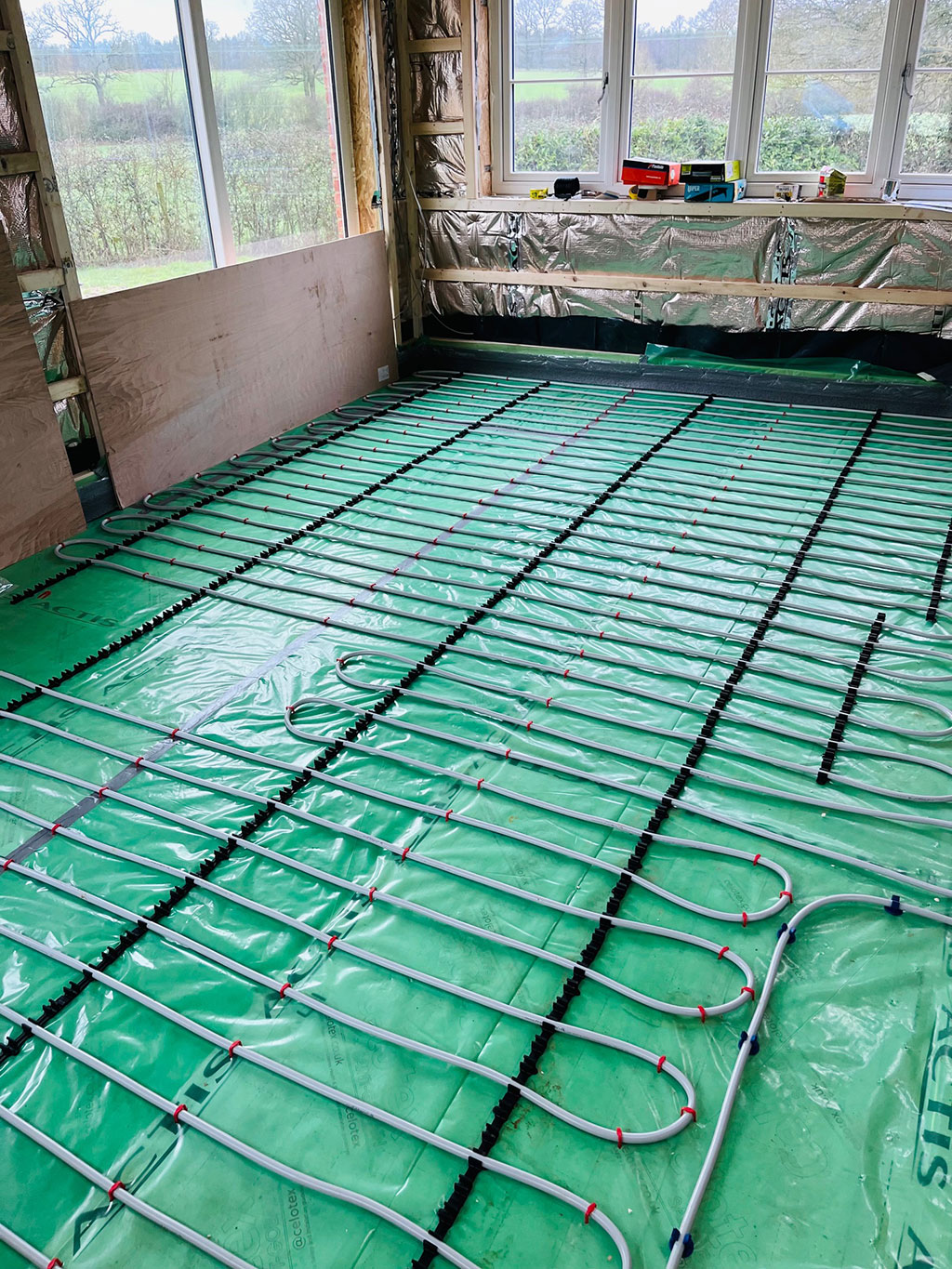
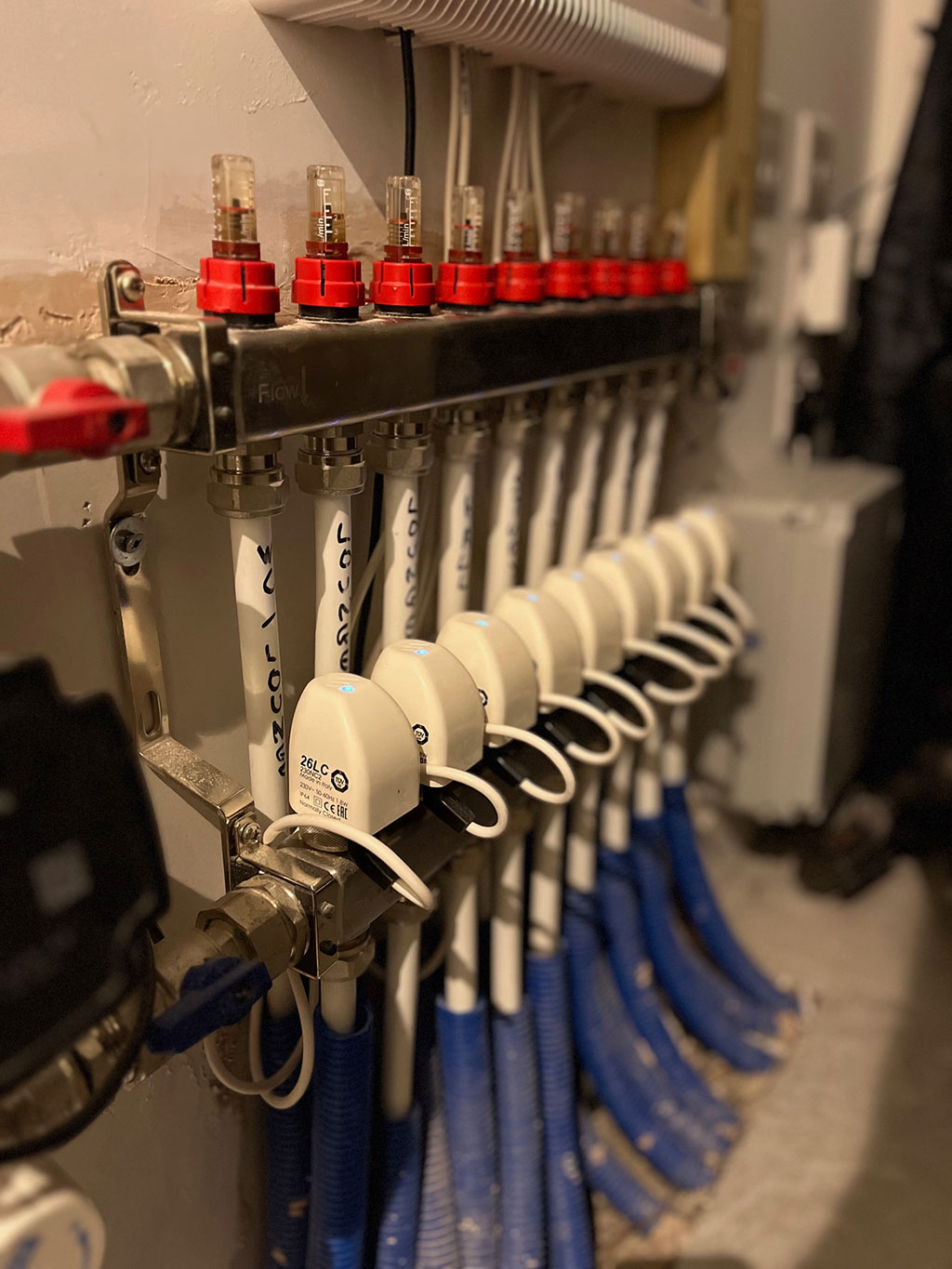
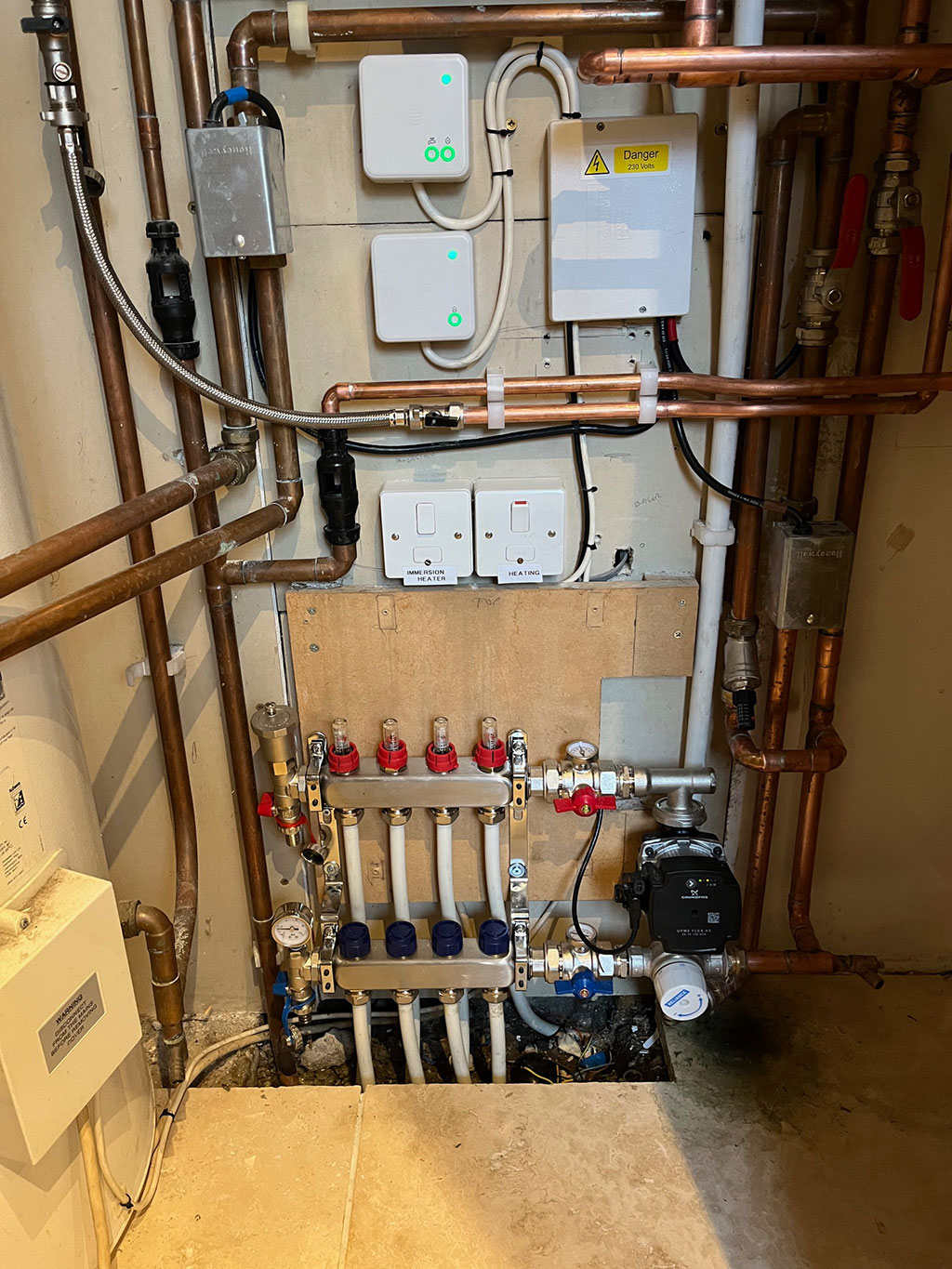
Then come the estates that give the village its bulk, and the new edges. Parsonage Road holds around 383 dwellings from the 1950s and 60s, Park Mead with Bloxham Road, Sapte Close and Sylvaways Close around 344, and the 1970s brought Summerlands, Rydelands, Acres Platt, Copse Edge and the west side of Barhatch Road, roughly 536 more, plus Hitherwood, Littlewood and the Hailey Place maisonettes. Bungalows are everywhere in those streets, which means loft tanks and awkward cylinder cupboards. Newer housing at Sarus Place, Amlets Park, Longhurst Park and Leighwood Fields is sealed-system, with plastic barrier pipework, manifolds and underfloor heating. Since 2015 permission has been granted for over 1,700 new homes in the parish.
What we do in Cranleigh
Boiler repair and replacement
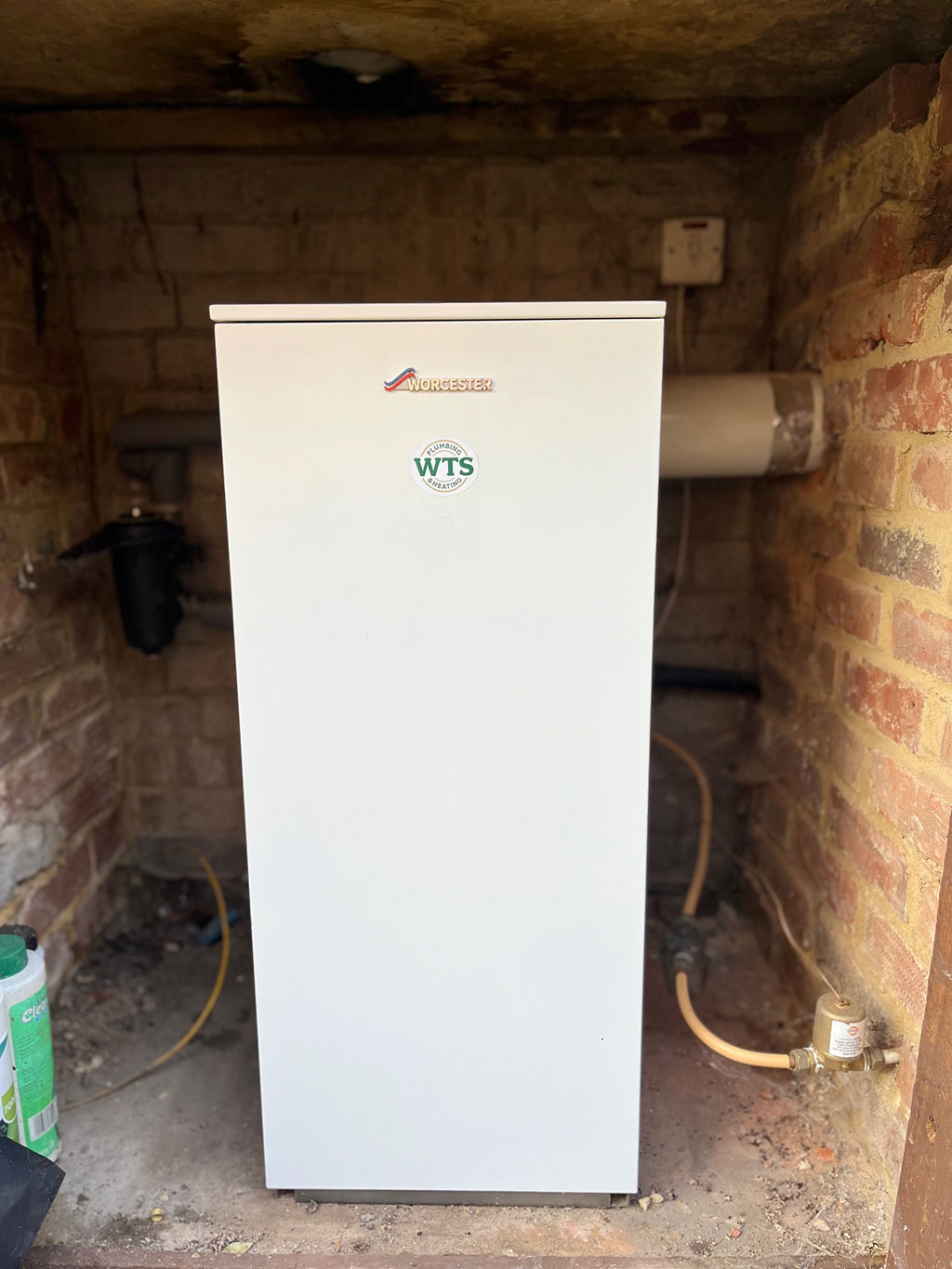
Boiler work here splits three ways. In the High Street flats and the maisonettes above the shops the flue is the job: rear-wall routes, limited terminal positions and condensate that has to reach a sensible drain. On the postwar estates it is usually a straight swap or a sealed-system conversion. On the newer houses at Amlets Park and Leighwood Fields it is the commissioning that matters, setting flow temperatures and balancing the circuit. Gas Safe registered engineers, with a 12-month warranty on parts and workmanship.
Boiler servicing and gas safety certificates in Cranleigh
Landlord work here clusters in a few predictable places: the flats and maisonettes above the shops on the High Street and around Stocklund Square, the Hailey Place maisonettes, and the terraces on John Wiskar Drive and Littlewood. We service gas appliances and issue landlord gas safety records for all of them. Annual servicing also keeps a manufacturer warranty intact, which matters on the newer houses at Amlets Park, Longhurst Park and Leighwood Fields.
Central heating and hot water cylinders
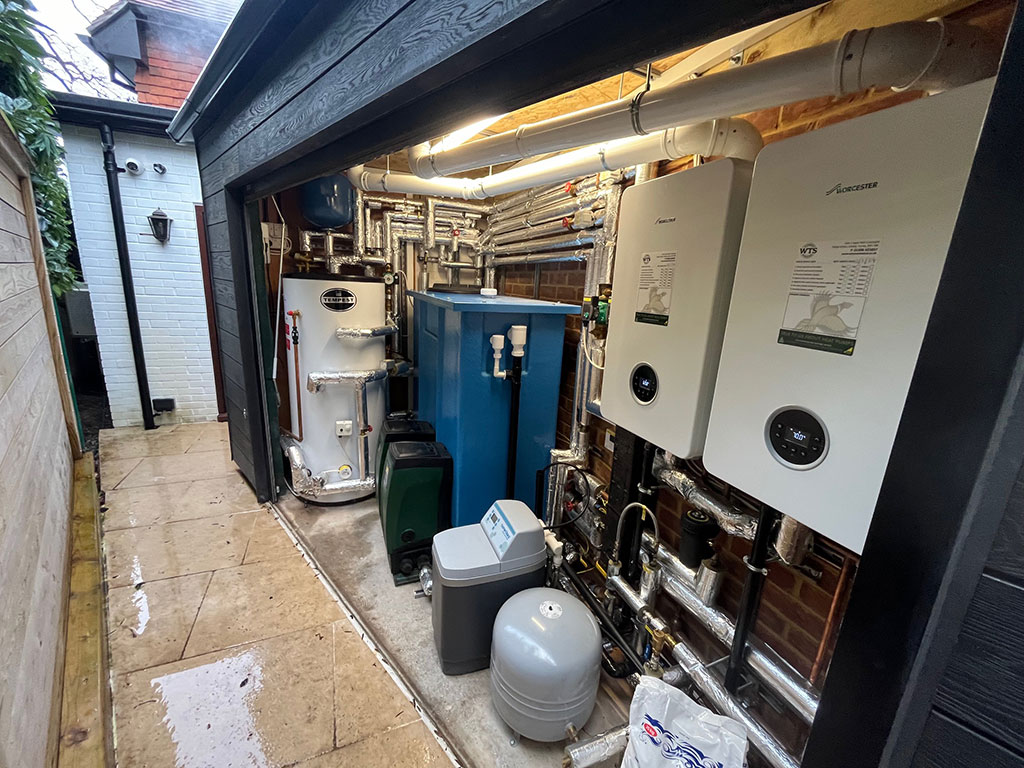
On the postwar estates the system is nearly always open-vented: a feed and expansion tank in the loft, a cold storage tank beside it and a cylinder in the landing airing cupboard. Converting to a sealed system means decommissioning both tanks, flushing the old steel radiators, fitting a filling loop and expansion vessel, and either freeing the cupboard up with a combi or, where the bathroom count needs stored water, fitting an unvented cylinder. On the older houses the cylinder stays and we size it against the real demand.
Blocked drains and drainage repairs
We camera survey before quoting, because what looks like a soft blockage on the Victorian and Edwardian houses is often a corroded cast iron soil stack or a cracked clay run underneath it. Root ingress is common where the mature verge trees sit close to the line. Shared runs on the Parsonage Road and Summerlands estates need the whole length tracked rather than the nearest chamber cleared. We clear, survey, then repair what the survey actually finds.
Air source heat pumps
A survey establishes two things: the heat loss and the flow temperature the existing emitters can live with. On a solid-wall cottage off Church Lane, with big cast iron or single-panel radiators, that usually means new emitters and a lower flow temperature; a sealed underfloor circuit at Leighwood Fields is already suited to one. The other question is where the outdoor unit can stand, which on a plot inside the village centre conservation area takes more thought than the heat loss does.
24/7 emergency plumbers in Cranleigh
The approach from Ockley is single-carriageway B-road the whole way in, and Elmbridge Road floods, so the route changes with the weather. Out of hours the calls follow the housing: overflowing feed and expansion tanks in the estate bungalows, cylinder failures in interwar airing cupboards, and frozen condensate pipes on the newer sealed systems. On a gravity-fed cottage near the Common we isolate the cold feed and the vent first, then drain down. We answer 24 hours a day.
Getting a van to your door
Access is its own subject here. The village runs on narrow, winding B-roads. The B2128 arrives as Horsham Road, runs along the High Street and leaves west as Guildford Road, the B2127 comes in from Ewhurst, and the B2130 from Godalming joins as Elmbridge Road, which is single track in places and is the main route out to the A281 Guildford to Horsham road. In the centre, Village Way and Stocklund Square are the main public car parks, with Snoxhall Fields a short walk out, and there is an open-air market in Village Way on Thursdays. Out on the estates, wide grass verges and mature street trees, many of them under Tree Preservation Orders, decide where a van can actually stand, and Nuthurst Avenue is an unadopted road.
Water pressure and limescale in the Cranleigh supply
The village takes both water and sewerage from Thames Water, with the treatment works on Elmbridge Road. The interesting part is hardness. Thames Water classes anything up to 100 mg/l of calcium carbonate as soft, and the Cranleigh supply falls in that band, so combis and cylinders here scale up far more slowly than the same appliance in a harder part of Surrey. Pressure is the bigger local issue. Waverley is in an area of serious water stress, and parts of the village recorded low pressure or no water in July 2018 and again in July 2022. We check standing and running pressure before specifying a combi, and fit an accumulator where the flow will not carry one.
Working in the conservation area and on older homes
Waverley Borough Council is the planning authority here. The Cranleigh Village Centre Conservation Area was first designated in October 1973, extended in 1985 and again in July 2016, and now covers 22.35 hectares in six character areas along the linear High Street. It takes in the central core only, not the whole village, so most housing here keeps ordinary permitted development rights. Inside it, and on the parish's 81 nationally listed buildings including the Grade II* Church of St Nicolas, external flue terminals, condensate routing, visible pipework and heat pump units may all need consent. A further 174 Buildings of Local Merit sit on Waverley's local list, which is not a statutory designation but is still worth knowing about before a unit goes on a front elevation. We say plainly when a conversation with Waverley comes first.
Streets, villages and postcodes we work in around Cranleigh
Cranleigh is the service centre for a wide ring of smaller villages, and we work across all of it from Ockley. Mains gas dominates inside the village itself, while several of the surrounding parishes are genuinely off the gas grid. These are the places we are called to most often, with the postcode district you will find on each.
- Cranleigh village centre (GU6) The linear High Street, Fountain Square, Stocklund Square and the Common. Shops at ground level with flats and maisonettes above, plus a small listed core.
- Rowly (GU6) Small rural settlement on the western approach along Guildford Road, washed over by the Green Belt but with its own settlement boundary in the Waverley Local Plan.
- Elmbridge Village (GU6) Retirement village and care home off Elmbridge Road, built from around the 1980s. Roughly 236 units, so a concentration of similar systems in one place.
- Ewhurst (GU6) North-east along the B2127 Ewhurst Road below Pitch Hill. Mostly mains gas with a small oil minority, and a conservation area designated in 1970.
- Ewhurst Green (GU6) Separate hamlet close to Ewhurst with its own conservation area, designated in 1974. Rural lanes and detached houses on large plots.
- Alfold (GU6) South-west of the village. Its census ward is one of the least gas-connected nearby, with only about a third of households on mains gas only.
- Alfold Crossways (GU6) Roadside settlement on the A281, the single-carriageway Guildford to Horsham road that serves the whole area.
- Shamley Green (GU5) North-west towards Wonersh, with a conservation area designated in 1973. Mostly mains gas, with an oil minority of around nine per cent of households.
- Wonersh (GU5) North-west on the B2128 towards Chilworth and Guildford. Conservation area designated 1973, with the Blackheath conservation area close by.
- Bramley (GU5) On the A281 to the north-west. Conservation area designated 1974 and amended 1990, with Birtley Green and Thorncombe Street in the same parish.
- Dunsfold (GU8) South-west, and properly off-grid: around 23 per cent of households in its ward heat with oil only. Two conservation areas, both designated in 1974.
- Hascombe (GU8) Small village west of Cranleigh on the Greensand ridge, with a conservation area designated in 1981.
- Rudgwick (RH12) West Sussex village where the B2128 meets the A281. About 19 per cent of households use oil only, and Horsham District Council is the planning authority.
- Loxwood (RH14) West Sussex village on the restored section of the Wey and Arun Canal. Heavily off-grid, with roughly 47 per cent of households on oil only.
Why homeowners in Cranleigh call WTS
- Family-run since 2008, started by William Smith, and still run from the Surrey head office at Jayes Park Courtyard in Ockley, south of Dorking.
- The Ockley office sits on the same Wealden B-road network as the village, so the van comes in from a few miles away rather than across the county.
- Gas Safe registered heating engineers, so boiler work, servicing and landlord gas safety records are all handled by the same team.
- Emergency response 24 hours a day, seven days a week, for burst pipes, leaks, blocked drains and heating that has stopped working.
- A 12-month warranty on parts and workmanship, whether the job is a single tap washer or a full heating system replacement.
Cranleigh plumbing and heating questions
Yes. Cranleigh is one of our primary Surrey areas and we work there from our head office at Jayes Park Courtyard in Ockley, south of Dorking. We also cover the ring of villages it serves, including Ewhurst, Alfold, Shamley Green, Dunsfold, Wonersh, Bramley and Hascombe, and over the West Sussex border to Rudgwick and Loxwood. That takes in the GU6, GU5, GU8, RH12 and RH14 postcode districts. Call 01306 621 057.
The village is firmly on mains gas, despite the rural postcode. The 2021 Census recorded about 82 per cent of households across the two Cranleigh wards on mains gas only, and only 35 households on oil alone. There has been a piped supply here for a long time, since a local gas company was formed in 1876. The off-grid story belongs to the villages around it, such as Loxwood, Dunsfold, Alfold and Rudgwick, where oil is far more common.
The water is soft, so a scale reducer is rarely worth the money in Cranleigh. Thames Water classes anything up to 100 mg/l as soft, and the local supply sits in that band, which is why combi heat exchangers and cylinder coils last better here than in the harder parts of Surrey. What we would spend the money on instead is a magnetic filter and a proper flush, because on the older open-vented systems it is iron oxide sludge rather than scale that clogs a heat exchanger.
Keep the cylinder on the larger Edwardian and interwar houses, and take the combi on the postwar estates. On Avenue Road, Grove Road, New Park Road and Woodland Avenue, long pipe runs and several bathrooms normally call for a system boiler with a properly sized cylinder. On the 1950s to 1980s estates around Parsonage Road, Park Mead, Summerlands and Hitherwood, demand is lower and a combi conversion gets the loft tanks out at the same time. We measure the property before advising either way.
In most of the village, yes, and the housing suits it. Large detached houses on big plots leave room for an outdoor unit and a cylinder, and the soft local water is easy on system components. What decides the job is the heat loss and the flow temperature the existing radiators can work at, which is why we survey before quoting rather than after the order. Older solid-wall cottages usually need bigger emitters first, while the newer underfloor houses are ready for one as they stand.
Heavy Wealden clay under most of the village will not absorb water, so surface water has nowhere to go and the drainage runs stay under load. The parish has a recorded history of fluvial, groundwater, surface water and sewer flooding, including December 2013, January 2016 and June 2016, and Elmbridge Road has a documented flooding history of its own. We clear, camera survey and repair rather than jetting a blockage and leaving it to come back.
Book a plumber or heating engineer in Cranleigh
The Ockley head office is on the same Wealden B-road network as the village, and the van comes in on the B2128 as Horsham Road, so this is local work for us rather than a long run out. Whether it is a boiler service on a Parsonage Road semi, a new cylinder for a big Avenue Road villa, a blocked drain on the clay, or a heat pump survey on a plot with the room for one, the same Gas Safe registered team handles it, with a 12-month warranty on parts and workmanship and a 24/7 line for emergencies. Call the Surrey office on 01306 621 057, or email info@wtsmechanical.co.uk.
What we do in CranleighPlumbing in CranleighBoilers and heating in CranleighDrainage in CranleighHeat pumps in Cranleigh
Nearby areas we also coverPlumbers and heating engineers in DorkingPlumbers and heating engineers in ReigatePlumbers and heating engineers in Leatherhead