Putney is a town of flats. Census 2021 figures for the seven neighbourhoods covering Putney and Roehampton record 27,405 households, and 16,406 of them are in a purpose-built block. Add the 2,974 in converted or shared houses and roughly seven households in ten here are in a flat of some kind. That single fact changes almost every plumbing and heating job in SW15: where a boiler can sit, where a flue can terminate, whether a cylinder fits anywhere at all, and who has to say yes before a pipe is cut.
WTS Plumbing and Heating Ltd has been working on London and Surrey homes since 2008. Our head office is at Jayes Park Courtyard in Ockley, near Dorking, and the Surrey towns are where we are strongest: Dorking, Reigate, Leatherhead, Ashtead, Epsom, Banstead, Cheam and Cranleigh. We also work in Putney, and we still take jobs here, but that is now offered subject to engineer availability rather than as guaranteed cover. If you are in SW15 or SW18, call and we will tell you honestly what we can do and when.
How Putney was built, and what that means for your pipework
Putney was largely rebuilt in the late nineteenth century, and the dates matter. Parkfields was developed from the 1840s. The Putney Park Estate was laid out in the 1890s. Wandsworth Council's own appraisal calls West Putney Victorian to the north and east and overwhelmingly Edwardian through the centre, south and west, with houses built between 1895 and the 1930s. East Putney keeps its mid to late nineteenth century villas along Upper Richmond Road, West Hill and Keswick Road, with heavy postwar infill and backland blocks dropped onto wartime bomb sites. Older still, St Mary the Virgin by the bridge was begun around 1450. Either side of 1900 is what usually decides whether there is lead on the incoming main.
In a late Victorian or Edwardian terrace off Hazlewell Road or Colinette Road, expect solid or early cavity walls, suspended timber ground floors, external soil stacks with hopper heads, and on anything unmodernised a real chance of lead or old iron on the incoming supply. Chimney stacks are prominent here and protected inside the conservation areas, so a flue route becomes a design question rather than an afterthought. The bigger Edwardian houses on Gwendolen Avenue and Chartfield Avenue are tall, and one combi rarely serves two bathrooms in a house like that.
Then there are the flats. Converted and shared houses run right through the older streets, which in practice means split services, shared risers, meters in odd places and a boiler wedged into a hall cupboard. The 1930s mansion blocks on Putney Hill and Putney Heath, among them Manor Fields of 1932-33, Highlands Heath, Wildcroft Manor and the smaller Ullswater of 1935, bring communal risers, restricted flue options and no loft space. The Alton Estate blocks in Roehampton do much the same. In all of them, freeholder or managing agent consent comes before the spanner.
Roehampton also has the cottage-style houses of the Dover House Estate, built after the First World War in London stock brick and roughcast render with Crittall or timber casements. Those houses, and the Edwardian suburb streets with gardens, are the properties where an air source heat pump is genuinely realistic, although the estate sits under an Article 4 direction on external work. Everywhere here, Thames Water supplies hard water, and that shapes the servicing schedule more than anything else about the building.
What we do in Putney
Boiler installation in flats and terraces
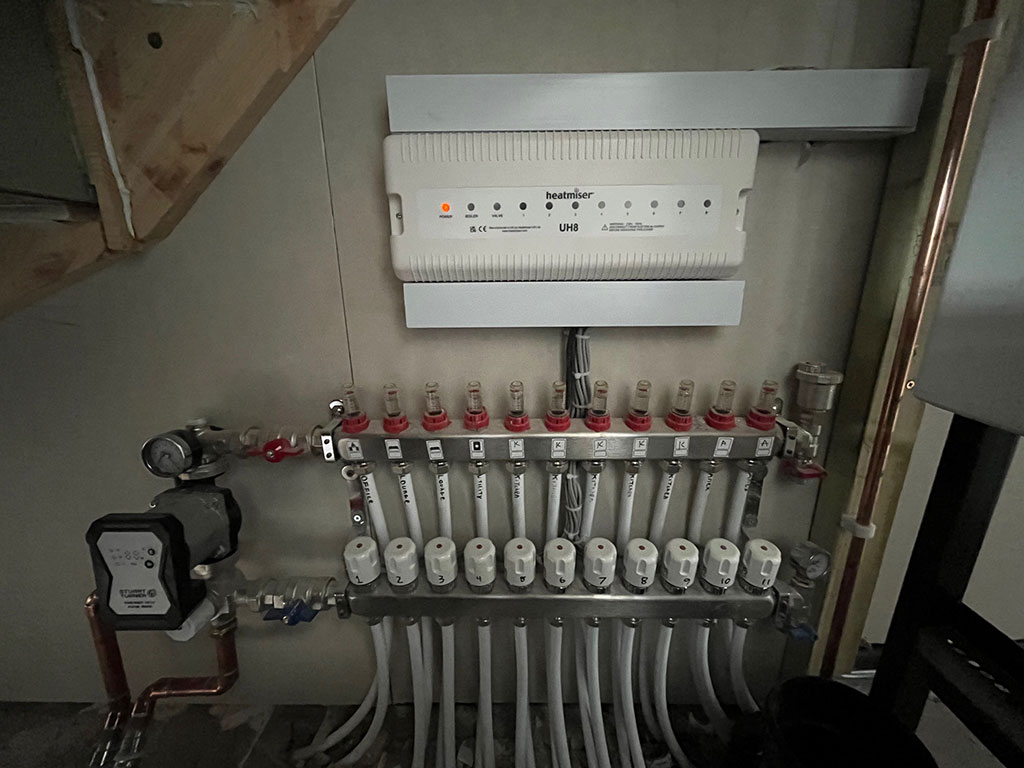
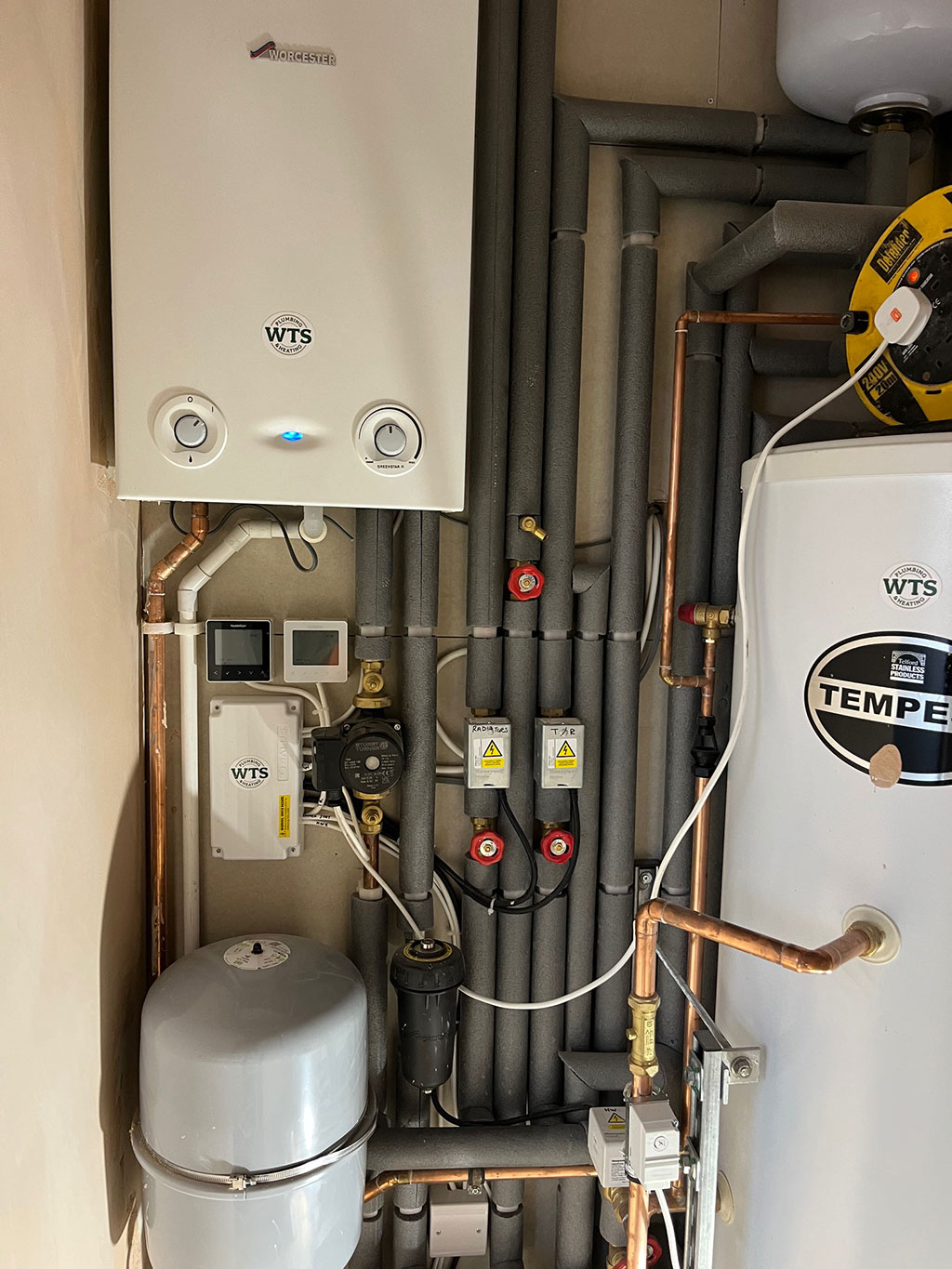
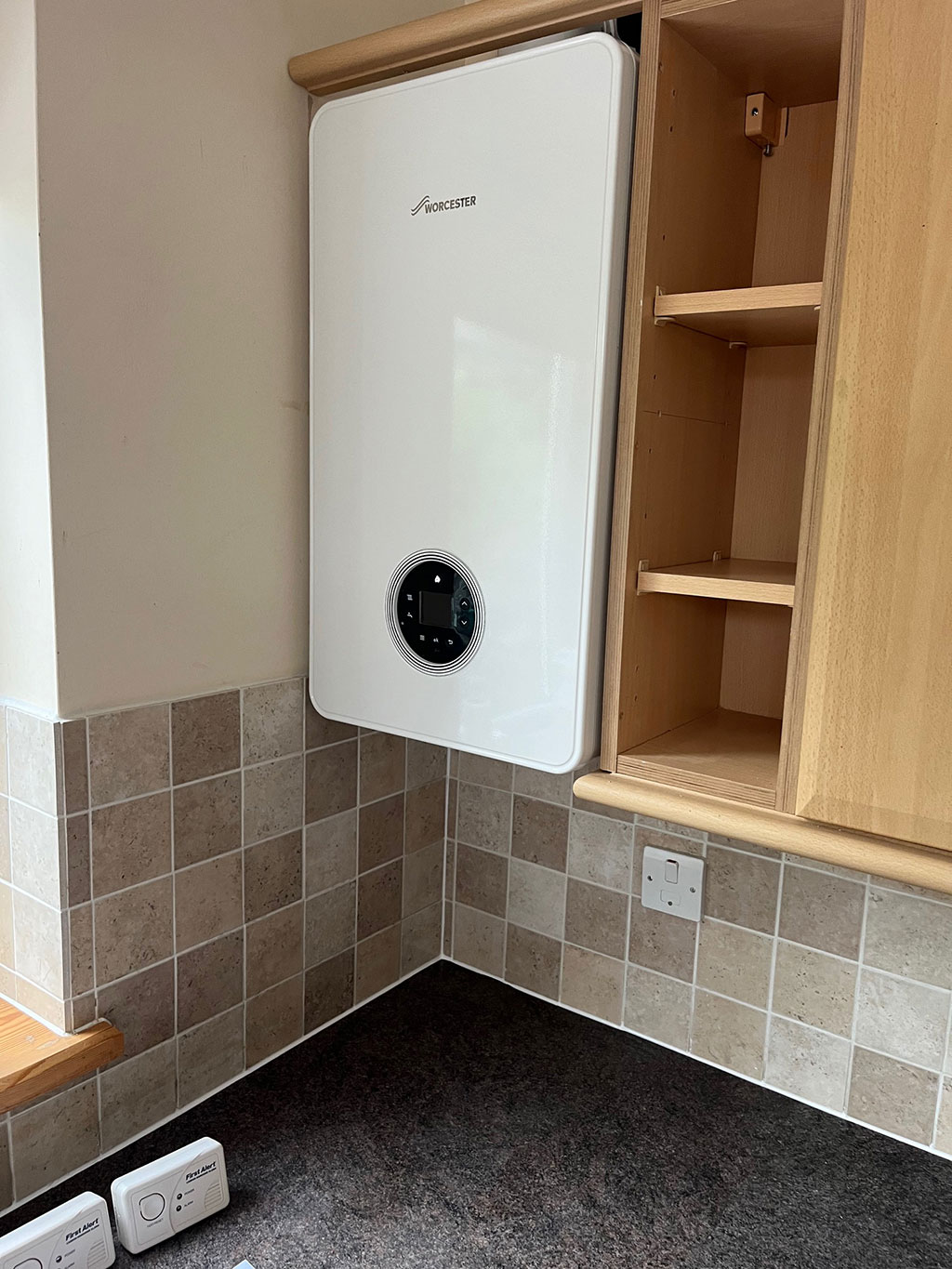
Two thirds of Putney households heat with mains gas only, so combis and system boilers are the everyday work here. In a tall Edwardian house on Chartfield Avenue a single combi rarely keeps up with two bathrooms, and we will usually price a system boiler with an unvented cylinder instead. In a mansion block on Putney Hill the deciding factor is flue termination and condensate routing, not the boiler itself.
Boiler repair and servicing, SW15 and SW18
Most calls here start the same way: hot water goes lukewarm before it goes cold, the pressure creeps down, then the boiler locks out on a Sunday. We service gas combis and system boilers in houses and flats, check flue routes against conservation area constraints where they run up a protected elevation, and tell you before we start whether the part is a stock item or a week away. Availability in SW15 is on request.
Gas safety certificates for landlords
Census 2021 counts 2,974 households across Putney and Roehampton in converted or shared houses. Conversions mean landlords, and landlords mean annual gas safety checks. We issue landlord gas safety records on flats above the High Street shops, on Alton Estate and Dover House Estate lettings, and on the Edwardian conversions around East Putney. Access to a shared riser or a landlord-controlled meter cupboard usually needs arranging before we arrive.
Drainage and blockages in Putney's Victorian stock
Victorian and Edwardian Putney was built before single-stack drainage, so external soil stacks and hopper heads are still common, and so are shared runs under converted houses. We unblock, repair and survey drains in SW15 and SW18, subject to engineer availability. In a converted house the first job is usually working out which flat's waste is on which stack, because here the answer is rarely the obvious one.
Air source heat pumps in Putney and Roehampton
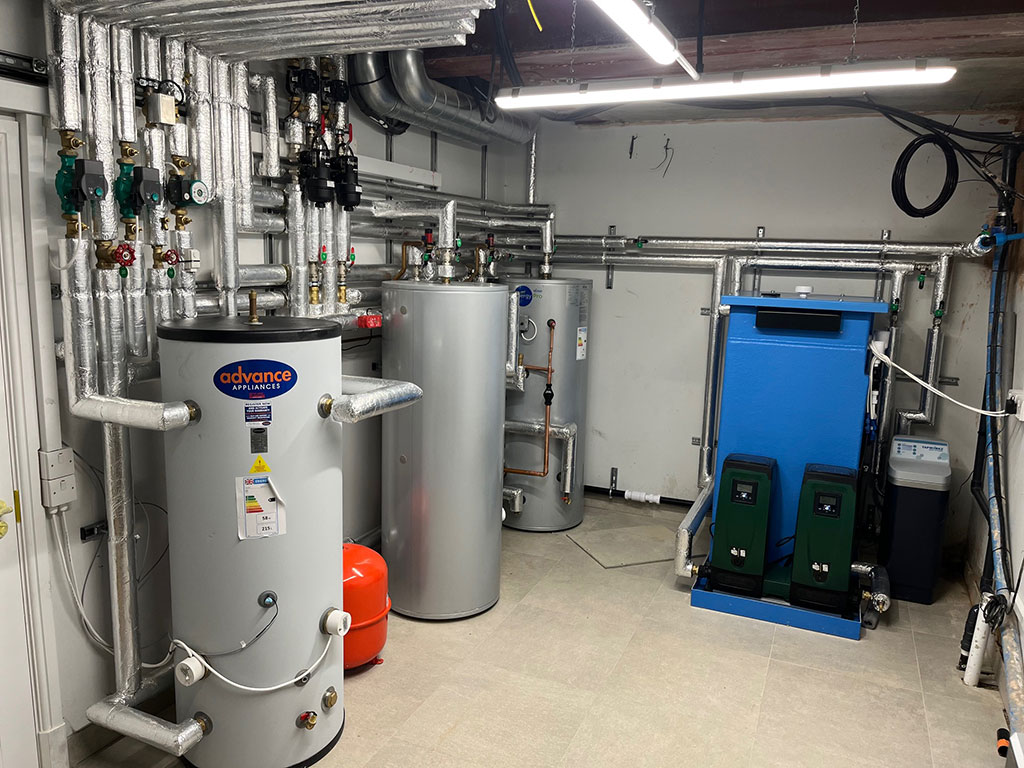
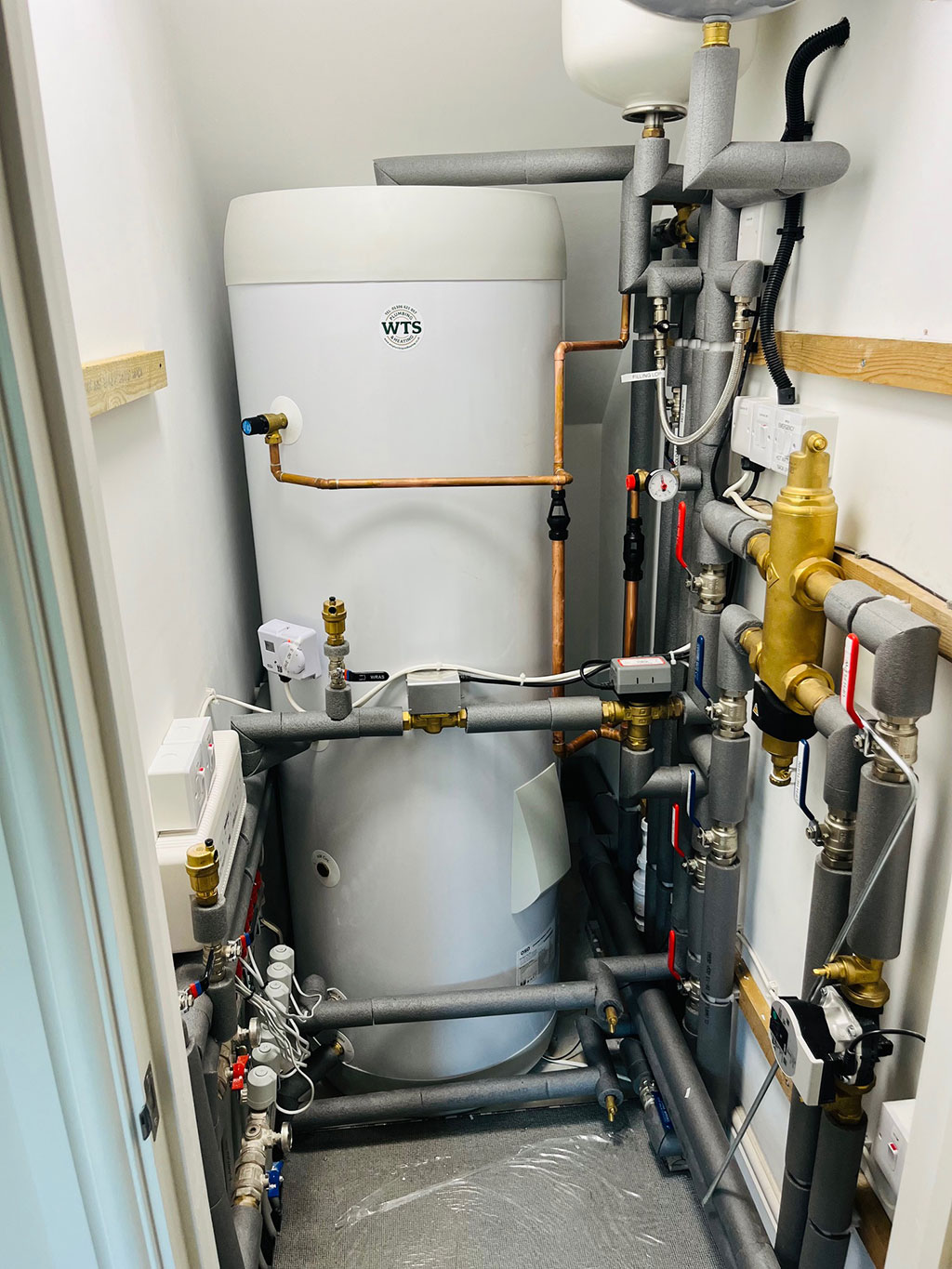
Heat pumps work here where there is outdoor space and room for a cylinder: the Dover House Estate cottages, the Edwardian houses off Howard's Lane and the larger properties around Putney Heath. In a purpose-built flat with no loft and nowhere for a cylinder, we will normally say so. In a Dover House Estate cottage the cylinder usually ends up in the small upstairs bedroom or a boxed run off the landing, and that is the conversation to have before anyone orders a unit.
Emergency plumbing help in Putney
We run a 24/7 emergency response, though for Putney that is now subject to engineer availability, and our quickest attendance is around the Surrey towns near our Ockley office. If you have a burst in a converted flat on Oakhill Road, find the stopcock, warn the flat below and call. Tell us which floor you are on and whether the block has a caretaker, because in the Putney Hill blocks getting into the riser cupboard is usually the slow part, not the drive.
Parking, permits and the ULEZ on a Putney job
Parking is part of the job here. Wandsworth Council runs controlled parking zones over Putney, Putney Heath, Roehampton, Southfields, West Hill and Wandsworth Town, so a van left on the street in working hours is almost always in a controlled bay, and business or trade permits are the sensible route for a day's work. The borough has a 20mph limit, described by the council as covering all residential streets and the majority of classified roads. The ULEZ runs across every London borough, 24 hours a day except Christmas Day, at £12.50 a day for a non-compliant van up to 3.5 tonnes. The A3 at Tibbet's Corner and the A205 South Circular are the pinch points on timing. It means a morning slot inside CPZ hours on Upper Richmond Road needs a trade permit sorted the day before.
Conservation areas, Article 4 and where a flue can go
Most of the town centre and the streets west of it sit inside a conservation area. Putney Embankment was designated on 1 April 1971, Dover House Estate in 1978, West Putney on 2 January 1986, East Putney on 7 January 1987 and Putney Heath on 16 September 1987. There are more: Deodar Road, Coalecroft Road, Charlwood Road and Lifford Street, Landford Road, Parkfields, Roehampton Village, Alton and Putney Lower Common. Dover House Estate, Putney Lower Common and Roehampton Village carry Article 4 directions limiting external work that would otherwise be permitted development, and the exact schedule has to be checked with Wandsworth for the individual address. For us that means flue terminals, external pipework and any visible plant get checked before they get quoted.
Communal heating, electric flats and heat interface units
Not every home here runs on a gas boiler. Census 2021 records 3,713 households across Putney and Roehampton heating by electricity only, and 1,296 on a district or communal heat network, most of that at estate and block scale in Roehampton. Electric-only tends to be flats with no gas riser, or a landlord fit-out. Communal systems mean heat interface units, landlord-controlled plant and work that needs freeholder or managing agent authority before anything is opened up. Only 30 households in the whole area heat with oil, so this is nothing like the off-grid villages around our Ockley office. If it is a heat interface unit on an Alton Estate scheme, tell us the managing agent as well, because their authority is what sets the date.
Streets, villages and postcodes we work in around Putney
Putney and Roehampton are not one place. A flat in an Alton Estate slab block, a cottage on the Dover House Estate and an Edwardian villa off Howard's Lane are three different jobs. These are the parts of SW15 and the districts next to it that we are asked about most, along with what tends to be different about each one.
- Putney town centre and High Street (SW15) Victorian shop terraces with flats above, plus later mansion flats. The High Street is the A219, and Putney railway station sits just off it.
- Putney Embankment (SW15) Putney's oldest buildings, including St Mary the Virgin and the Georgian Winchester House, stand alongside wharf flats. Conservation area since 1 April 1971.
- West Putney (SW15) Victorian to the north and east, overwhelmingly Edwardian through the centre and south. The conservation area takes in the Putney Park Estate, Lower Shott and the Westbury Estate.
- East Putney (SW15) Nineteenth century villas along Upper Richmond Road and West Hill, plus postwar infill flats on bomb-damaged sites, inside 14.1 hectares of conservation area.
- Putney Heath (SW15) Mansion blocks with communal risers and no loft space: Manor Fields and Ullswater on Putney Hill, Highlands Heath on Portsmouth Road, Wildcroft Manor off Wildcroft Road.
- Putney Lower Common (SW15) Conservation area on the Barnes side of Putney, with an Article 4 direction covering part of it, so external alterations need checking address by address.
- Roehampton Village (SW15) Historic village core around Roehampton High Street and Medfield Street, with Georgian survivals. An Article 4 direction covers part of it, so check the address before any external change.
- Dover House Estate, Roehampton (SW15) Cottage-style houses built by the London County Council after the First World War. Gardens and airing-cupboard space make these realistic heat pump candidates, subject to the Article 4 direction.
- Alton Estate, Roehampton (SW15) The London County Council estates of the 1950s. Low-rise terraces, maisonettes, point blocks and slab blocks, with communal risers and managed entrances.
- Putney Vale (SW15) The southern edge beside the A3 and Wimbledon Common. Low density and green, taking in Putney Vale Cemetery and the playing fields nearby.
- West Hill (SW18) The A3 corridor between Putney and Wandsworth Town. The road straddles SW15 and SW18, so check the address rather than assuming the district.
- Southfields (SW18) East of Putney, on the District line. Parts sit inside the Victoria Drive and Sutherland Grove conservation areas, and some addresses fall in SW19.
- Wandsworth Town (SW18) Immediately east of East Putney along Putney Bridge Road or West Hill. Wandsworth's Town Hall and the borough planning department are here.
- Fulham (SW6) Directly north over Putney Bridge, in Hammersmith and Fulham. We have a second office here, although work in Fulham is now on request.
Why homeowners in Putney call WTS
- Family-run since 2008, started by William Smith, and still run from the same head office at Jayes Park Courtyard in Ockley, Surrey.
- Gas Safe registered heating engineers, so gas work, boiler swaps and landlord safety certificates are done by people legally allowed to do them.
- Twelve-month warranty on parts and workmanship on every job, whether that is a boiler swap, a drain repair or a full heating system.
- We work for private households, landlords, construction companies and tier-one contractors, so block, freeholder and managing agent jobs are familiar ground.
- We take on apprentices, offer work experience and sponsor grassroots football teams. Being a training employer is part of how the firm is run.
Putney plumbing and heating questions
We do work in Putney, but it is no longer guaranteed cover. Our engineers are strongest around the Ockley and Dorking head office, and SW15 work is taken on subject to availability. In practice that means asking about a date rather than assuming a next-day slot, and emergency attendance in SW15 cannot be promised. Ask about your specific date and we can check the diary before you make other arrangements.
Often yes, but the flue decides it, not the boiler. In the 1930s blocks on Putney Hill and Putney Heath, and in the Roehampton estate blocks, flue termination, condensate routing and access to a communal riser are what limit the options. Most leases will also require freeholder or managing agent consent before anything is cut into a shared structure, so check yours early. A survey of the actual cupboard and elevation answers it far quicker than a phone call.
Yes. Putney is supplied by Thames Water, and Thames Water states that all water across its region is hard because it passes through chalk and limestone. In practice that means scale building in plate heat exchangers, unvented cylinders, shower valves and immersion heaters, so hot water fades slowly rather than failing all at once. Regular servicing, and on some systems scale protection on the incoming supply, is worth the money here.
Very possibly, so check your address on Wandsworth's conservation area map before you order anything. Inside a designated area a flue terminal on a visible elevation will usually need consent, and a householder planning application normally runs to about eight weeks. Article 4 directions sometimes cover only part of an area: Roehampton Village's runs to one house and a stretch of Medfield Street, so the check is address by address. If a front terminal is refused, the fallback is a rear elevation and a longer internal run.
Three things decide it: where the outdoor unit can stand, whether the radiators are big enough, and where the cylinder goes. In a conservation area or under an Article 4 direction, a unit on a visible elevation may need consent, so the side return or rear garden is the starting point. A solid-wall Edwardian terrace needs radiators upsized for a lower flow temperature. A heat pump cylinder is larger than the one it replaces, so in a house with no airing cupboard the space has to be found first.
Any Gas Safe registered engineer can issue one, and we do them in SW15 and SW18 subject to availability. A landlord gas safety record (often still called a CP12) records every gas appliance and flue we test, the results and any defects found. The check is annual, the record has to reach existing tenants within 28 days, and a check carried out up to two months early keeps the same renewal date. In a converted flat, the landlord's duty covers the appliances they supply, while the freeholder deals with communal plant.
Book a plumber or heating engineer in Putney
Putney is an awkward place to work on, and that is not a complaint: a church begun around 1450, Edwardian villas, 1930s mansion blocks and postwar estate flats, all on hard water and mostly inside a conservation area. We have worked on mansion-block risers on Putney Hill, Edwardian conversions off Upper Richmond Road and Dover House Estate cottages, so the constraints are not a surprise. What we cannot promise is that an engineer will be free on the day you want, because the work has moved back towards Surrey. Call 01306 621 057 and we will tell you honestly whether we can help and when.
What we do in PutneyPlumbing in PutneyBoilers and heating in PutneyDrainage in PutneyHeat pumps in Putney
Nearby areas we also coverPlumbers and heating engineers in WimbledonPlumbers and heating engineers in FulhamPlumbers and heating engineers in Central London