Wimbledon sits in the London Borough of Merton, and until 1965 it sat in Surrey. That history matters to a firm working out of Jayes Park Courtyard in Ockley, because the road between the two has never really gone away. WTS Plumbing and Heating has taken work in south west London since William Smith started the company in 2008, and we still do. Coverage here is now on request and subject to engineer availability, because our day to day focus has moved back towards Dorking, Leatherhead, Ashtead and Epsom.
If you are in SW19 or SW20 and want a Gas Safe registered engineer for a boiler, a cylinder, a leak or a blocked drain, call and ask. Ring 01306 621 057, give the address and the appliance, and we can usually say the same day whether an engineer can reach you. What follows is written for the houses that are actually here: the Victorian terraces off Haydons Road, the flat conversions around Hillside, the interwar terraces and semis at West Barnes, and the large detached houses on Parkside and Somerset Road.
What Wimbledon houses are actually built like
This is a railway suburb in the most literal sense. The line reached the bottom of the hill in 1838 and split the place permanently in two: the old village up on the ridge, and a new commercial town below it. Merton's own conservation appraisals record a population of 2,195 in 1831 rising to 41,630 by the turn of the twentieth century, and terraces and villas were run out along the roads towards Putney, Merton Park and Raynes Park to house them. Those appraisals also date the streets. Somerset Road was among the first laid out after Earl Spencer sold the manor in 1846, and Arthur Road, Leopold Road, Lake Road and Home Park Road followed between 1870 and 1872.
The 2021 census shows what that building boom left behind. Across Merton, terraced houses are the single largest category, purpose-built flats come next, then semi-detached houses, then converted or shared houses, and detached houses are rarest of all. The wards differ sharply from one another. Village ward is 29.6 per cent detached, the highest share in the borough. Wimbledon Park is 36.8 per cent terraced with 30 per cent purpose-built flats. Hillside is 45.6 per cent flats and 18.5 per cent conversions. Head west and West Barnes is 47.8 per cent terraced, Cannon Hill 48.1 per cent, and both are largely interwar.
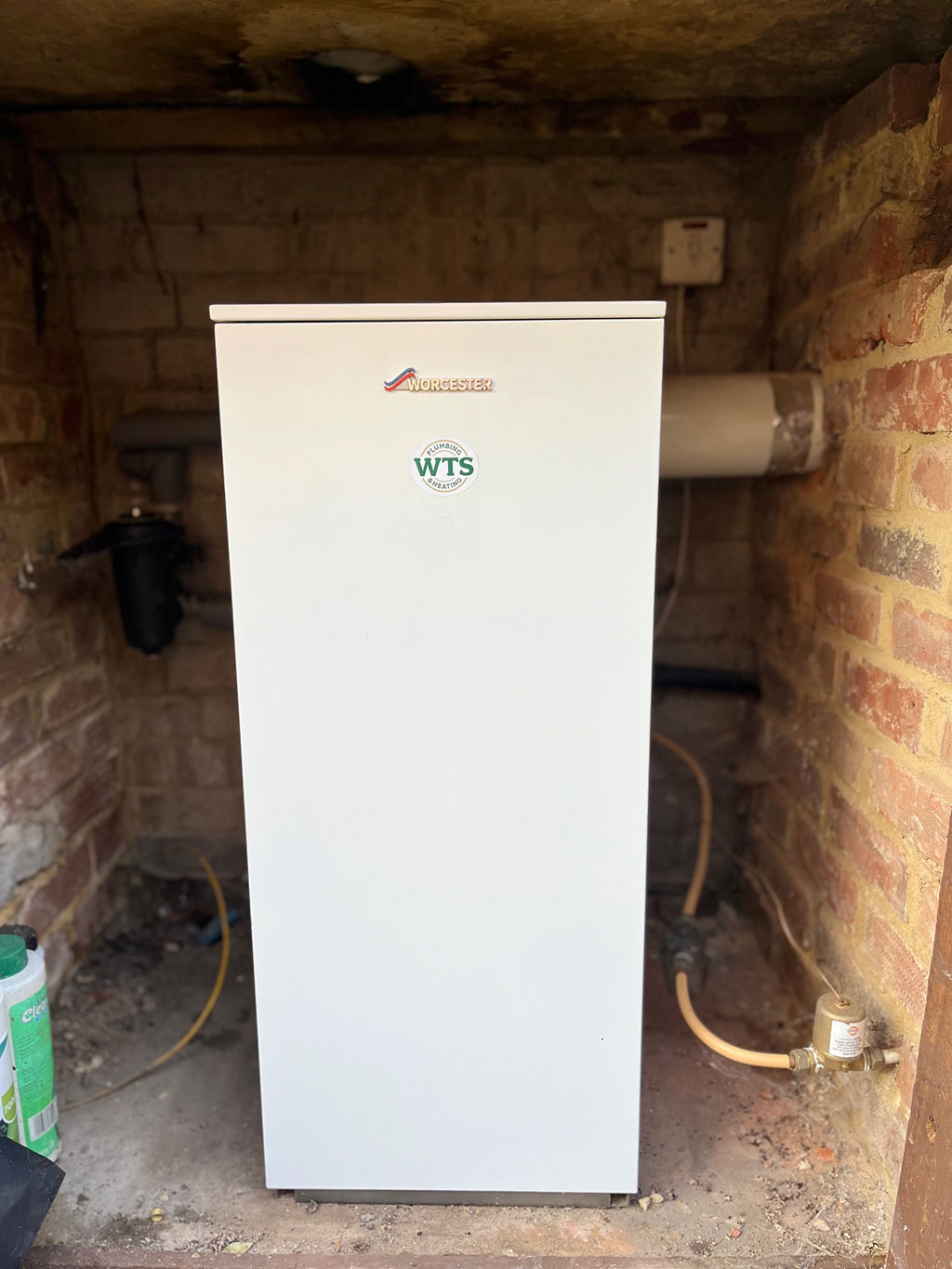
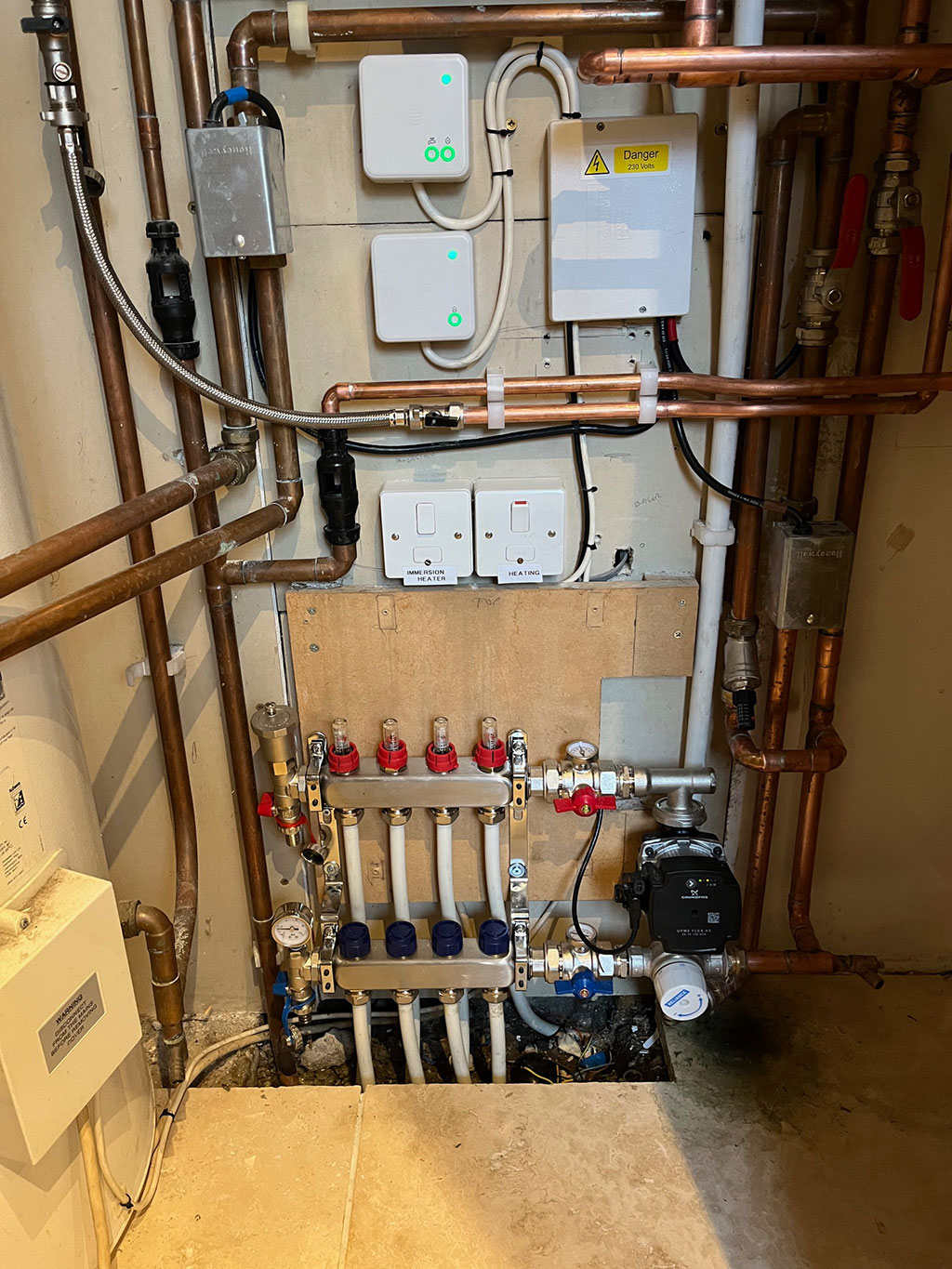
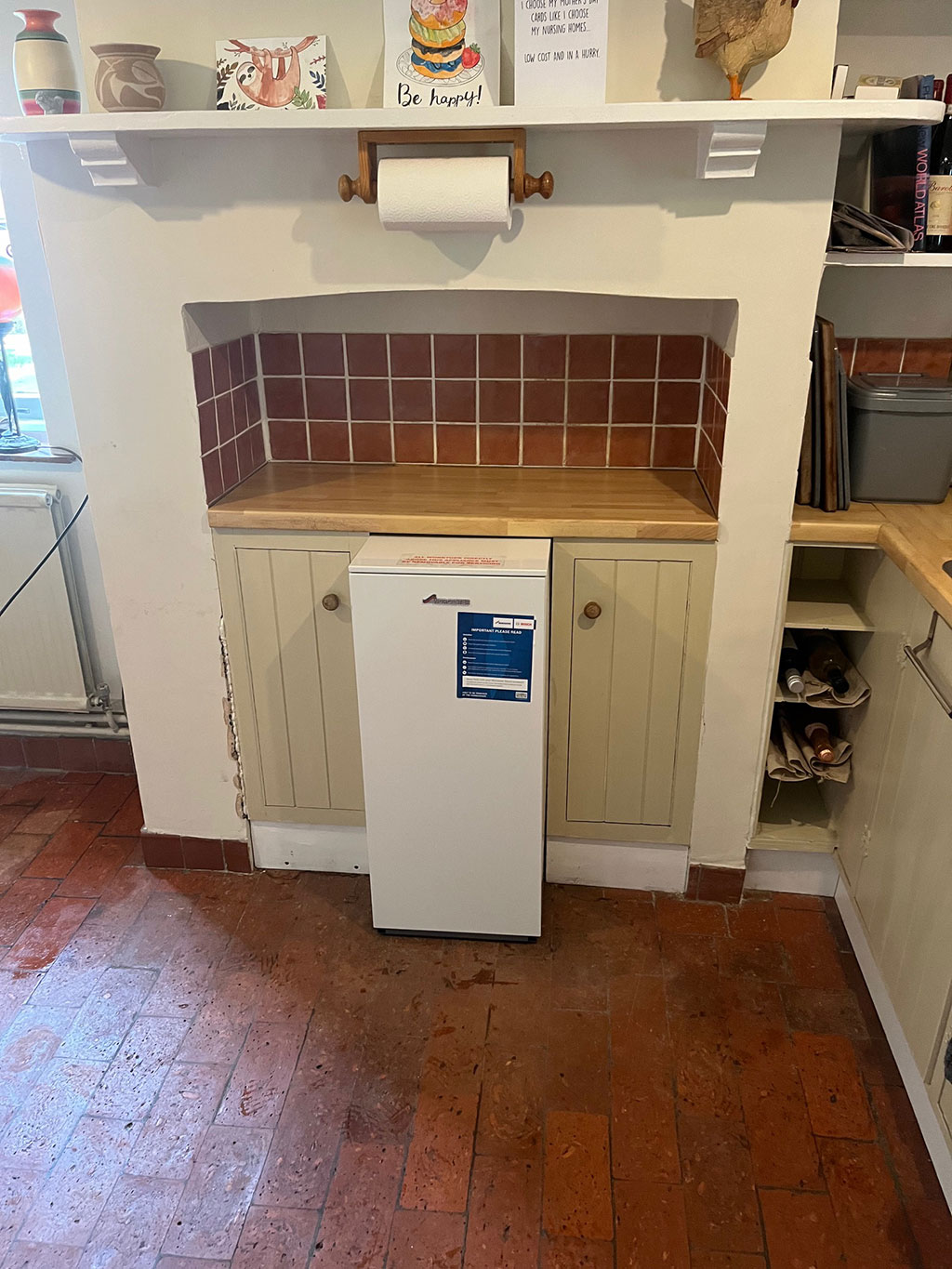
On the tools, the terraces around Wimbledon Park, Haydons Road and Raynes Park nearly all began as open-vented gravity systems with a cold water tank in the roof and a vented cylinder on the landing. Most have been through one or two conversions since, either to a combi or to a system boiler with an unvented cylinder. Expect imperial copper meeting metric, microbore left over from 1970s and 1980s refits, radiators sized for a house that has since gained a side return and a loft room, and a boiler relocated to a kitchen with a long horizontal flue and condensate run. Solid brick walls with no cavity change every heat loss calculation.
The other stock types behave differently again. Converted houses and bedsits, 17.6 per cent of households in Wimbledon Town and Dundonald ward and 18.5 per cent in Hillside, mean several small combis inside one Victorian villa, a single incoming main feeding all of them, and one drainage stack that was never designed for four kitchens. Purpose-built flats bring sealed system pressure, awkward flue routes and managing agent access. The large detached houses on Marryat Road, Burghley Road, Camp Road and Copse Hill want zoned pressurised systems and big cylinders. The interwar stock at West Barnes and Cannon Hill is the kindest of the lot: cavity walls, side access and often a garage.
What we do in Wimbledon
Boiler repair and replacement
Roughly four in five Merton households heat with mains gas only, and across the SW19 and SW20 wards it runs from 71 per cent in Wimbledon Park to 87 per cent in Cannon Hill, so this is combi and system boiler country, not oil country. The usual job is a swap in a Victorian terrace where the boiler has already been moved once, the pipework is part imperial and part microbore, and the flue has to clear a solid brick wall.
Unvented cylinders for three-bathroom houses
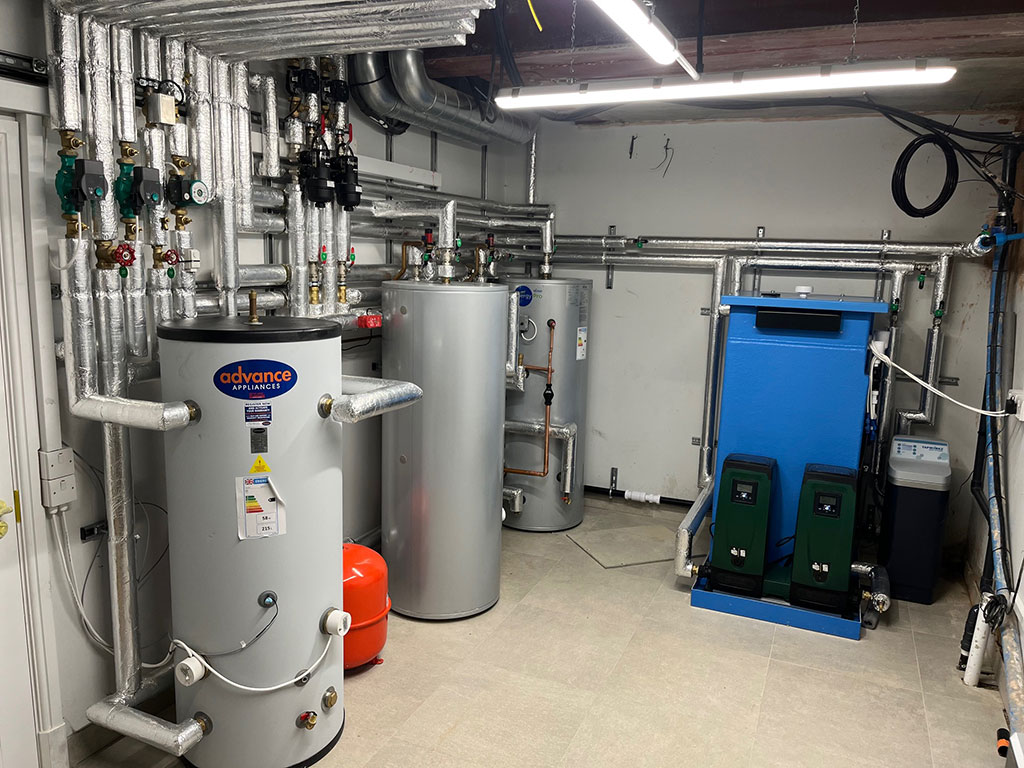
In the Village, on Parkside, Somerset Road, Marryat Road, Lake Road and Copse Hill, houses regularly run three or more bathrooms drawn at once, plus a utility and sometimes an annexe. These are cylinder houses. We size a system boiler and a large unvented cylinder to the real draw-off, zone the pipework so the top floor is not fighting the ground floor, and put the plant in the cellar or plant room these houses tend to have.
Landlord gas safety certificates
Private renting runs from about 26 per cent of households in Village ward to 42 per cent in Hillside, with Wimbledon Town and Dundonald at 35 per cent and Raynes Park at 33 per cent, so annual gas safety checks and void period boiler swaps are steady work here. In converted houses each flat often has its own combi and its own gas run threaded through common parts, which makes access arrangements as important as the check itself.
Blocked drains and shared Victorian stacks
The older terraces around Haydons Road and South Wimbledon usually still have external soil and vent stacks with hopper heads and a shared rear gully, so a blockage in one house shows up in next door's kitchen. Where a rear gully serves more than one property the clearance is normally a shared cost, and once the run leaves your boundary the lateral drain is Thames Water's to repair. We survey first, so the bill lands with whoever actually owns the pipe.
Electric heating and hot water in flats
Around one in ten Merton households heat by electricity alone, and it climbs where the flats are: 18 per cent in Wimbledon Park ward, 17 per cent around Haydons Road, 13 per cent in Hillside. Those homes have no gas appliance at all, so the work is storage heaters, unvented electric cylinders, immersion elements and electric showers, all of which scale up quickly in hard water.
Air source heat pumps for interwar and detached stock
Heat pumps genuinely suit the interwar and detached stock in Copse Hill, Cottenham Park, West Barnes, Cannon Hill and Raynes Park, where the terraces and semis carry deep rear gardens and side returns with room for a unit outside and a cylinder in. They are much harder in the tight inner terraces, and harder again in flats and conservation areas, where an outdoor unit on a street elevation raises planning questions with Merton Council.
Getting a van and a boiler to your door
This is inside the ULEZ, which Transport for London runs across every London borough, all day, every day except Christmas Day, with a daily charge for non-compliant vans up to 3.5 tonnes. Many streets here sit inside a Merton controlled parking zone, and the hours vary from zone to zone, so a van may need a resident, visitor, business or trade permit, a paid bay or a booked suspension. Worth checking the signs on your road before the day. Then there are hills and widths: Wimbledon Hill Road, Arthur Road and Vineyard Hill Road are steep, many Village streets are narrow with cars both sides, and a flat conversion can mean carrying a boiler up three flights with no lift. Tell us the parking zone, the floor, whether there is a lift and how tight the street is.
Conservation areas and where a flue is allowed
Merton has a long list of conservation areas and a large share of them sit in or around the town, including Wimbledon Village, Wimbledon Broadway, Wimbledon Hill Road, Vineyard Hill Road, Wimbledon Chase and John Innes Merton Park. That matters for plumbing because a chimney, flue or soil and vent pipe is not permitted development in a conservation area where it would sit on a wall or roof slope fronting a highway and forming the principal or side elevation. The John Innes Merton Park and John Innes Wilton Crescent conservation areas both carry Article 4 directions covering things such as windows, doors and boundary treatments. Listed building consent is separate and can apply to internal work. Always check with Merton Council before committing to a flue position.
Hard water, old mains and poor flow
Thames Water supplies this area, and the water here is hard. That shows up as scale in combi heat exchangers, on immersion elements and inside showers, and it is the most common reason a boiler that was fine three winters ago now cycles and bangs. On the big unvented cylinders in the Village houses it furs the coil and the immersion, so a three-bathroom system loses its recovery time long before anything fails. A scale reducer on the incoming main and correct inhibitor dosing in the heating circuit are what keep that off. Poor flow is a separate trap. On pre-1900 stock around Wimbledon Park the incoming supply pipe can still be lead or old iron, and in a converted villa one main may feed several flats, so weak pressure is often the supply rather than the boiler.
Streets, villages and postcodes we work in around Wimbledon
These are the parts of Wimbledon and the surrounding streets where our work has taken us. Coverage is subject to engineer availability, so treat the list as where we can often help rather than a promise. Some of these addresses are not in Merton at all: Southfields is Wandsworth, and Motspur Park straddles Kingston upon Thames, which changes who you apply to for a flue or a heat pump.
- Wimbledon Village (SW19) The old settlement on the ridge around the High Street and Church Road, with the cellars and plant rooms that make zoning a big system straightforward.
- Wimbledon town centre and The Broadway (SW19) The commercial centre below the hill, built up after the railway arrived in 1838. Flats over shops and converted upper floors are common.
- Wimbledon Park (SW19) Arthur Road, Leopold Road, Lake Road and Home Park Road, laid out from about 1870, so open-vented systems converted twice over are the norm.
- South Wimbledon (SW19) Around the Northern line station. Merton's Abbey ward, which covers this area, is 36.1 per cent purpose-built flats with 38 per cent of households privately rented.
- Merton Park (SW19) John Innes garden suburb. The John Innes Merton Park and John Innes Wilton Crescent conservation areas both carry Article 4 directions covering things such as windows, doors and boundary treatments.
- Raynes Park (SW20) Around the station, Coombe Lane and Approach Road. Interwar terraces with deep rear gardens, which is why heat pumps are more workable here than in the inner streets.
- West Wimbledon (SW20) In Merton's West Barnes ward. Largely interwar terraces and semis, mostly owner-occupied and almost all on mains gas, usually with side access for a flue run.
- Wimbledon Chase (SW20) Around the Thameslink station and Kingston Road. Edwardian and interwar terraces and semis, and a Merton conservation area, so front elevation work needs checking first.
- Cottenham Park (SW20) Between Raynes Park and the Village, spanning Merton's Village and Raynes Park wards. Larger Victorian and Edwardian houses on generous plots with room for outdoor plant.
- Copse Hill (SW20) The ridge road running west from the Village towards Coombe. Large detached and semi-detached houses with the space for cylinders and heat pump units.
- Colliers Wood (SW19) East of Merton Park on the Wandle. A lot of converted flats, and more homes than usual run on electric heating with no gas appliance at all.
- Haydons Road (SW19) Dense Victorian terraced streets in Wandle ward. Shared rear gullies and external soil stacks, and no side access on most of it, so plant comes through the house.
- Southfields (SW18) Immediately north of Wimbledon Park, with the same late Victorian and Edwardian terraced grid and the same open-vented systems converted to combis.
- Motspur Park (KT3) South west of Raynes Park, straddling the Merton and Kingston upon Thames boundary. Mainly interwar semi-detached and terraced housing, so check which council covers your address before applying for anything.
Why homeowners in Wimbledon call WTS
- Family-run since 2008, started by William Smith and run from their own yard at Jayes Park Courtyard in Ockley rather than a call centre.
- Gas Safe registered heating engineers, working on gas boilers, gas safety certificates and full central heating systems.
- Twelve month warranty on parts and workmanship, so a repair or an installation is not the end of the conversation.
- We work for private households, landlords, construction companies and tier-one contractors, on projects including Kew Gardens, Cabot Square and Cannon Street.
- Our London days are planned around the Ockley yard, so we can tell you which day an engineer is already heading into SW19 rather than guess at a slot.
Wimbledon plumbing and heating questions
Yes, though it is no longer part of our core patch. Our head office is at Jayes Park Courtyard in Ockley, near Dorking, and the day to day area is Surrey: Dorking, Reigate, Leatherhead, Ashtead, Epsom, Banstead, Cheam and Cranleigh. Ring 01306 621 057 with the SW19 or SW20 address, the make of boiler and what it is doing, and we can often tell you whether it is a parts job before anyone travels.
Often not, and it is the most common hot water complaint in these terraces. Once the side return has been filled in and the loft converted, the airing cupboard that held the old vented cylinder is usually an en suite, so the real question is where a new unvented cylinder goes: loft, understairs, or a slim unit in the utility. The other half of the answer is the incoming main, which we measure at the kitchen tap first.
Possibly, and you should check with Merton Council before any work starts. A flue on a front elevation in Wimbledon Village or Vineyard Hill Road would normally need an application, while one on a rear elevation may not, so the cheaper fix is often to move the boiler rather than argue the flue. If consent is needed it is a householder application to Merton with a location plan and elevations, and the statutory determination period is eight weeks.
Yes. In practice it costs you recovery time and efficiency rather than causing a dramatic failure. A furred plate heat exchanger in a combi drops the hot water temperature at the tap, and a scaled immersion element in an electric flat takes longer to heat the same cylinder for the same money. Fit a new appliance without dealing with the water and the scale simply builds again. A service picks it up early, because the noise on ignition changes first.
Yes, when we have an engineer free. A converted house here often needs a separate certificate for each flat, because each has its own boiler and its own hob, and the landlord of each flat carries their own duty. The check is repeated every twelve months, and it can be done in the last two months of the current certificate without losing the anniversary date. Void periods are the sensible time to book.
In the Village and Wimbledon Park, yes. Merton publishes parking restrictions for the Championships fortnight each year covering the streets around the All England Club on Church Road, and a trade van cannot simply pull up outside. Skips and deliveries are harder to place too. If the work is not urgent and you live inside that zone, booking either side of the fortnight is easier. If it is urgent, say so on the phone and we will plan where the van goes.
Book a plumber or heating engineer in Wimbledon
Wimbledon is a place we still work in, on request and subject to engineer availability, rather than an area we can promise to cover. If you need a boiler looked at, a cylinder sized for a house with three bathrooms, a landlord gas safety certificate or a drain cleared in SW19 or SW20, ring 01306 621 057 and tell us the address and the problem. We will give you a straight answer about whether we can get an engineer to you and when. If we cannot, we will say so, and our regular working area sits closer to home around Dorking, Leatherhead, Ashtead, Epsom and Reigate.
What we do in WimbledonPlumbing in WimbledonBoilers and heating in WimbledonDrainage in WimbledonHeat pumps in Wimbledon
Nearby areas we also coverPlumbers and heating engineers in PutneyPlumbers and heating engineers in CheamPlumbers and heating engineers in Fulham