Reigate sits in the Vale of Holmesdale, directly under the North Downs escarpment, and its plumbing changes street by street. Victorian terraces near the station, big villas along Chart Lane and around Wray Common, bay fronted 1930s semis at Woodhatch and South Park, postwar estate housing at Rushetts Farm and a large number of flats and town centre conversions all sit within a couple of miles of each other. WTS Plumbing and Heating work across all of it, from a seized stopcock in a flat above the High Street to a heat pump on the rural fringe.
WTS Plumbing and Heating Ltd have been going since 2008, when William Smith started the business, and it is still family run. This is one of our primary Surrey towns, worked from the head office at Jayes Park Courtyard in Ockley, near Dorking. Our heating engineers are Gas Safe registered, we answer emergency calls 24 hours a day, and parts and workmanship carry a twelve month warranty. We work for private households, landlords, construction companies and tier one contractors.
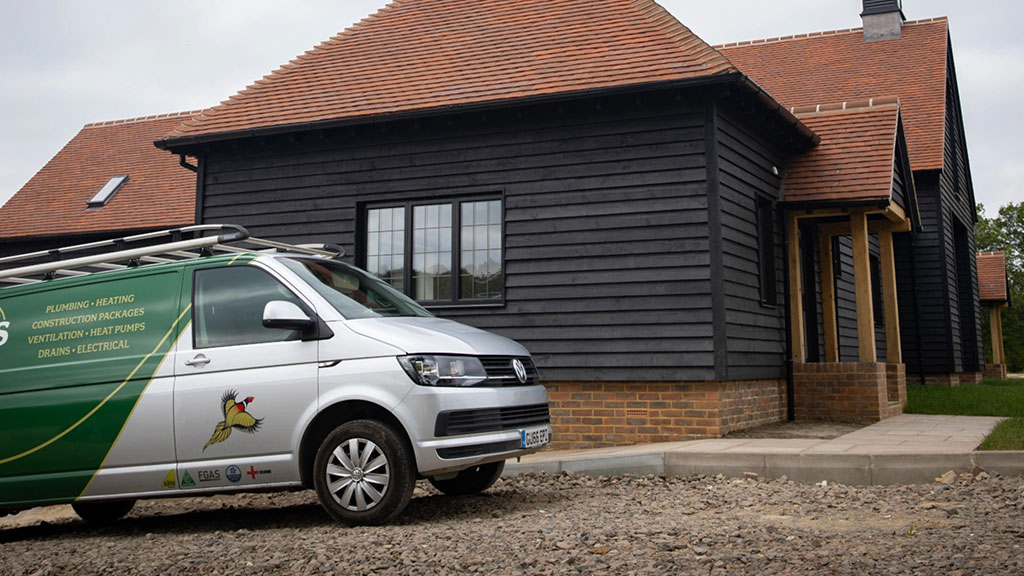
The houses in Reigate, and what is behind the walls
Reigate grew with the railway. Wray Park was laid out north of the centre in the 1850s and 1860s, with St Mark's Church built to serve it. Doods Road went in around 1864 and still carries the Victorian terraces that were built along it, and Somers Road followed just west of the station. The National Freehold Land Society started the Glovers Field estate in 1863, Glovers Road and Lesbourne Road arrived around 1893, and the Great Doods estate between the railway and Reigate Road was sold in 1897. Larger villas sit on the higher ground along Chart Lane and around Wray Common.
On the tools, those older houses mean solid walls, chimney breasts, bathrooms added long after the house was built, and long runs of small bore or imperial copper, often with a stub of lead at the incoming main or lead jointed cast iron on the waste. Open vented systems are common, with a feed and expansion tank and a cold water cistern still sitting in the loft and gravity primaries feeding the cylinder. Radiators are frequently undersized once solid walls are counted, and a single skin brick chimney needs a lined flue before anything heat producing goes up it.
The 1921 sale of the Reigate Priory estate released more land, and the interwar wave followed. South Park pushed south and east, Woodhatch Farm was sold in the 1930s for housebuilding, and Western Parade at Woodhatch went up in 1936. Those bay fronted, hipped roof, cavity wall semis at Woodhatch, South Park and Doversgreen are the most straightforward houses in town to convert to a combi, with usable loft space and a flue route through a gable or rear wall. The original 15mm and 22mm copper is often still sound but undersized for modern flow rates, and loft conversions have pushed plenty of cylinders and tanks into awkward corners.
After the war Woodhatch grew again with the Rushetts Farm estate in the 1950s, where layouts are simpler and access is better, although a good number of those houses were built for solid fuel or a back boiler and have been converted more than once. Flats are a job type of their own, and there are a lot of them in the town: purpose-built blocks, conversions above the town centre shops and flats near the station. That means no loft, no room for a vented cylinder, room sealed flues, shared risers and a freeholder to satisfy. Out at Reigate Heath, Flanchford and Sidlow the stock shifts to cottages and converted farm buildings on longer service runs.
What we do in Reigate
Boiler repair and servicing in Reigate
This has been a gas town for a very long time, so gas boiler faults are the daily work here. We service and repair boilers in the interwar semis at Woodhatch and South Park, in the larger period houses around Wray Common and Chart Lane, and in flats above the shops on Bell Street and the High Street. Hard water is the local culprit, so heat exchangers, scale protection and cylinder condition get checked properly at every service rather than skipped.
Boiler installation and combi swaps
What moves the price here is the survey, not the boiler. In an older house off Doods Road or Somers Road three things have to be settled first: whether the single skin chimney needs lining, where the redundant loft tank comes out and what making good costs once it has gone, and whether the incoming main still carries a lead stub that has to be cut out. Woodhatch and South Park semis usually settle all three quickly.
Emergency plumbing in Reigate, day and night
Burst pipes and dead boilers do not keep office hours. We answer emergency calls around the clock, whether that is a lead stub failing on the incoming main in a Victorian terrace near the station, a leak from a soil stack on an older house off Lesbourne Road, or a flat in the town centre where the stopcock is on a shared riser and nobody is sure which one it is. Ring the Surrey office on 01306 621 057.
Landlord gas safety certificates
Reigate carries a large rented and flatted element, from conversions above the shops in the town centre conservation area to blocks near the station and lets across the older terraces. We issue landlord gas safety certificates across RH2 and the RH1 side at Meadvale, and we are used to jobs where access, a shared riser and a managing agent or freeholder all have to line up before an engineer can get through the door.
Blocked drains and drainage repairs
Reigate's first sewerage system was installed in 1876, with the main outfall sewer running under Bell Street via Woodhatch, so the centre sits over old combined drainage. Woodhatch and the southern edge are on Weald Clay, which shrinks and swells and is hard on rigid pipe joints. Surveys there usually show failed clay joints and root ingress; in the centre it is more often cast iron. Where a flat above the shops shares a stack, the repair has to be agreed with the freeholder first.
Air source heat pumps in Reigate
Air source suits the larger detached and semi-detached stock at Reigate Heath, Chart Lane, Wray Common and the rural edge towards Flanchford and Sidlow, where there is outdoor space and somewhere sensible for a big cylinder. In town centre terraces and flats the constraints are cylinder space, small bore pipework and solid walls with poor fabric performance. On conservation area and listed properties, unit siting and pipe runs need checking with the council before anything is ordered.
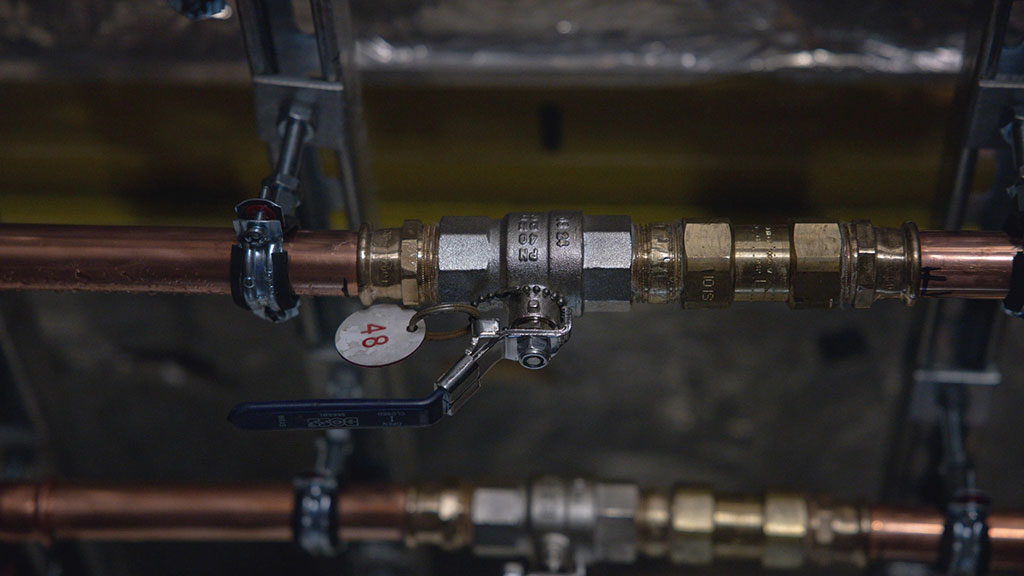
Conservation areas, listed buildings and consent
Reigate has several conservation areas, including Reigate Town Centre, Chart Lane, Wray Common, Somers Road, and Flanchford Road and Colley Lane. Reigate and Banstead Borough Council states that Article 4 directions have been served on most conservation areas in the borough, controlling external changes to houses, which removes permitted development rights you would otherwise rely on. The council says most, not all, so it has to be checked address by address on its own mapping tool rather than assumed. Add the listed buildings, with Reigate Priory at Grade I and the Church of St Mary Magdalene and the Old Town Hall at Grade II*, and flue terminals, condensate routes, external pipe runs and heat pump units all become questions to settle before the job is priced.
Hard water and limescale in Reigate
Water here comes from SES Water, whose own head office is on London Road in Redhill. Much of that supply is drawn from boreholes in chalk and limestone, and SES Water describes it as naturally hard, softened only slightly during treatment. Chalk sits directly north of the town under the Downs. In practice that means furred kettles, showers losing flow, scaled combi heat exchangers and immersion heaters that stop earning their keep. SES Water advises storing hot water at 60 degrees Celsius, hot enough to keep the cylinder safe while limiting scale. We fit scale reduction, replace elements and cylinders, install softeners, and build scale protection into a boiler swap rather than selling it later as an extra. Sewerage for the area is Thames Water, not SES Water.
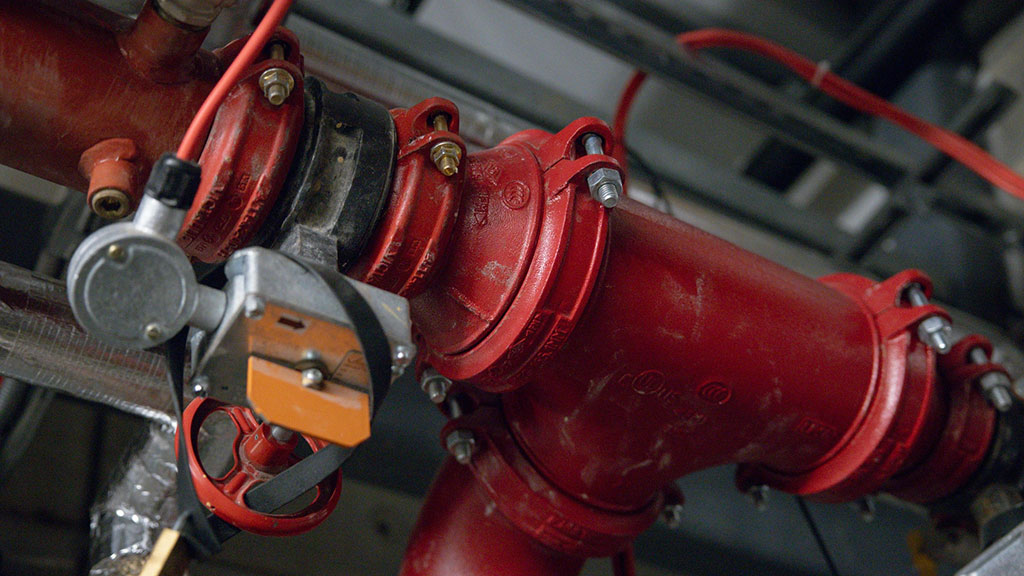
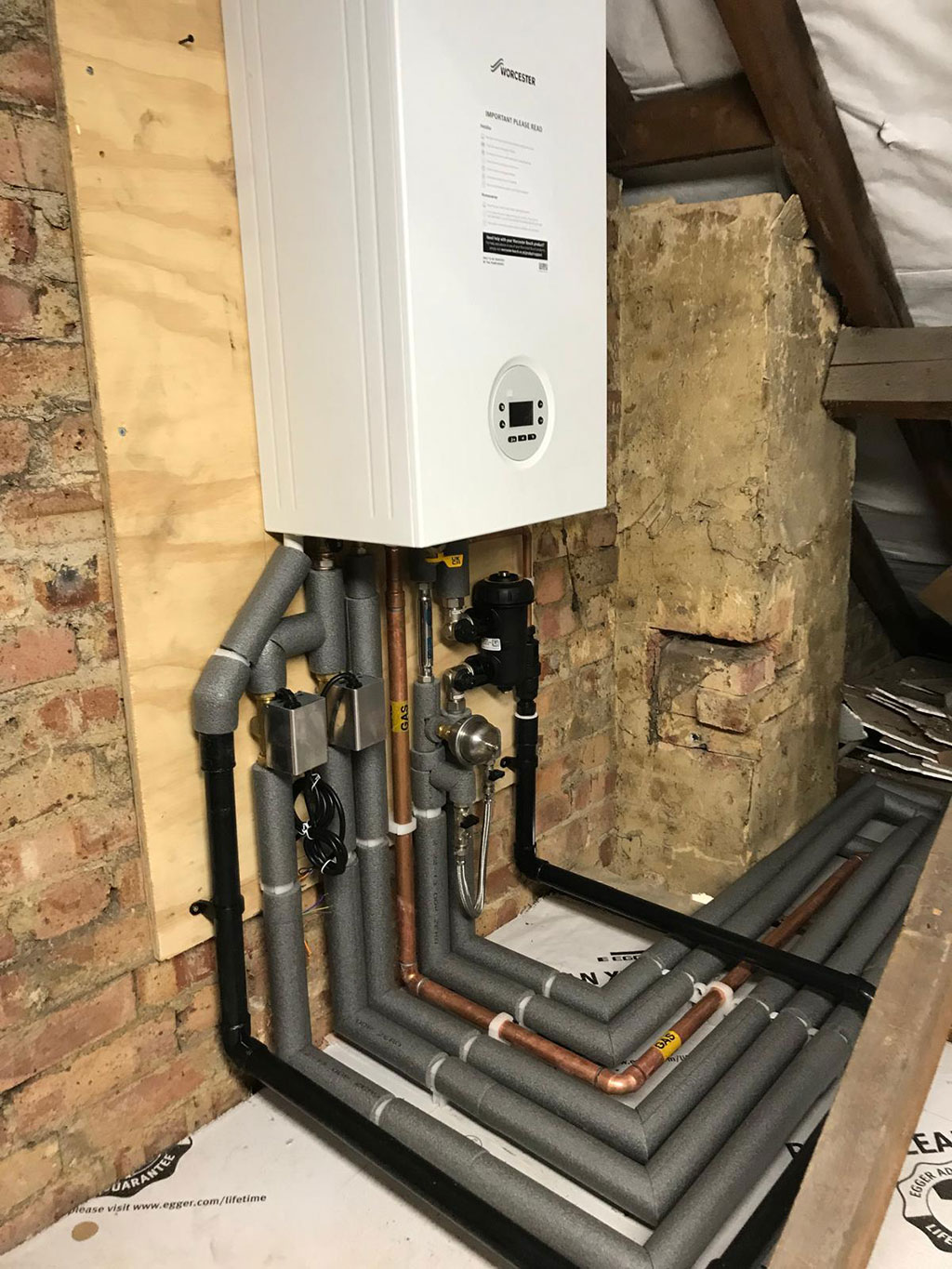
Getting a van to your door in Reigate
The A25 and A217 run together through the town centre one way system, which is the thing to plan around on any job near the middle of town. Reigate Tunnel, opened in 1823 beneath the castle, is pedestrian only now, so that traffic goes round instead. The centre streets are narrow and historic, kerbside space is tight and loading is restricted, so anything longer than a call out needs arranging in advance. There is council parking at Bell Street, and on-street permit schemes near the centre and the station are run by Surrey County Council. Reigate Hill is steep, the M25 comes in at Junction 8 at the top of it, and the lanes west and south towards Reigate Heath, Flanchford, Leigh and Sidlow are single track in places with soft verges.
Streets, villages and postcodes we work in around Reigate
These are the parts of town and the villages on its edge where we work most often, with the postcode district for each. The list runs from the chalk under the Downs to the Weald Clay at the southern end, and the housing changes as the ground does. Meadvale is the one worth ringing about: it is RH1 rather than RH2, which leads people to assume it is not covered.
- Reigate town centre (RH2) Conservation area since 1973. Georgian and Victorian frontages on High Street, Bell Street and Church Street, with flats and offices above the shops.
- Wray Park (RH2) Laid out north of the centre in the 1850s and 1860s around St Mark's Church. Large Victorian houses, a good number of them since subdivided.
- Wray Common (RH2) Conservation area designated in 1988. Substantial Victorian houses around the common, near the Grade II* windmill and the former Reigate Corporation electricity works.
- Great Doods and Doods Road (RH2) Doods Road dates from about 1864 and is lined with Victorian terraces. The Great Doods estate was sold in 1897, with Deerings Road following.
- Somers Road and the station area (RH2) Laid out shortly after 1864 and a conservation area since 1990. Reigate station opened in 1849 and its original building is still in use.
- Chart Lane (RH2) Conservation area designated in 1983, east of the centre. Large detached period houses in generous plots, usually with big heating loads.
- South Park (RH2) Started in 1863 by the National Freehold Land Society, west of Woodhatch.
- Woodhatch (RH2) South of the town on Weald Clay, where clay was dug for bricks. Woodhatch Farm was sold in the 1930s and Western Parade was built in 1936.
- Doversgreen (RH2) On the A217 south of Woodhatch, largely interwar and postwar housing, with Dovers Green School here. Simpler layouts and easier access for a van.
- Reigate Heath (RH2) West of town on free draining Folkestone Beds sand. Lower density cottages and detached houses on larger plots, near the Grade II* post mill.
- Flanchford Road and Colley Lane (RH2) Conservation area designated in 1990, on the western edge towards the heath and the River Mole. Rural lanes, cottages and converted buildings.
- Meadvale (RH1) South east of the centre. The postcode district here is RH1 rather than RH2, which catches people out.
- Sidlow (RH2) South of Doversgreen where the road crosses the River Mole. Scattered rural properties and farm buildings, often on long service runs.
- Leigh (RH2) A Weald village south west of Reigate. The postcode district is RH2 but planning sits with Mole Valley District Council, not Reigate and Banstead.
Why homeowners in Reigate call WTS
- Family run since 2008, when William Smith started the business. Reigate is part of our core Surrey patch, worked from the head office at Ockley near Dorking.
- Gas Safe registered heating engineers, so boiler and gas work is carried out and certified properly, whether that is a Woodhatch semi or a town centre flat.
- Night calls run in from Ockley: a lead stub letting go on a Victorian main near the station, or a flat where the shared riser stopcock has to be found.
- The twelve month warranty covers the jobs this town generates: a scaled cylinder swap, a lined flue in a single skin chimney, a stack repair on Woodhatch clay.
- The rented flats above the Bell Street and High Street shops, their managing agents and freeholders, and the private houses at Chart Lane and Wray Common are all regular work.
Reigate plumbing and heating questions
Yes. We run a 24/7 emergency response and Reigate is one of our primary Surrey towns, covered from the head office at Ockley near Dorking. Call 01306 621 057 for a burst pipe, water coming through a ceiling or a boiler that has stopped dead. If you are in a town centre flat or a conversion, it saves time if you can find out where the shared stopcock is before we arrive.
Yes, hard. SES Water supply the town and treat the supply as naturally hard. Here that shows up as furred kettles, showers losing flow and scaled combi heat exchangers, and it is the most common reason a boiler that was fine three winters ago has lost its hot water flow. Fit scale protection with the boiler rather than after it, and have the cylinder checked at the same time.
Usually yes, subject to survey, and it is rarely the boiler that decides it. In a Doods Road terrace the thing that most often kills a straight swap is the incoming main: a lead or undersized stub will not deliver the flow rate a combi needs, so the supply has to be renewed before the boiler is ordered. Get that measured at quote stage rather than on installation day.
Possibly. Reigate and Banstead have Article 4 directions on most, not all, conservation areas in the borough, so permitted development rights may not apply at your address. It has to be checked on the council mapping tool before a flue position or heat pump siting is priced. Listed buildings need separate consent on top of that.
It depends on the fabric and the radiators, not the ground under the house. A heat pump runs at a lower flow temperature than a gas boiler, so a solid walled Victorian house off Doods Road usually needs larger radiators and often larger pipework before the numbers work. On the Weald Clay at Woodhatch and Doversgreen the clay is a drainage question rather than a heating one. In a conservation area, settle where the outdoor unit and the pipe runs go before the order is placed.
Yes. The certificate has to be in the tenant's hands at the start of the tenancy and the check repeated every twelve months, so book it before a void ends rather than after. If a tenant will not let an engineer in, keep a written record of every attempt and warn them in writing, because the duty stays with you. In a town centre conversion the common failure is not the appliance but a room sealed flue terminating too close to a window or a boundary.
Book a plumber or heating engineer in Reigate
If you need a plumber or a heating engineer in Reigate, call WTS Plumbing and Heating on 01306 621 057 or email info@wtsmechanical.co.uk. Tell us the street and the type of house and we can usually say on the phone what we expect to find, whether that is a loft tank in a Doods Road terrace, a scaled cylinder in a Wray Common villa or a shared riser in a flat off the High Street. We cover the town seven days a week, with emergency response around the clock and a twelve month warranty on parts and workmanship.
What we do in ReigatePlumbing in ReigateBoilers and heating in ReigateDrainage in ReigateHeat pumps in Reigate
Nearby areas we also coverPlumbers and heating engineers in DorkingPlumbers and heating engineers in BansteadPlumbers and heating engineers in Epsom