Fulham is not a Surrey town and it does not behave like one. It sits in the London Borough of Hammersmith and Fulham, in a bend of the north bank of the Thames between Hammersmith and Chelsea, and its housing is overwhelmingly late Victorian and Edwardian brick terrace with a strip of modern riverside flats along the southern edge. WTS Plumbing and Heating has an office in Fulham and we also work across the area, though our engineers are now based mainly at our head office at Ockley near Dorking, so work here is taken on subject to engineer availability rather than promised.
Our strongest coverage is now across Surrey, in Dorking, Reigate, Leatherhead, Ashtead, Epsom, Banstead, Cheam and Cranleigh. A visit here is planned rather than dispatched the same day, because the camera schemes in the south of the borough and any parking bay suspension have to be arranged first. We take bookings, quote properly and tell you what the access adds. What follows is written for the houses and flats that are actually here, because a boiler swap in an SW6 terrace is a very different job from a boiler swap in an RH5 cottage.
What Fulham homes are built like, and what that does to the pipework
Close to three in five Fulham homes were built before 1919, and that single fact shapes almost every job here. Valuation Office Agency council tax figures for 31 March 2025 record 95,070 dwellings across Hammersmith and Fulham, of which 45,750 were built before 1900 and a further 7,160 between 1900 and 1918. Across the neighbourhood areas that make up Fulham and SW6, roughly 48 per cent are pre-1900 and about 11 per cent date from 1900 to 1918. Interwar building is thin, at around four per cent, so the 1930s bay-fronted semi that a Surrey engineer sees every week barely exists here.
The reason is that Fulham stayed farmland, orchards and market gardens long after its neighbours were built over. Moore Park was one of the early estate developments here. Everything else followed the railway extensions of the late nineteenth century, and the Peterborough estate went up street by street over that period, taking in Peterborough Road, Coniger Road, Quarrendon Street, Chipstead Street and Studdridge Street. Most went up as two-storey red brick half-gabled terraces with paired arched recessed porches, slate roofs, terracotta friezes and timber sash windows, and many carry terracotta lion finials.
Two later alterations now dominate the plumbing. Most of those houses have since been extended upwards with mansard attic floors and downwards by basement excavation with open light wells in the front garden, adding a great deal of floor area. A mansard removes the loft, which takes away the usual home for a cold water storage cistern and a feed and expansion tank, and it puts a bathroom at the point in the house where head pressure is worst. That is why so many Fulham terraces end up on a sealed system or a combi rather than the gravity-fed layout they started with.
A basement conversion goes a full storey down, which puts a bathroom, utility or plant room below the invert of the sewer, so nothing down there drains by gravity. The open light wells cut into the front gardens light those rooms and drain surface water to the lowest point in the house. Basement flats are the most exposed when sewers surcharge, so we fit non-return protection as standard on basement work. Flats are the other half of the picture. Converted or shared houses account for 30.8 per cent of households in Munster and 32.9 per cent in Fulham Town, which means two boilers, two gas runs and a shared soil stack in a building never designed to be split.
What we do in Fulham
Boiler installation
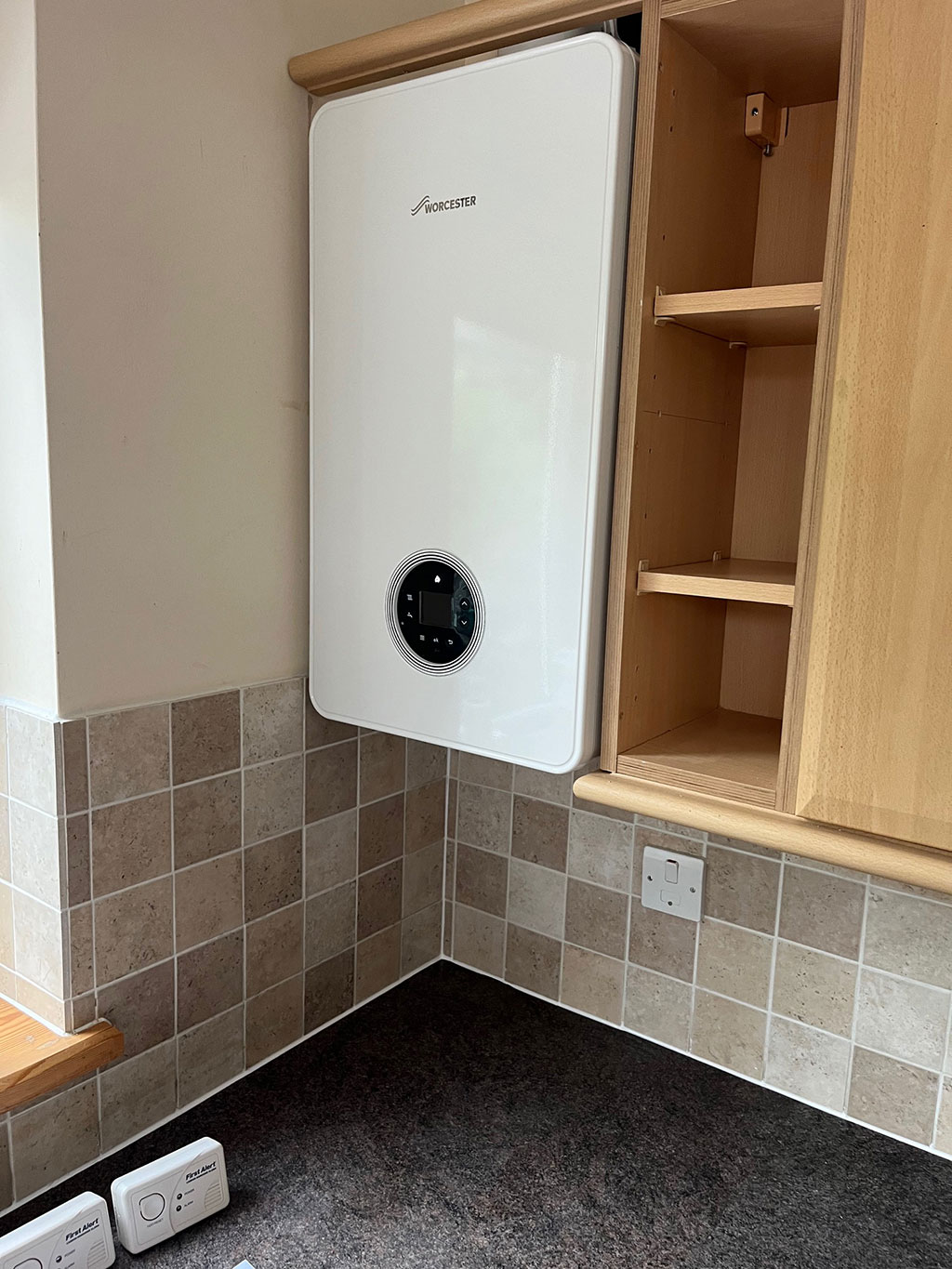
Where the boiler can go in a Fulham terrace is settled before the appliance is chosen, so we survey the flue route first and price the access it needs, because a terminal taken up through a back addition roof is a different day's work from one on a wall. Only then do we size the appliance: what the incoming main will actually deliver, how many outlets a mansard bathroom and a basement shower room add, and whether a combi can carry them.
Boiler repair and servicing
Pipework in an SW6 terrace is layered because a mansard and a basement were each plumbed in a different decade, so we check material and bore on site rather than assuming. Chimney breasts on party walls are often the only vertical route in a terrace, and the flues inside them are usually unlined and were never intended for a modern appliance, so any open-flued or converted set-up gets a liner and a proper flue integrity test rather than a guess.
Central heating and hot water
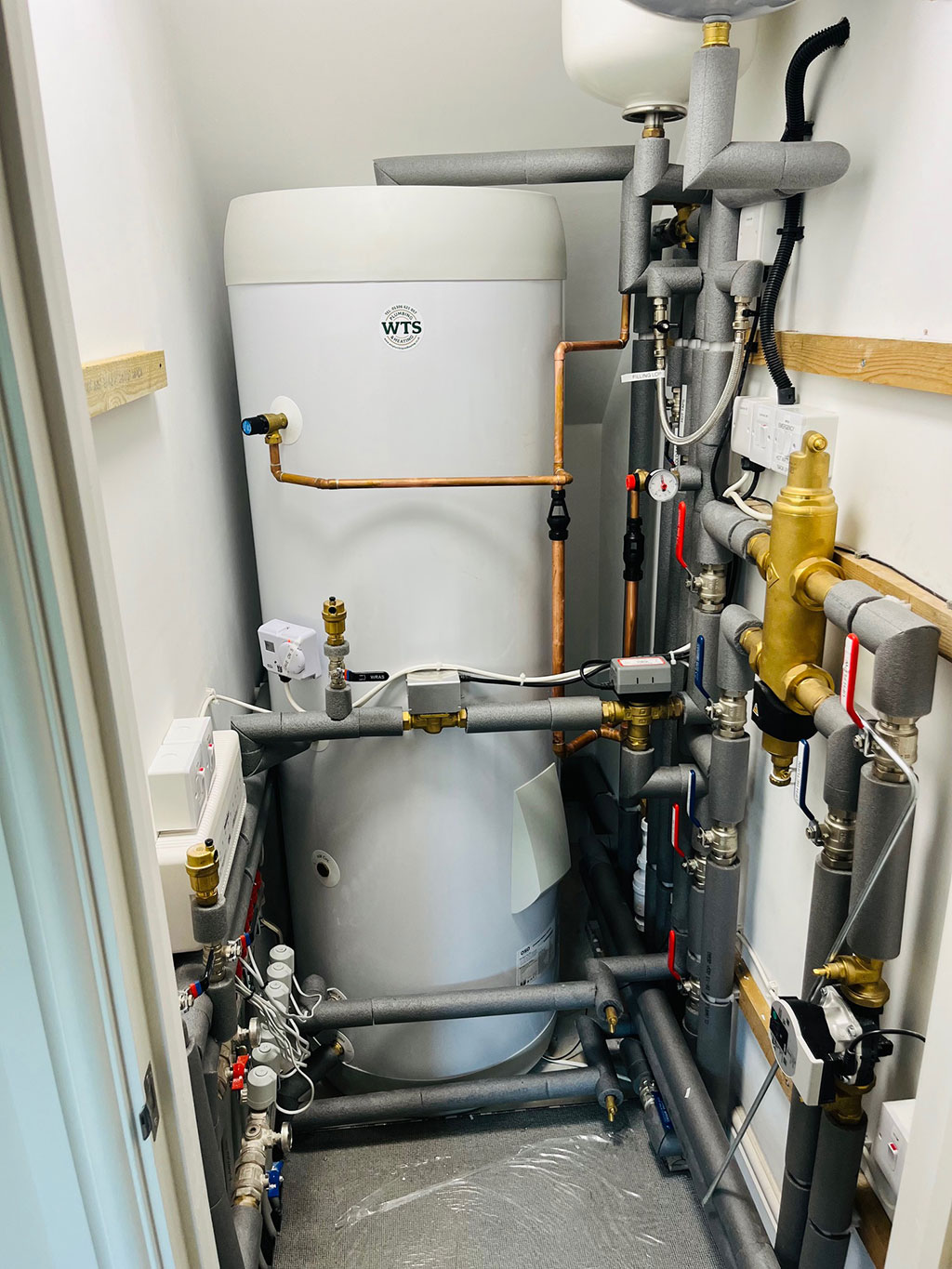
A mansard or a basement changes the whole system, not one radiator. Once the loft has gone, the cistern and the feed and expansion tank go with it, and a shower tucked under an SW6 mansard roof is left with almost no head. We look at the whole house before recommending anything: sealed system or combi, a cylinder position where there is still space for one, and a pump or accumulator where the incoming main will not carry the outlets.
Basement and bathroom plumbing in Fulham
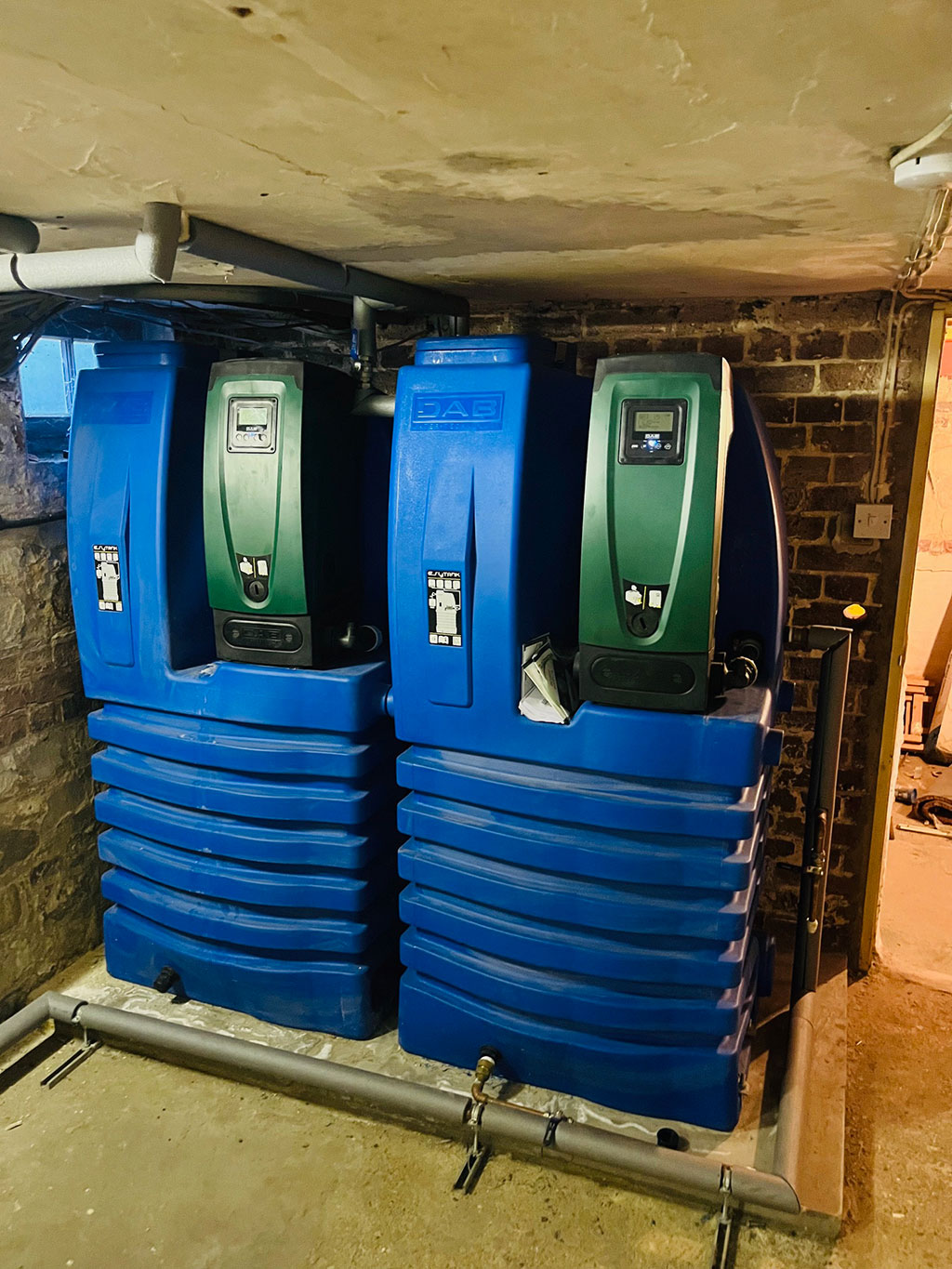
Sizing is most of this job. A lifting station has to match the fittings it actually serves rather than the smallest unit that fits the cupboard, and it needs room for servicing, a discharge route back up to the stack and a run that will not siphon. Hard water on this supply also puts scale through pump impellers and shower valves, so we protect both at the same visit rather than coming back for it.
Drainage and blocked drains
Drainage in a converted Fulham terrace is rarely simple, because an upper and a lower flat usually share a soil stack and an underground run that was laid for one household. We camera survey before quoting, so you know whether a blockage sits in your own pipework, the shared stack or the sewer, and whether it is a Thames Water matter. The front light wells cut into these terraces also silt up and are a common cause of repeat flooding.
Landlord gas safety certificates in Fulham
Private renting runs from around a third of households in Palace and Hurlingham up to 44.2 per cent in Fulham Town, so landlord work is a large share of what we do here. We issue gas safety certificates, service the appliance at the same visit and flag the things that catch out flat conversions: two separate gas runs off one supply, unlined chimney breasts serving old appliances, and boilers boxed into cupboards without the ventilation or access they need.
Bridges, cameras and permits before we can park
Access is the part of a Fulham job that people forget to plan. Hammersmith Bridge is closed to motor vehicles, so anything coming from Surrey arrives over Putney Bridge or Wandsworth Bridge and funnels onto New King's Road or Wandsworth Bridge Road. South Fulham has number plate camera restrictions around Wandsworth Bridge Road, so we check the current scheme rules for your street before booking the visit. The whole area is inside the Ultra Low Emission Zone as well. Residents may be able to register a tradesperson's vehicle for the south Fulham cameras, so it is worth checking your permit options with the council before the visit.
Heat pumps on Fulham's protected streets
The front elevation is usually off limits here and rear gardens are small, so where a heat pump can stand gets settled before its size does. Under the national permitted development rules, an air source heat pump needs planning permission in a conservation area if the unit sits on a wall or roof fronting a highway, or nearer to a highway than the building, and also where the property is listed, where there would be more than one unit on anything other than a detached house, or where the unit is larger than the permitted volume. Solar panels are restricted on much the same basis. The borough has a large number of conservation areas and many streets here carry Article 4 directions on front roofs and elevations, so we check the address with the council before drawing anything up.
The riverside blocks work differently from the terraces
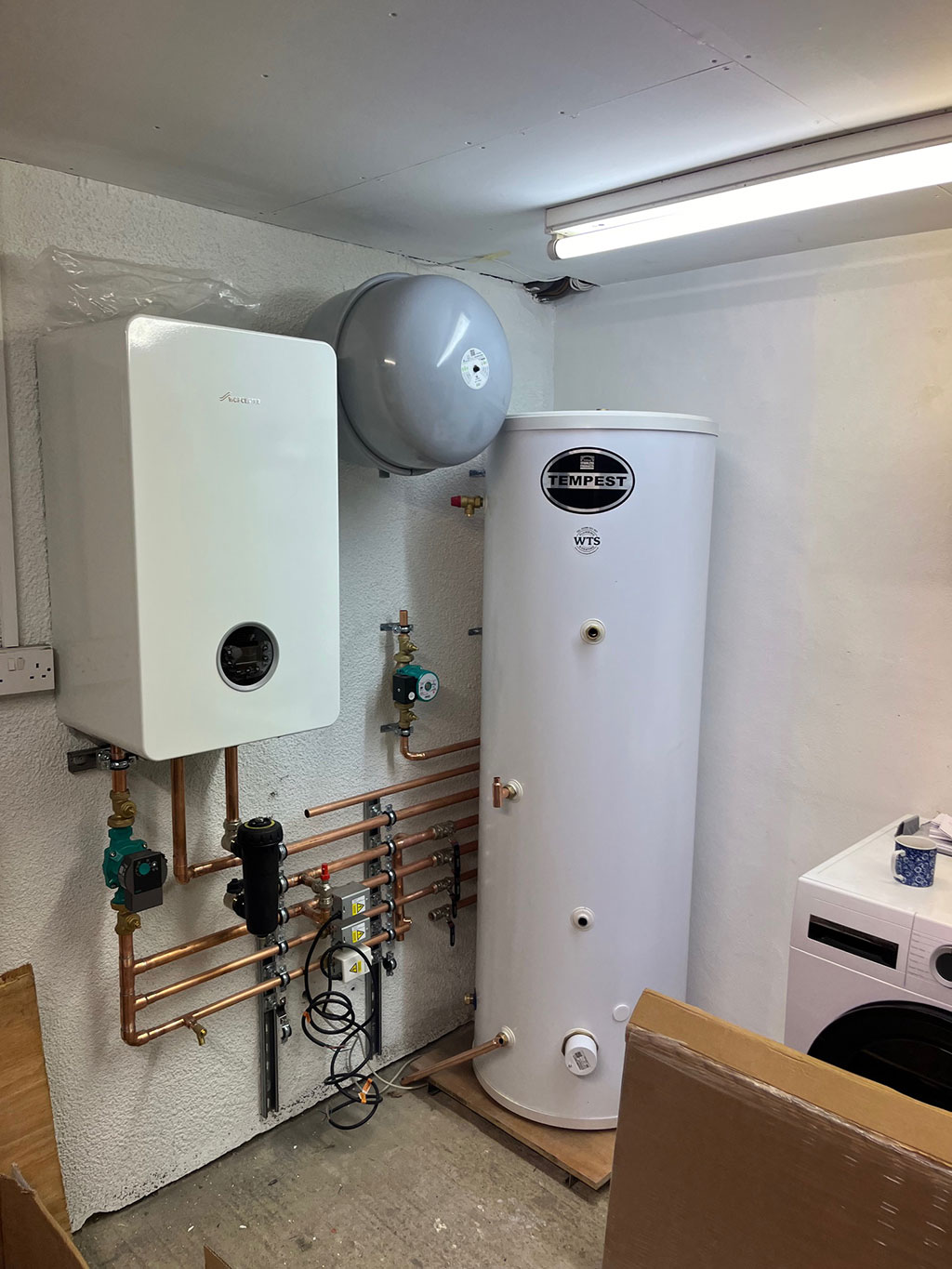
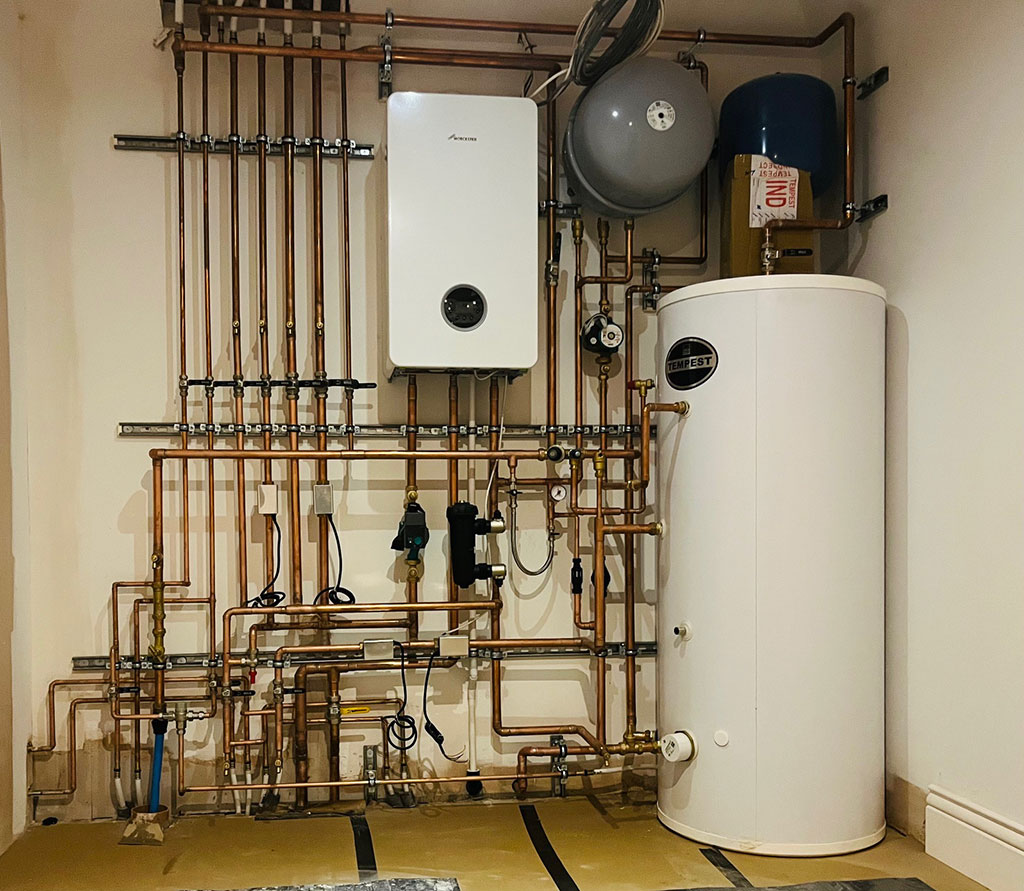
South Fulham Riverside is a large stretch of former industrial land at Sands End along the river, including the old Imperial Gas Works where Gasholder No 2 is Grade II listed. The flats built there heat themselves nothing like an SW6 terrace does. Census figures show Sands End with only 49.1 per cent of households on mains gas alone, against 77.9 per cent in Munster, with 29.9 per cent on electric heating alone and 6.1 per cent on a communal or district heat network. That means heat interface units, unvented cylinders and electric systems, plus a managing agent and a riser cupboard to arrange access to.
Streets, villages and postcodes we work in around Fulham
Fulham covers the SW6 district almost entirely, with W6 on the Hammersmith riverside, W14 to the north and a sliver of SW10 on the eastern edge. Heating varies as much as the housing: Munster runs at 77.9 per cent mains gas while Sands End runs at 49.1 per cent. These are the parts we are asked about most often, with the thing that tends to matter about each one.
- Fulham Broadway and Walham Green (SW6) The town centre around Fulham Broadway station, whose former entrance building and trainshed are listed. Dense mixed use, with flats sitting over shops.
- Parsons Green (SW6) Late Victorian terraces around the green and Eel Brook Common. A conservation area with three Article 4 directions covering roofs and gables on named streets.
- Peterborough Estate and Studdridge Street (SW6) Late Victorian streets over the old Peterborough House estate. Two Article 4 directions cover front roofs, gables, elevations, porches and brickwork painting.
- Sands End (SW6) The riverside quarter east of Wandsworth Bridge Road, industrial until fairly recently. Now terraces, estates and large modern blocks, with the lowest mains gas share in Fulham.
- Imperial Wharf (SW6) Modern riverside flats on the former gas works site, with far more electric and communal heating than the terraces. Imperial Square carries an Article 4 direction.
- Hurlingham (SW6) Riverside streets around Hurlingham Park and Broomhouse Lane. A conservation area, with an Article 4 direction on parts of Hurlingham Road covering front gables and dormers.
- Bishop's Park and Fulham Palace (SW6) Fulham Palace is Grade I listed and its moated site a scheduled monument, so works need scheduled monument and listed building consent, with Historic England and the council both involved.
- Munster Village (SW6) The terraced grid around Munster Road, Dawes Road and Filmer Road. The highest mains gas dependency in Fulham, and a lot of houses converted into two flats.
- Moore Park (SW6) One of the older estate developments here, with nineteenth century terraces and villas rather than railway-era streets. Fulham Road closes to vehicles on Chelsea match days.
- Fulham Cross and Lillie (SW6) The northern end around Lillie Road and North End Road. Mostly purpose-built flats and the highest social rented share in Fulham, so estate work dominates.
- Fulham Park Gardens (SW6) A conservation area with an Article 4 direction restricting roof coverings, rendering, cladding and repainting front brickwork, which matters before fixing anything to a front elevation.
- Crabtree (SW6) A conservation area taking in Crabtree Lane, so front elevations and roofs are constrained before a flue or a panel is fixed to them.
- Fulham Reach (W6) The Hammersmith riverside strip around Rainville Road, also a conservation area, so the frontages there need checking before anything is fixed to them.
- West Kensington and Barons Court (W14) Heavily flatted late Victorian and Edwardian streets and mansion blocks, much of it converted. Several conservation areas, including Queen's Club Gardens with its own Article 4 direction.
Why homeowners in Fulham call WTS
- Family run since 2008, started by William Smith, with Gas Safe registered heating engineers and an office in Fulham as well as the head office at Ockley near Dorking.
- Twelve month warranty on parts and workmanship, so a boiler, bathroom or heating system fitted by us stays covered after the invoice is paid.
- We work for private households, landlords, construction companies and tier-one contractors, so a two-flat conversion and a whole block are both familiar ground.
- Fulham work is quoted and booked around access, parking suspensions and the camera schemes, rather than promised for a time we cannot hold.
- We train apprentices, offer work experience and sponsor grassroots football teams, and we would rather turn a job down than take one we cannot properly staff.
Fulham plumbing and heating questions
Yes, we still take on work in Fulham and we have an office there, but those jobs are booked subject to engineer availability. Most of our engineers now work out of the head office at Ockley near Dorking, so our strongest coverage is across Surrey, in Dorking, Reigate, Leatherhead, Ashtead, Epsom, Banstead, Cheam and Cranleigh. Call the London office and we will tell you honestly whether we can get to you and when.
Usually at the rear, because there is rarely enough usable external wall anywhere else. These terraces are tightly packed with narrow side returns, and a flue has to clear boundaries, opening windows and neighbouring openings, which rules out most side walls. That leaves a long horizontal run to a rear elevation or a vertical terminal through the back addition roof. A front roof slope or front elevation is often ruled out anyway by an Article 4 direction, so the address is worth checking with the council first.
Often yes, because of where the unit has to sit. The front elevation is usually ruled out on a terrace here, which leaves a small rear garden or a flat roof, and the unit still has to meet its noise assessment against a boundary that may be only a few metres away. Much of the borough is in a conservation area, so check the address before ordering anything. Where permission is needed we build that timeline into the quote rather than leave you to find it out later.
Almost always. A basement here sits below the level of the sewer, so waste cannot run away by gravity. The thing worth deciding early is what the room will contain, because a single toilet and basin can go on a macerator behind the pan, while a full bathroom or a utility with a washing machine needs a lifting station and a cupboard or void to house it. That choice changes where the pipe runs, so it belongs in the design, not the snagging.
Not without planning it first. Streets here are permit controlled and most terraces have no off-street parking. If a bay needs suspending, the council wants formal notice in advance and the lead time depends on how many bays are involved, which is why boiler and drainage work here has to be booked ahead. We check the current requirement with the council when we quote. Where a suspension and a camera booking are both needed for one visit, we allow for the longer lead time.
Yes. Thames Water supplies Fulham and says that most of the water in the south east of England is hard, because its sources pass through chalk and limestone. In practice that means limescale in heat exchangers, cylinders, shower valves and pumped basement equipment. We will not quote a hardness figure for SW6 because we cannot verify one, but scale reducers, proper system flushing and the right inhibitor dose are all worth doing here, especially on a new boiler or an unvented cylinder.
Book a plumber or heating engineer in Fulham
If you have a job in Fulham, call the London office on 02080 874 309 or email info@wtsmechanical.co.uk and we will tell you straight away whether we can staff it and when. Send a photo of the boiler, the flue position or the basement plant and the conversation on the phone becomes far more useful. If you are nearer Surrey, our head office at Ockley covers Dorking, Reigate, Leatherhead, Ashtead, Epsom, Banstead, Cheam and Cranleigh on 01306 621 057, and that is where our engineers are based.
What we do in FulhamPlumbing in FulhamBoilers and heating in FulhamDrainage in FulhamHeat pumps in Fulham
Nearby areas we also coverPlumbers and heating engineers in PutneyPlumbers and heating engineers in Central LondonPlumbers and heating engineers in Wimbledon