Epsom sits north of Dorking on the A24, and our head office is at Jayes Park Courtyard in Ockley, further down the same road. The run in is straight up the A24, through Ashtead and into Dorking Road, South Street and the High Street, so we arrive on one road rather than picking through lanes. We are a family-run firm, started in 2008 by William Smith, and our Gas Safe registered engineers handle plumbing, boilers, central heating, drainage, air source heat pumps and gas safety certificates for households and landlords across KT17, KT18 and KT19.
Epsom is not a town you can treat as one kind of house. Close to four in ten homes in the borough went up between the wars, and the 1930s bay-fronted semi is the single most common thing we work in. The town centre and Church Street hold a much older core, the roads towards the Downs carry postwar and 1960s estates, and the closed hospital sites on the western side are now new flats and heavy conversions running sealed systems and communal risers. What sits behind the wall changes with each of those.
What Epsom is built from, and what that means behind the wall
The numbers here are unusually clear. Valuation Office Agency council tax stock data at 31 March 2025 records 33,280 properties in Epsom and Ewell, and 11,720 of them, 35.2 per cent, were built between 1930 and 1939. Add the 1919 to 1929 band and close to four in ten homes in the borough are interwar. Only 1,800, about 5.4 per cent, pre-date 1900. Census 2021 puts the borough at 34.9 per cent semi-detached, 26.4 per cent detached, 20.9 per cent purpose-built flats and 13.2 per cent terraced. In plain terms, this is a town of interwar family houses with a small, concentrated old core and a large block of flats on top.
Those interwar semis and detached houses fill Woodcote, the Epsom North area and the roads running up towards the Downs, and they tend to arrive with the same list. Original chimney stacks. A cold water storage cistern in the loft. A vented cylinder in the airing cupboard. Imperial-sized or early metric copper, and now and then a surviving lead or galvanised steel section on the incoming main. Deep bay windows and generous hall voids mean the heat loss is higher than the room size suggests, so a like for like radiator swap often leaves a front room cold. Boilers usually sit in a kitchen or a rear addition, and where the old flue went up a stack it needs lining or replacing with a balanced flue through the flank wall.
The pre-1900 stock is concentrated rather than scattered, around the town centre, Church Street, Chalk Lane, College Road, Pikes Hill, Lintons Lane and Adelphi Road. Solid brick, flint, stucco and weatherboarding under Welsh slate, on narrow plots with alleys and no easy service routes. Epsom and Ewell Borough Council has 21 conservation areas, and Article 4 directions are in force in eleven named residential areas including Church Street, College Road, Burgh Heath Road, Worple Road, the Downs Road Estate, Stamford Green, Pikes Hill and Lintons Lane. Those directions typically remove permitted development rights over front extensions and porches, front windows and doors, front roof slopes and rooflights, new hardstanding and front boundary walls. What each direction covers varies by area, so we read the one that applies to the address before quoting rather than after.
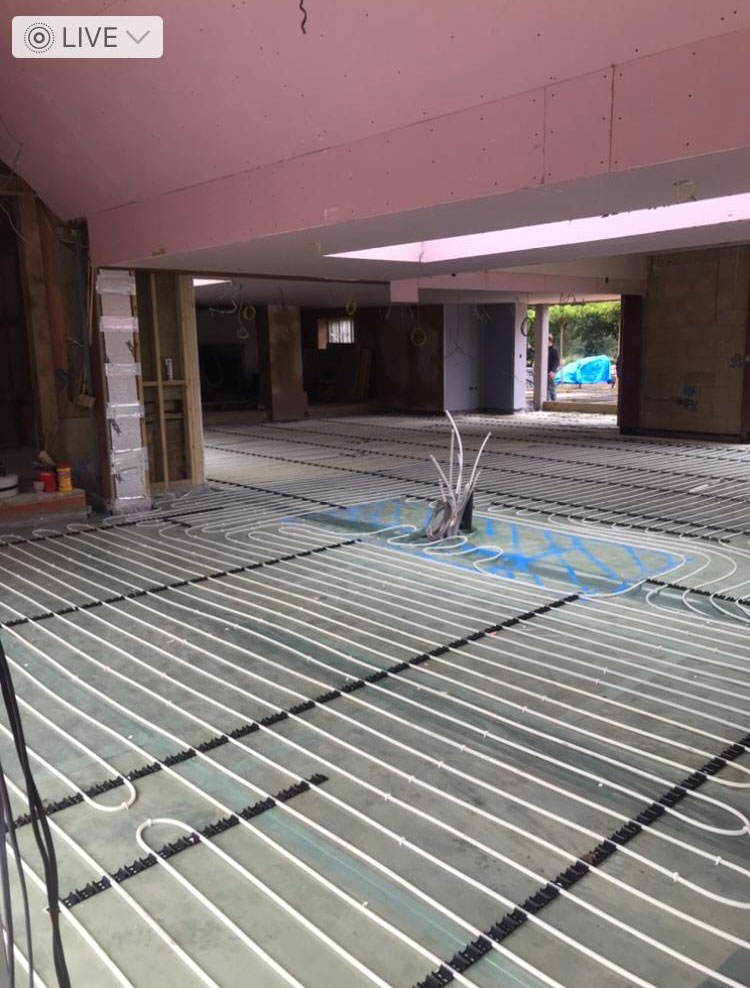
Then there is everything built since. The Downs Road Estate, over 110 houses put up by Wates in the late 1950s and early 1960s, sits under clay pantiles with timber casements and open-plan front gardens. From the 1970s onwards the pipework settles into ordinary 15mm copper and later plastic push-fit, and combi conversions are the norm. On the western side the closed hospital sites have become Clarendon Park, Livingstone Park and Noble Park, mixing new houses and flats with converted early 20th century hospital buildings, so expect sealed pressurised systems, plastic barrier pipe buried in screed, communal risers and management company rules on access. Ground conditions split as well, with London Clay across the north west, which is hard on old rigid drainage, and free-draining chalk to the south.
What we do in Epsom
Boiler installation and replacement
Most boiler replacements we do here are in a 1930s semi or detached house, taking out a system that still has a loft cistern and a vented cylinder and fitting a gas boiler in the kitchen or a rear addition. The decisions that matter are the flue route, whether the old stack is lined or left alone in favour of a balanced flue through the flank wall, and radiator sizing for those deep bays. Scale protection goes on as standard because the water here is hard.
Boiler repair and servicing
Epsom runs on mains gas. Census 2021 records 25,630 households in the borough, 81.8 per cent of the total, heated by mains gas alone, so gas boiler faults are the bulk of what we are called to. On hard water the usual culprits are a scaled plate heat exchanger giving lukewarm hot water, or a furred shower valve. We service, repair and issue the certificate, and where the boiler sits in an unheated rear addition or a garage, as it often does here, we lag the condensate run so it does not freeze off again next winter.
Central heating upgrades
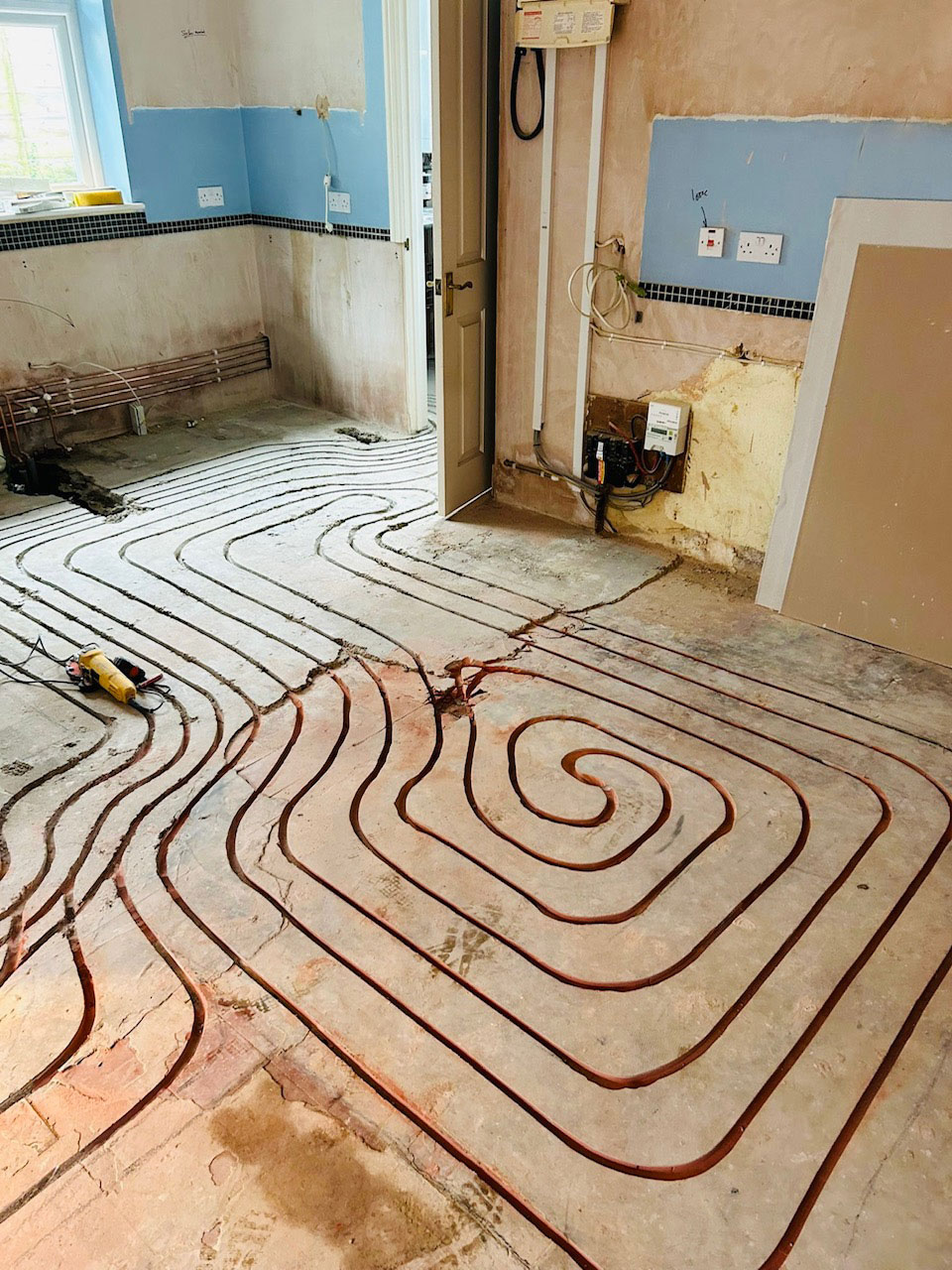
Where the boiler stays but the heating is not keeping up, the work is in the pipework rather than the appliance. Interwar Epsom houses often still run imperial copper that has to be picked up properly where it meets modern fittings, and a wide footprint with a long hall and an open stairwell wants zoning and thermostatic valves rather than one thermostat by the front door. On the converted hospital sites it is barrier pipe in screed and a communal riser instead. Balancing and a full flush are part of the work, and on hard water and old copper the flush is what stops a new pump picking up the system's debris.
Emergency plumbing in Epsom, day or night
We answer emergency calls 24 hours a day. In the newer town centre flats off West Street, South Street and Waterloo Road, water coming through a ceiling usually means a communal riser rather than anything inside the flat, so reaching the management company or the on-site key holder is part of the job at two in the morning. On the older east side streets the incoming main can still carry a lead or galvanised steel section, which is worth knowing before anyone cuts into it. Ring 01306 621 057 and we will talk you through isolating the water.
Drainage and drain surveys in Epsom
The north west of Epsom, including the streets on the former hospital sites, sits on London Clay. It holds water through the winter and shrinks hard through the summer, and that yearly movement is what cracks old salt-glazed clay drains and shears rigid connections. If your drains block every autumn, that is normally the reason rather than anything that has gone down them. We unblock, run camera surveys so you can see the defect for yourself, and carry out repairs, including on shared runs where a management company wants the report.
Landlord gas safety certificates
Epsom and Ewell has a lot of flats: 20.9 per cent of homes in the borough are purpose-built flats, with 643 households in converted or shared houses and another 386 in other converted buildings such as former school, church or warehouse blocks. We carry out annual gas safety checks and issue certificates for landlords and agents across KT17, KT18 and KT19, and we are used to working around door entry systems, key safes and management company access rules.
Air source heat pumps on Epsom houses
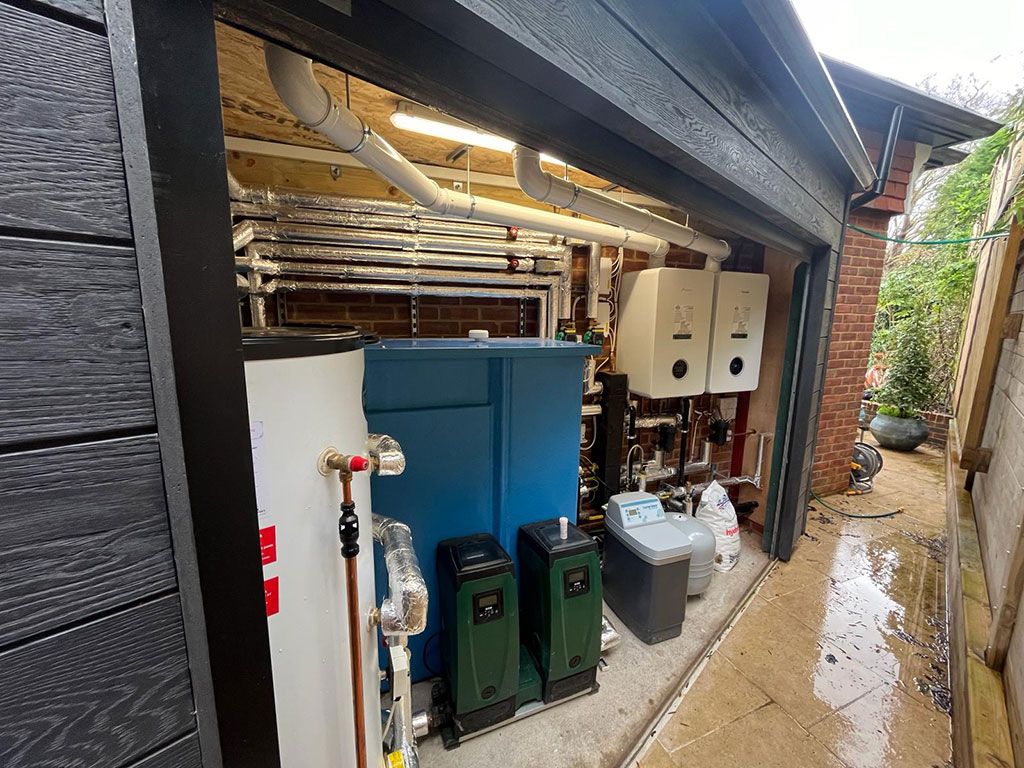
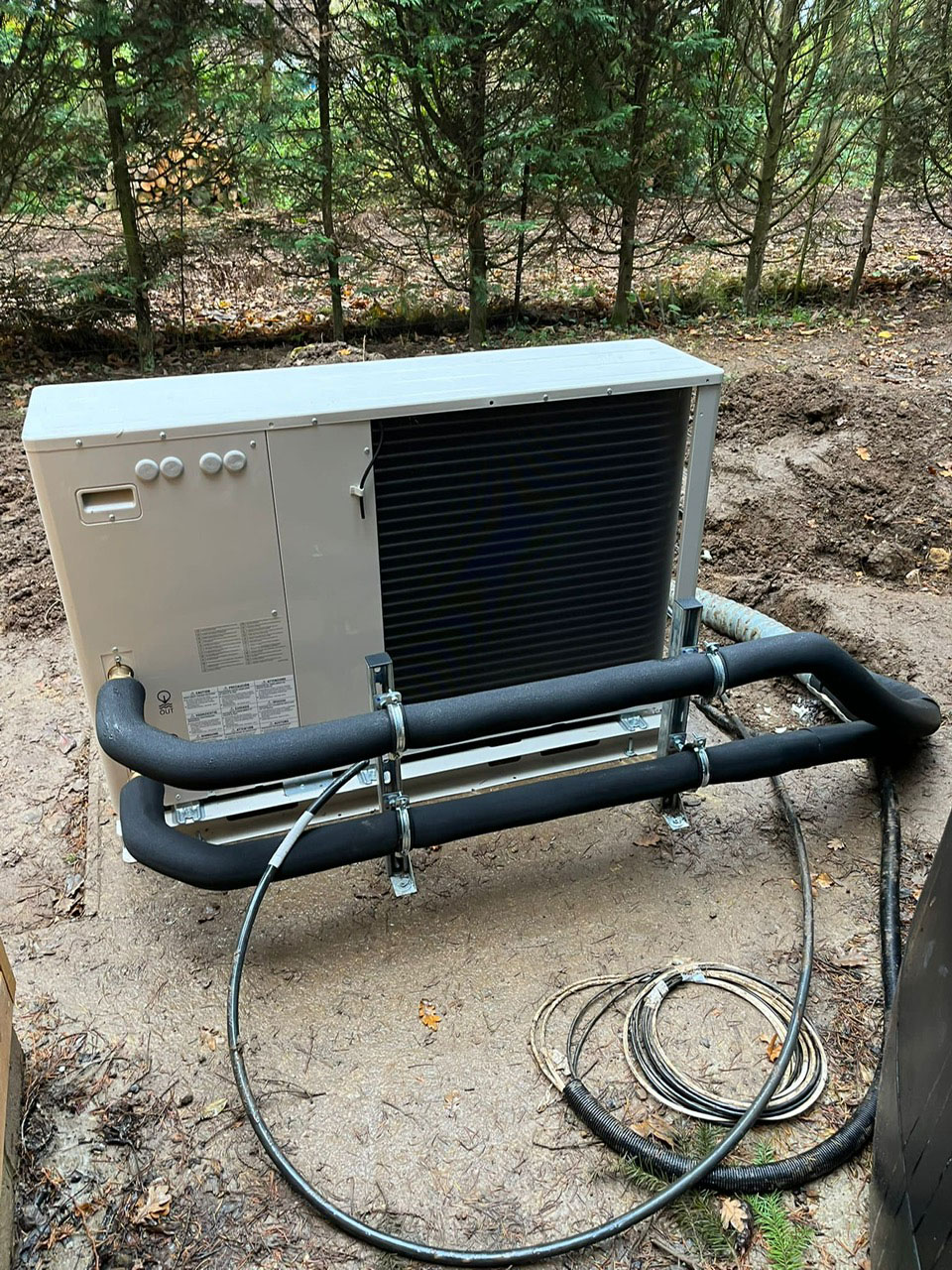
On paper Epsom suits heat pumps. The borough is 26.4 per cent detached and 34.9 per cent semi-detached, with gardens and flank walls to work with. Two things get in the way locally. The first is cylinder space, because plenty of 1930s houses here lost the airing cupboard during an earlier combi conversion and a cylinder has to be found a home again. The second is planning. With 21 conservation areas in the borough, siting an outdoor unit needs checking against the council's mapping before anything is ordered. Flats on a communal system are usually not candidates on their own. Census 2021 records only 141 borough households on renewable heating alone, so this is early ground and worth surveying properly before anyone commits.
Hard water, and what it does to your boiler
Water in this part of Surrey comes largely from boreholes in chalk and greensand, which makes it hard. Hardness is set by the source and the treatment zone that serves the property rather than by the ground under the house, and it varies from zone to zone, so it is worth checking your own postcode with your water company. In practice, limescale is the routine reason things fail here: combi plate heat exchangers that only give lukewarm water, furred shower valves, immersion elements, and washing machine and dishwasher inlets. We fit scale protection on new boiler installations as a matter of course, and if you are on your second or third failed heat exchanger, that is the first thing worth looking at.
Getting to your street, and parking a van in Epsom
The A24 is the direct road between our Ockley head office and Epsom. It arrives as Dorking Road and South Street and carries on through the town as the High Street and East Street. Parking is the harder part. Surrey County Council runs the residents' permit schemes, and a household's allocation is typically the number of vehicles registered to it minus its off-street spaces, while Article 4 directions in several conservation areas control the creation of a hardstanding in a front garden, which is exactly why so many period houses around Worple Road and Pikes Hill have no driveway. On the Downs Road Estate the front gardens are open plan with no boundaries at all. We agree access when we book and plan around racecourse event days on Downs Road and Grandstand Road.
Streets, villages and postcodes we work in around Epsom
Epsom's postcodes meet in an awkward way, with KT17, KT18 and KT19 all coming together near the town centre and neighbouring districts running out into KT21, KT4 and SM7. These are the parts of the town and its edges we are in most often, with a note on what tends to be behind the walls in each.
- Epsom town centre (KT17, KT18 and KT19) The High Street with short extensions into West Street, South Street, Waterloo Road and Ashley Avenue. A lot of flat building took place here in the 2000s.
- Church Street and The Parade (KT17 and KT18) The historic core around the church of St Martin, with late 17th and early 18th century spa houses on the south side and an Article 4 direction in force.
- Chalk Lane and Woodcote End (KT18) One of the borough's most sensitive conservation areas, with high red brick boundary walls, several of them individually listed, defining the frontages.
- Woodcote (KT18) Centred on the junction of South Street, Woodcote Road and Dorking Road, with interwar housing running out along Dorking Road.
- College Road (KT17) A single residential street beside Epsom College, mostly built between 1895 and 1913 under Welsh slate with many brick chimney stacks. Article 4 in force.
- Burgh Heath Road and Downs Avenue (KT17 and KT18) Large detached houses added from the 1870s and mainly in the early 20th century, several in Surrey Vernacular Revival or Arts and Crafts style. Article 4 in force.
- Worple Road and Ashley Road (KT17 and KT18) Terraced cottages, semis and detached houses from the 1860s onwards under slate or tile. Article 4 here blocks new hardstanding in a front garden, so few have a driveway.
- Downs Road Estate (KT18) The Ridings, Walnut Close and Milburn Walk. Over 110 Wates houses of the late 1950s and early 1960s, with clay pantiles, timber casements and open-plan front gardens.
- Stamford Green (KT18) West of the town on the edge of Epsom Common, built around the green and pond, with late 19th century cottages originally housing hospital workers.
- Livingstone Park and Clarendon Park (KT19) The former Horton and Long Grove hospital sites, now a mix of new build and conversion around Horton Lane, Chantilly Way, Sandy Mead and Abbots Avenue.
- Noble Park (KT19) The former West Park Hospital site, now a mix of new build and converted hospital buildings, with sealed systems and communal risers behind the walls.
- Pikes Hill, Lintons Lane and Adelphi Road (KT17) The post-railway east side. Brick and slate terraces with some roughcast render, flint and weatherboarding, and narrow frontage houses hemmed in by railway embankments.
- Epsom Downs (KT18) The racecourse side of town along Grandstand Road and Downs Road, mixing interwar with 1950s and 1960s housing. Tattenham Corner, just beyond, is in Reigate and Banstead.
- Longmead and the trade units (KT19) Longmead Road and the industrial estate north of the town centre, useful to us for parts and merchants, with postwar housing on the streets around it.
- West Ewell and Ruxley Lane (KT19) North of the town towards the Hogsmill. Largely interwar and postwar suburban housing on wider plots than the streets in the old centre.
Why homeowners in Epsom call WTS
- Family-run since 2008, started by William Smith. You deal with the people doing the work, whether that is a household, a landlord, a construction company or a main contractor.
- Our head office is at Jayes Park Courtyard in Ockley near Dorking, which is a straight run up the A24 into Epsom.
- Gas Safe registered heating engineers, so boiler, flue and gas work is carried out and certificated properly in your own home or a rental.
- Emergency cover 24 hours a day, seven days a week, and we plan around racecourse event days when Downs Road and Grandstand Road are closed off.
- Twelve-month warranty on parts and workmanship, including on the sealed systems and communal risers in the converted blocks at Livingstone Park and Noble Park.
Epsom plumbing and heating questions
Yes. Our head office is at Jayes Park Courtyard in Ockley near Dorking, a straight run north up the A24 into Epsom. The A24 takes us almost the whole way, so we are on one road in rather than picking through lanes. We cover KT17, KT18 and KT19 and carry on out into Ashtead, Banstead, Ewell, Stoneleigh and Worcester Park. Call 01306 621 057 and we will tell you whether your street sits on the clay side or the chalk side, because it changes what we bring.
Yes. The supply in this part of Surrey comes from chalk and greensand boreholes and it is hard, so scale protection goes on every boiler we fit here rather than being treated as an upgrade. Hardness varies by supply zone, so check your own postcode with your water company. The section above sets out what limescale does to a combi and which parts give up first.
Possibly. Epsom and Ewell has 21 conservation areas and Article 4 directions in eleven named residential areas, and the housing section above lists what those directions cover. A flue on a front elevation or a front roof slope is the one to check first. Look up the council's mapping for your own address, and we will plan the route around what it says, including whether an existing stack can be relined instead.
Often yes, but the heat loss survey decides it, not the boiler that is there now. On a bay-fronted 1930s semi the front rooms lose more heat than their size suggests, so radiators go up a size or two and the flow pipework is often uprated to carry the volume at a lower temperature. The cylinder is the other question: an unvented one needs real height and a discharge route, awkward once the airing cupboard has gone. In a conservation area we check the council's mapping before siting anything outside.
Yes, 24 hours a day, seven days a week, including weekends and bank holidays. Burst pipes, leaks coming through ceilings, no heating and no hot water are the usual reasons people ring. If you can, turn the stop tap off first. In the older terraces around Worple Road, Pikes Hill and Church Street it is often outside under a cover in the alley rather than under the kitchen sink. Then call 01306 621 057.
On the converted hospital estates at Livingstone Park, Clarendon Park and Noble Park a lot of the drainage is shared, so a blockage under your kitchen may sit on a run serving several homes. Shared lateral drains beyond the property boundary are normally the water company's, while private runs inside the estate fall to the freeholder or the management company. A camera survey with clear footage of the defect is what a managing agent needs before authorising a repair, and it beats paying for repeat jetting.
Book a plumber or heating engineer in Epsom
If you need a plumber or a heating engineer in Epsom, call WTS on 01306 621 057. We are a family-run firm working out of Jayes Park Courtyard in Ockley near Dorking, straight up the A24, with Gas Safe registered engineers, emergency cover around the clock and a twelve-month warranty on parts and workmanship. Tell us the road and what the house is, whether that is a 1930s semi with a loft tank, a town centre flat or a converted hospital building, and we will tell you what we expect to find before we come out.
What we do in EpsomPlumbing in EpsomBoilers and heating in EpsomDrainage in EpsomHeat pumps in Epsom
Nearby areas we also coverPlumbers and heating engineers in AshteadPlumbers and heating engineers in BansteadPlumbers and heating engineers in Cheam