WTS Plumbing & Heating Ltd carries out planned preventative maintenance on commercial boiler plant. We also work in Putney and the wider SW15 area on request. The people holding this obligation locally are managing agents on the Upper Richmond Road blocks, centre management at Putney Exchange, business managers at the Roehampton schools and estates teams at the university and hospital sites. Servicing here is not one annual visit stamped on a certificate. A High Street restaurant boiler running seven days behind a busy kitchen, a Roehampton campus block idle through vacation and a boathouse cylinder hammered for two hours a morning need three different intervals, set against the manufacturer's instructions and the hours the building actually runs.
Our head office and engineering base is at Ockley near Dorking, so Putney servicing is planned in advance rather than attended at short notice, and we will tell you at enquiry stage whether we can hold the dates your building needs. What does not change is the standard of the visit itself: Gas Safe registered engineers, recorded combustion readings, a written account of what was found, and a clear view of what it means for the next twelve months of running.
What Putney's commercial buildings do to a service regime
Putney is a London town centre rather than a market town, and the plant reflects that. The retail core runs from Putney Bridge down the High Street to the station, a mix of Victorian and Edwardian shop terraces with offices and flats above, plus later infill, weighted heavily towards banks, chain retail, cafes, pubs and restaurants. Putney Exchange Shopping Centre sits in the middle of it, an enclosed centre with a Waitrose anchor, food units and a rooftop car park reached from Lacy Road. Catering gas loads, kitchen ventilation interlocks and centre trading hours shape a service calendar here far more than boiler size does.
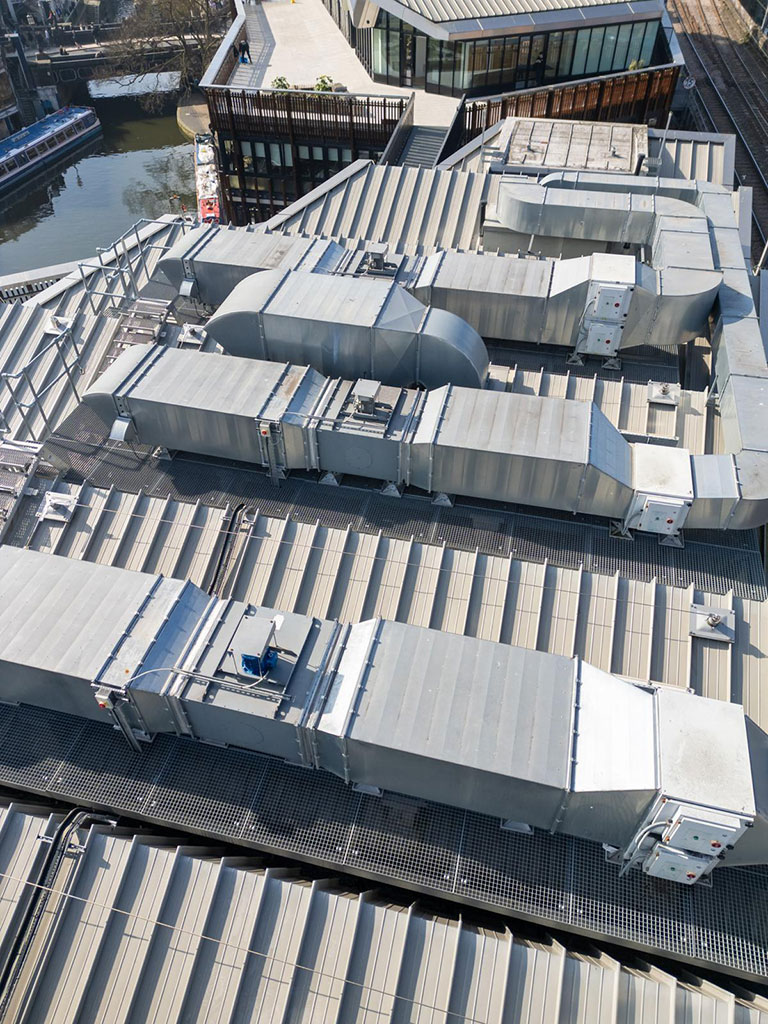
The office pitch is the Upper Richmond Road corridor, the A205 South Circular, with named multi-let buildings such as Oxford and Cambridge House at 178 to 182 Upper Richmond Road. Much of that stock dates from the 1980s and 1990s, with raised access floors, small plant rooms and roof mounted kit. Closer to the water, the Putney Wharf and Brewhouse Street development mixes restaurants, bars, retail, a health club and offices with flats above, so landlord plant, kitchen loads and health club hot water demand sit in one development and cannot all be taken off at once. Putney Embankment is lined with rowing club boathouses, where the heating load is boat bays and drying rooms and the hot water load is banks of showers hit in short, heavy peaks after an outing.
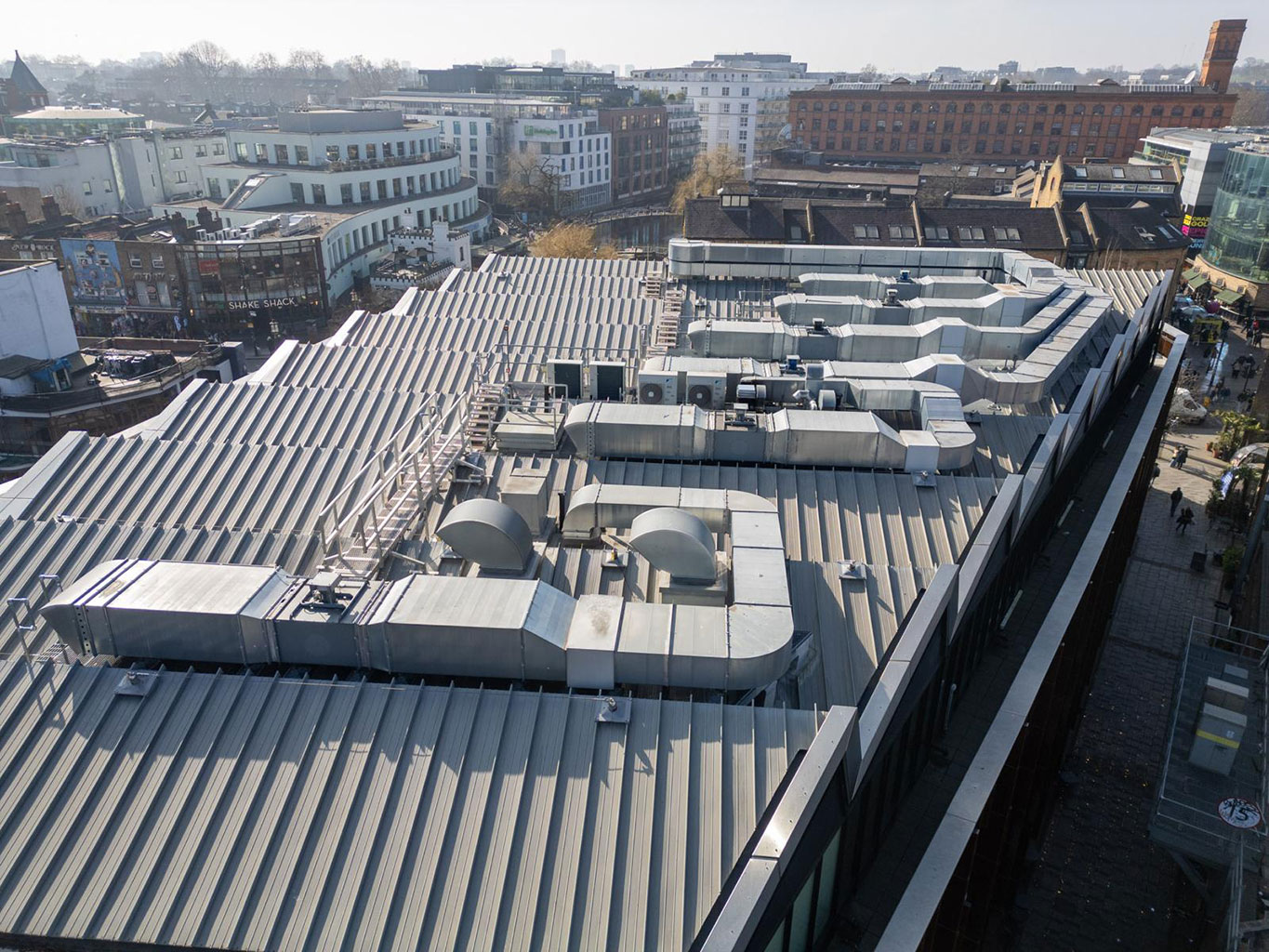
The largest block of plant is institutional and sits out at Roehampton and Putney Vale. The University of Roehampton runs four colleges, Digby Stuart, Froebel, Southlands and Whitelands, across everything from historic listed buildings at Parkstead to later twentieth century academic and residential blocks, so one campus can hold flued plant in a protected structure and packaged boilers in a modern block on the same service schedule. Kingston University's Roehampton Vale campus adds wind tunnels and workshops. Queen Mary's Hospital, the Royal Hospital for Neuro-disability on West Hill and a cluster of nursing and care settings across Roehampton run continuously. Putney High School GDST, Ark Putney Academy, Oasis Academy Putney and Ibstock Place School add term-time restrictions, and Putney Leisure Centre adds pool hall air to the mix.
What this covers in Putney
Service regimes built round the building's year
A single fixed service date suits almost nothing in Putney. University of Roehampton and Kingston Roehampton Vale plant is best serviced in vacation, school boilers in the holidays with safeguarding checks in place, High Street catering kit before the winter trade rather than during it, and the chapels at Putney Vale Cemetery and Crematorium around funeral bookings. We agree those windows first and build the visit schedule backwards from them.
Combustion analysis and flue gas readings
Every gas appliance is checked with a calibrated flue gas analyser and the readings are written down, not simply glanced at. Carbon monoxide and carbon dioxide figures, the ratio between them, gas rate and operating pressures give a picture of how the burner is behaving. Comparing those figures visit to visit is what shows a heat exchanger fouling up or a flue starting to fail, well before either puts the plant out of service.
Gas safety checks in commercial premises
Servicing and a gas safety check are not the same piece of work, and Putney's mixed-use buildings often need both. We check appliances, flues, ventilation openings and safety devices, and on High Street kitchens we prove the gas interlock with the extract and make-up air running. Where a Victorian terrace has flats over a shop, we set out plainly which appliances sit under the residential duty and which sit under the workplace duty.
System water quality and cleanliness
Older distribution pipework in the Victorian and Edwardian stock along the High Street sheds a lot of iron oxide, and large open-vented systems in the Roehampton campus blocks pick up oxygen faster than a modern sealed system does. We sample system water, check inhibitor concentration, inspect and clean magnetic and strainer filtration, and record the results, so a falling inhibitor level is picked up as a maintenance item rather than discovered when a heat exchanger blocks in December.
Records for insurers, auditors and inspections
An academy trust audit, a CQC inspection at a West Hill care home or a compliance review at a PFI hospital building all start with the record rather than the plant room. Each visit produces an asset-level record: appliance make, model and location, readings taken, parts changed, defects found with a clear priority, and photographs. That is the format that answers the question asked months later about what condition an appliance was in and what was done about it.
Protecting warranty cover and uptime
Commercial boiler warranties are conditional on servicing to the manufacturer's schedule by a registered engineer, with treated system water. We work to that schedule rather than a generic checklist, so cover is not quietly lost. On the ageing packaged plant common in the Upper Richmond Road offices we flag parts that are becoming hard to source before they fail, and set out what temporary heating or hot water would be needed if an appliance had to come off line in term or trading hours.
Working out who actually holds the duty
In a Putney building the maintenance duty is rarely held by one person. A multi-let block on Upper Richmond Road usually splits landlord plant, held by the managing agent, from anything demised to a tenant. A Victorian terrace on the High Street can carry a workplace duty at ground floor and a residential letting duty above it. Queen Mary's Hospital was rebuilt under a PFI arrangement, and buildings of that kind normally route contractors through a facilities management permit system rather than direct to an estates team. University and academy estates run their own permit and contractor approval systems. Before a first visit we agree in writing which appliances are on our schedule, who receives each record, and who is expected to act on the defects we raise.
Getting to the plant on a working day
Access is usually the harder half of a Putney service visit. Putney High Street is the A219 and carries heavy bus traffic, while Upper Richmond Road is the A205 South Circular, so neither offers anywhere useful to leave a van. Kerbside space is controlled, trade vehicles need permits or dispensations arranged with Wandsworth Council in advance, and the whole area sits inside the London-wide ULEZ. Work inside Putney Exchange runs to centre management permits and agreed hours, and the rooftop car park reached from Lacy Road limits what can be wheeled or craned in. On the Upper Richmond Road offices, roof access is often an internal stair or ladder rather than a goods lift, which changes how long a plant inspection takes.
Typical commercial buildings in Putney
- Shops, cafes and restaurants on Putney High Street
- Retail and food units inside Putney Exchange Shopping Centre
- Multi-let offices on the Upper Richmond Road corridor
- Riverside mixed-use buildings at Putney Wharf and Brewhouse Street
- Rowing clubs and clubhouses on Putney Embankment
- University and college buildings at Roehampton and Roehampton Vale
- Independent and state schools across Putney and Roehampton
- Hospitals, nursing homes and care premises on West Hill and Roehampton Lane
- Leisure, civic and worship buildings including Putney Leisure Centre
Duties and standards that apply
- Work on gas fittings and appliances must be carried out by a Gas Safe registered business under the Gas Safety (Installation and Use) Regulations 1998. Commercial boilers and commercial catering appliances sit in separate competency categories, so ask any contractor to confirm which categories the attending engineer holds. WTS engineers are Gas Safe registered.
- Regulation 35 places a duty on employers and the self-employed to make sure gas appliances, installation pipework and flues at a place of work are maintained in a safe condition. The regulations do not set a fixed service interval for workplace appliances. In practice the interval comes from the manufacturer's instructions and a recorded, risk based judgement about how the plant is used.
- The separate landlord duty in regulation 36, an annual gas safety check and record for each appliance, applies to residential lettings. In Putney's mixed-use stock the flats above a High Street shop can therefore sit under a different duty from the shop itself, and the two obligations need recording separately even where one owner holds both.
- System water treatment sits in standards and guidance rather than in statute. BS 7593 covers water treatment in domestic heating and cooling systems in individual dwellings, and BSRIA guidance such as BG 50 covers closed system water in commercial buildings. Neither is law in itself, but manufacturer warranty terms and insurer requirements often make working to them a contractual matter.
Common questions
Usually annually as a minimum, but the manufacturer's instructions and your duty as an employer set the interval, not a figure in the regulations. Hard-worked plant is often on a six-monthly regime: catering-linked boilers behind a High Street restaurant, hot water plant at a Putney Embankment boathouse serving heavy shower and drying demand in short peaks, or plant sitting in pool hall air. We recommend an interval per appliance rather than one interval for the whole site.
Yes, subject to availability, and we would rather say that plainly than overpromise. Our engineering base is at Ockley near Dorking, so Putney servicing is planned work booked ahead rather than a call-out. If your building needs committed attendance windows through the year, we will tell you at enquiry stage whether we can hold them.
Whoever controls the appliance. Landlord plant serving common areas normally sits with the managing agent, while anything demised to a tenant sits with that tenant, and the lease is the document that settles it. We will service to whichever schedule you hold and issue records addressed to the right party, but we cannot resolve a lease ambiguity for you. Agreeing it in writing before the first visit stops appliances falling between two schedules.
Mostly yes. A service is an appliance-by-appliance job measured in hours, not a plant room shutdown. Retail units at Putney Exchange and on the High Street are usually done before trading or after close, under centre or landlord permits. Continuously occupied premises such as the Royal Hospital for Neuro-disability, care homes on West Hill and student accommodation at Roehampton need appliances taken off one at a time, with the sequence agreed so heating and hot water stay available throughout.
An asset-level record for each appliance plus a site summary, issued after the visit rather than weeks later. Gas safety records are issued where the work calls for them. They go to whoever you nominate, which is usually the facilities manager and the managing agent, and we can supply them in the format your compliance system takes. Where a building has more than one duty holder, each party receives the records for the appliances they control.
Talk to us about Putney
If you hold a maintenance obligation on commercial boiler plant in Putney or the wider SW15 area, talk to us before the next service falls due rather than after it. We will look at the appliance schedule, the manufacturer's requirements, the access constraints on your building and the windows your occupants allow, then tell you honestly what we can commit to. Putney work is planned in advance from our Ockley office. Call 01306 621 057 or email info@wtsmechanical.co.uk to talk it through.
Related pagesCommercial boiler installation in PutneyCommercial boiler repairs in PutneyCommercial boiler servicing in Banstead